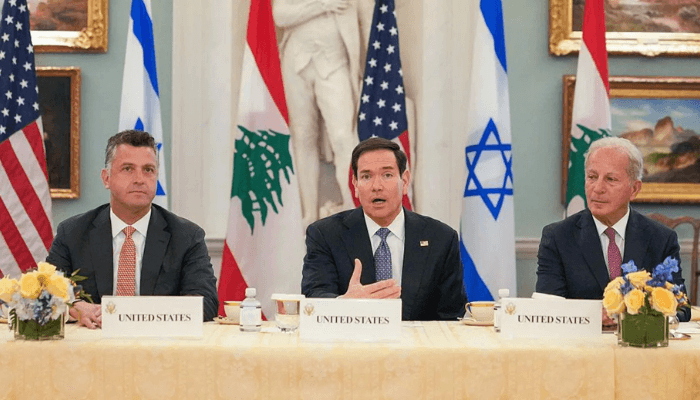
Israel and Lebanon have held their first direct diplomatic talks since 1993, in a rare and delicate effort to contain a conflict that has steadily intensified along their shared border.

The meeting, mediated by Marco Rubio, US Secretary of State in Washington, brought together officials from two countries that do not maintain formal diplomatic relations. It comes against the backdrop of mounting violence involving Hezbollah, the Iran-backed armed group at the centre of the confrontation.

Read also: WORLD IN BRIEF: Israeli strike kills 14 in Lebanon, Trump threatens ‘hell’ for Iran, Traoré slams democracy and other stories

Speaking ahead of the talks, Rubio described the engagement as the beginning of a process rather than a breakthrough. He said it presented a historic opportunity to reduce tensions and curb Hezbollah’s influence, though he cautioned that progress would take time.

According to a US statement, both sides discussed the possibility of further direct negotiations, with details yet to be agreed upon. Israel reiterated its position that all non-state armed groups must be disarmed, a clear reference to Hezbollah. Lebanon, for its part, called for an immediate ceasefire and urgent steps to address a deepening humanitarian crisis, “ceasefire and concrete measures to address and alleviate the severe humanitarian crisis” in the country,” Rubio said.

Read also: Iran fires fresh missiles at Israel, dismisses Trump’s peace talks as fake news

The talks took place as fighting continued on the ground. Hezbollah claimed multiple attacks on Israeli targets on the same day, while air raid alerts sounded across northern Israel. Israel says its military operations in Lebanon are aimed at dismantling the group’s capabilities following months of cross-border hostilities.

Joseph Aoun, Lebanese president  expressed cautious hope that the talks could “mark the beginning of the end of the suffering of the Lebanese people in general, and those in the south in particular,” he said.

He said the “only solution” to the conflict would be in the Lebanese armed forces “being solely responsible for the security of the area”.

Read also: Lebanon seeks talks with Israel as president criticises Hezbollah

However, the prospects for any agreement remain uncertain. Hezbollah officials have already signalled they may not recognise outcomes reached in Washington.

A senior member of the organisation told the AP news agency it would not abide by any settlement agreed in Washington.

“We are not bound by what they agreed to,” said Wafiq Safa, a member of Hezbollah’s political council.

Underscoring the limits of the Lebanese government’s authority over the powerful group.

The renewed diplomatic push also intersects with wider regional tensions. Separate discussions between the United States and Iran have raised questions about whether Lebanon’s conflict will be tied to broader negotiations, though Washington and Israel have indicated they prefer to keep the tracks separate.

For now, the talks mark a significant, if tentative, step. After more than three decades without direct engagement, even a cautious dialogue reflects a shift in approach as the risk of a wider regional escalation grows.

Faith Omoboye is a foreign affairs correspondent with background in History and International relations. Her work focuses on African politics, diplomacy, and global governance.

Join BusinessDay whatsapp Channel, to stay up to date

Open In Whatsapp