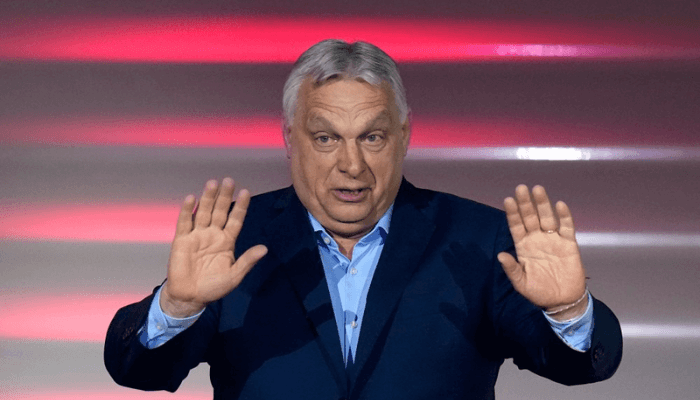
Viktor Orbán, one of Europe’s longest-serving leaders, has been voted out of power after 16 years, in a result that signals a sharp shift in the country’s direction.
The election delivered a decisive victory to Péter Magyar, a 45-year-old former insider who broke ranks to lead a reform movement that captured widespread public frustration.
Read also: Meet Tinubu’s envoys to Mexico, Hungary, UK: Reno Omokri, Abasi Braimah, Aminu Dalhatu
Preliminary results, with more than 98 percent of votes counted, show his Tisza party on course for a commanding parliamentary majority, far ahead of Orbán’s Fidesz party.
Speaking to jubilant supporters by the River Danube in Budapest, Magyar framed the result as a collective turning point. “We did it,” he said. “Together we overthrew the Hungarian regime.”
The scale of the victory reflects a surge in voter engagement. Turnout reached a record 79.5 per cent, and Magyar said no party in Hungary’s democratic history had secured such a strong mandate.
Read also: Hungary work visa: Hiring organisations must be from Nigeria with an office in Hungary
Orbán, 62, acknowledged defeat in sombre remarks to party loyalists. He thanked millions who remained loyal but conceded the outcome was clear. “We have not been entrusted with the responsibility to govern,” he said.
For years, Orbán built his rule on repeated electoral victories and a political model critics described as an electoral autocracy. His government faced sustained criticism over corruption, limits on judicial independence and strained relations with European institutions.
Magyar’s rise has been swift but relentless. Over the past two years, he travelled across towns and villages, holding multiple rallies a day and tapping into public anger over cronyism and economic inequality. His campaign message centred on restoring accountability at home and recalibrating Hungary’s place abroad.
The result is expected to reshape Hungary’s foreign policy. Orbán had maintained close ties with Donald Trump and Vladimir Putin, often putting Budapest at odds with the European Union and Ukraine. Magyar has promised a different course, seeking closer cooperation with Brussels and stronger support for Kyiv.
European leaders were quick to respond. Donald Tusk, Poland’s Prime Minister, welcomed what he called a “glorious victory”, signalling a potential reset in regional alliances. Magyar has said his first official visits will be to Warsaw and Brussels, where he plans to push for the release of billions of euros in EU funds frozen over governance concerns.
Despite the scale of the defeat, Orbán has not stepped down as leader of Fidesz, leaving open questions about the party’s future without the man who defined it for more than a decade.

Join BusinessDay whatsapp Channel, to stay up to date
Open In Whatsapp