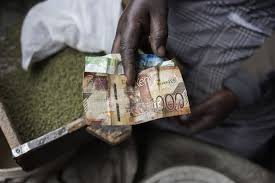
The Kenyan shilling is emerging as one of Africa’s most vulnerable currencies, with global banks warning that rising oil prices linked to the Iran conflict could trigger renewed pressure on East Africa’s largest economy.
Strategists at Citigroup, Standard Chartered, and Société Générale told Bloomberg that the currency’s recent stability may be difficult to sustain as higher energy costs widen Kenya’s external imbalances. The country imports nearly all its fuel, leaving it highly exposed to oil price shocks.
Higher oil prices—driven by escalating tensions linked to the Iran conflict—are expected to widen the country’s external financing gap, increasing pressure on the shilling.
Standard Chartered, for instance, expects the central bank to begin “accommodating moderate upward pressure” on the exchange rate. The bank forecasts the shilling could weaken to KSh132 per dollar by year-end, from around KSh129 currently, according to Razia Khan, head of research for Africa and the Middle East.
At Citigroup, chief Africa economist David Cowan warned that risks could intensify if oil prices surge further.
“If oil moves back above $100 a barrel and remains there, the currency could slide to KSh135 this year—a level last seen two years ago—if authorities allow it to adjust,” Cowan said.
Stability under pressure
The shilling weakened to about KSh130 per dollar in early April, marking the end of a roughly 20-month period of relative stability around the KSh129 level. It traded at approximately KSh129.11 per dollar on Tuesday, April 21, posting a marginal gain of less than 0.1 percent.
To maintain that stability, Kenya’s central bank revealed earlier in the month at its second Monetary Policy Committee meeting, that it has intervened heavily in the foreign exchange market.
According to the bank’s governor, Kamau Thugge, the country has spent nearly $1 billion of its foreign reserves since the conflict escalated, as authorities sought to curb excessive volatility.
Roughly $941 million was deployed in the four weeks to April 2 alone, helping to keep the currency within a narrow trading band near KSh129 per dollar—a level it has largely maintained for almost two years.
External risks building
The central bank has already begun adjusting its outlook to reflect a more challenging external environment.
Thugge said projections now factor in weaker export growth, slower remittance inflows, and softer tourism receipts. Despite these headwinds, Kenya is still expected to record a current account deficit of about $4.4 billion in 2026, alongside inflows of roughly $5 billion, resulting in a modest balance-of-payments surplus of around $619 million.
“We have been very cautious in our projections,” Thugge said. “We have assumed lower export growth, a deceleration in remittances, and weaker tourism receipts, yet we still expect a balance-of-payments surplus.”
However, risks to that outlook are rising.
A recent report by the World Bank warned that Kenya could lose up to $40 million in monthly remittance inflows as the Middle East crisis disrupts a key source of foreign income.
The Bank noted that the conflict is increasing uncertainty around remittance flows from the Gulf, where large numbers of African migrant workers are employed in construction and service sectors.
A fragile recovery
The renewed pressure comes after a volatile period for the currency.
According to Bloomberg data, the Kenyan shilling lost 21 percent against the dollar in 2023—its steepest annual decline since 1993—driven by rising global interest rates, weaker export earnings, and foreign portfolio outflows. It marked the currency’s fourth consecutive year of depreciation.
The trend reversed in early 2024, when the shilling rebounded sharply, strengthening by about 12 percent to KSh143.6 per dollar by February, supported by a Eurobond issuance and an oversubscribed domestic infrastructure bond. The rally extended into March, with the currency approaching KSh130 per dollar.
Still, concerns about the sustainability of that stability persist.
The International Monetary Fund has previously cautioned against prolonged exchange rate rigidity, noting that maintaining the shilling within a tight band for an extended period could mask underlying external imbalances.

Join BusinessDay whatsapp Channel, to stay up to date
Open In Whatsapp