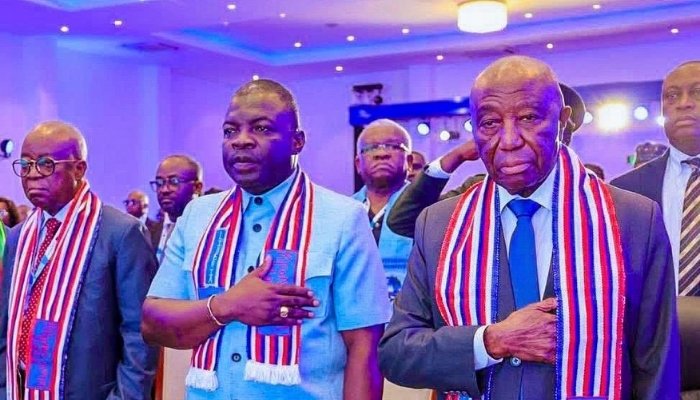
Declining fish stocks, weak infrastructure, and limited access to finance and modern technology are limiting access to fish for millions of West and Central Africans who depend on it for affordable protein, said Adegboyega Oyetola, minister of marine and blue economy.
Oyetola, who is also the chairman of the fisheries committee for the West Central Gulf of Guinea, said at the National Fisheries Investment Conference in Liberia, that sustainable regional investment is needed to solve the shortage and restore one of the more affordable staples for families.
“Our oceans, rivers, and coastal ecosystems must be carefully managed… without sustainability, long-term benefits cannot be achieved,” he said on Monday.
In West and Central Africa, coastal communities face up to 75 percent reductions in catch, with over 50 percent of stocks in the region considered unsustainably exploited, according to the World Bank and the United Nations.
Read also: Oyetola seeks to close 2MT deficit with fisheries bill, blue data bank
Incomes for small-scale West African fishers have decreased by an estimated 40 percent in recent years, and according to the Pulitzer Center, Nigeria could lose up to 53 percent of its fish stocks by 2050.
The UN says declining stocks are driven by overfishing, illegal, unreported, and unregulated (IUU) fishing by foreign and local vessels, and climate change. “This undermines not just food security, but the ability to provide other necessities for families,” the UN said in 2024.
Oyetola clamoured for pool funding in aquaculture, processing, cold-chain logistics and export development to revive numbers. “No single country can tackle illegal, unreported, and unregulated fishing alone,” he said.
The minister said that policies to boost local production and reduce imports “are already delivering results,” citing the country’s shrimp export, its third largest agricultural export, generating FX earnings.
Read also: Nigeria seeks World Bank financing to plug problematic fish importation
He said that the Fisheries Committee for the West Central Gulf of Guinea (FCWC), a regional fisheries organisation with a membership of six West African countries including Nigeria, is working to “harmonise fisheries policies among member states and promote trade within the region, with the goal of improving value chains and attracting investment.”
As coastal livelihoods become unsustainable, the younger generation feel they have no choice but to migrate in search of better opportunities. According to the International Organisation of Migration, this can be to other African nations, or increasingly, towards Europe.
Join BusinessDay whatsapp Channel, to stay up to date
Open In Whatsapp