


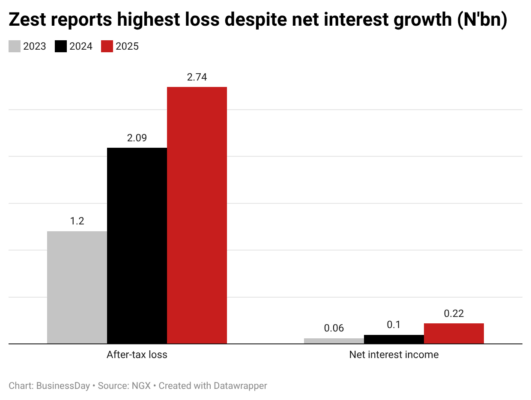
Zest, Nigeria’s Stanbic IBTC Holdings fintech subsidiary, reported a 30 percent increase in its net interest income in 2025, but rising costs continue to weigh on its bottom line.
According to the group’s full-year financial statements, Zest’s net interest income increased to N219 million in the fiscal year ended December 31, 2025, up from N95 million the previous year.
The surge in interest earnings comes as the young fintech continues to build scale following its launch in October 2023. Zest reported an after-tax loss of N2.7 billion in 2025, its highest since inception, largely driven by rising staff costs, technology investments, and operational expansion.
Read also: How Payaza and HATRICKS by Tolani Alli Redefined Lagos
Last year, Stanbic IBTC Holdings injected N4 billion into Zest to strengthen its infrastructure and expand its payments network nationwide.
The fintech operates under licenses from both the Central Bank of Nigeria (CBN) and the Nigerian Communications Commission (NCC).
The company provides a unified multi-railed payment platform that supports cards, bank transfers, USSD, and QR codes, enabling seamless transactions across a wide range of scenarios and offering sector-specific payment customization from educational institutions, oil and gas, ports, to FMCG, supplier settlements, and daily sales by micro-merchants.
Zest also empowers businesses with customizable digital storefronts and an integrated biller hub, helping merchants go online and manage transactions efficiently as well as offer lifestyle products to their customers.
Read also:Banks’ digital earnings slow as fintechs expand dominance
To support its rapid growth, Zest has entered a strategic collaboration with Huawei Cloud to deliver stable, scalable, and compliant payment services across Nigeria. The partnership is expected to enhance system resilience, improve transaction processing speed, and ensure regulatory-grade security as transaction volumes rise.
Commenting on the collaboration, Stanley Jacob, the company’s CEO, said, “With Huawei Cloud, we can deliver secure, scalable, and reliable payment services even during peak periods—while preparing the platform for future innovation. This partnership ensures that our systems meet financial-grade security and compliance standards, giving businesses and consumers confidence in every transaction.”
“The true value of this collaboration is that it allows us to innovate confidently, expand services securely, and support the broader financial sector in Nigeria. Technology is the bridge between businesses and the future of the digital economy,” Jacob added.

Join BusinessDay whatsapp Channel, to stay up to date
Open In Whatsapp


