

Nigeria’s women entrepreneurs are increasingly ready to scale their businesses, but limited access to finance, governance skills and structured support systems continues to slow the transition from small ventures to lasting enterprises.
Across Nigeria, women own roughly 40 percent to 50 percent of small businesses and operate millions of enterprises ranging from informal market stalls to growing small and medium-sized companies.
Development institutions say this high level of participation makes the country one of the most active hubs of female entrepreneurship globally. Yet many of these businesses struggle to move beyond survival stage into stable companies that can attract investors and outlive their founders.
Economists and business leaders say the problem is no longer about whether Nigerian women can build businesses. Instead, it is about whether the ecosystem like banks, training institutions and investors, is ready to support their expansion.
Read also: Women entrepreneurs urged to strengthen legal, digital structures to attract global investment
One key challenge is what experts call the “capacity gap”. While many women-led businesses generate steady revenue, fewer have the financial structures, audited accounts and governance frameworks required to attract institutional capital. That gap has become more visible as Nigeria’s private sector looks for new sources of growth in a volatile economy marked by inflation, currency swings and rising operating costs.
Studies by the International Finance Corporation estimate that women-owned small and medium enterprises in sub-Saharan Africa face a financing gap of more than $40 billion annually. Analysts say the shortfall is not only due to lending bias but also because many businesses operate informally and lack the documentation banks require.
For some entrepreneurs, access to structured training is beginning to change that dynamic.
Omoyemi Chukwurah, chief executive of Lagos-based Seams and Stitches Ltd, said enrolling in an executive education programme helped her rethink how her company handled financial oversight. During a module on entrepreneurial accounting and governance, she ordered a forensic audit of a dormant company account.
The review led to the recovery of 3.8 million naira ($2,400) that had been overlooked for years, highlighting how stronger financial systems can directly affect business performance.
Such experiences illustrate a broader trend: when entrepreneurs combine instinct built from years in Nigeria’s tough business climate with formal management training, their companies often become more attractive to investors.
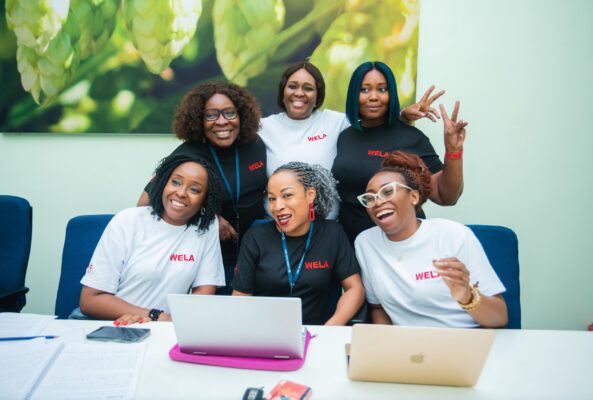
Programmes like the Women Entrepreneurship and Leadership for Africa initiative run by the China Europe International Business School are designed to address this gap. The initiative brings entrepreneurs from Nigeria and other African countries into structured training focused on financial management, governance and international trade exposure.
Gordon Kwesi Adomdza, executive director of the school’s Africa campus, said the next phase for African entrepreneurship is institutionalisation rather than mere survival.
“Women entrepreneurs across Africa have proven resilience and creativity.The next step is building enterprises that are structured, scalable and able to outlive the founders,” he said.
Business experts say this shift could have wider economic implications. Women dominate Nigeria’s informal retail and services sectors, meaning improvements in how their businesses operate could boost productivity, expand employment and increase tax revenue.
The push also comes as Africa’s trade ties with China and other global markets deepen, creating new opportunities for export-oriented small businesses, if they can meet international standards.
For policymakers and investors, the question is whether support systems can move fast enough to match the ambitions of entrepreneurs already driving large parts of the economy.
For many of Nigeria’s women business owners, the issue is clear: resilience built their companies, but stronger institutions may determine whether those companies become the next generation of African enterprises.

Join BusinessDay whatsapp Channel, to stay up to date
Open In Whatsapp


