Nigeria is moving closer to a major governance step in artificial intelligence as the federal government awaits approval from the National Assembly for its newly completed National Artificial Intelligence (AI) Strategy, Bosun Tijani, the minister of Communications, Innovation and Digital Economy, said on Wednesday in Lagos.
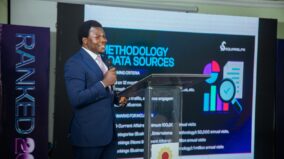
Speaking at the Crisis Management Advocacy Month 2026 flagship conference organised by CMC Connect LLP, Tijani said the country’s AI framework has moved beyond the planning stage and is now fully developed, with the final step being legislative backing.
He said the policy framework has passed through the necessary processes and could receive approval within weeks, marking an important milestone for Nigeria’s digital governance agenda.
Read also: Nigeria set to pass AI law, among first in Africa to regulate sector
“I am pleased to share that Nigeria now has a National Artificial Intelligence Strategy. It is no longer a draft, it is a fully developed strategy,” the minister said.
If approved, the strategy will place Nigeria among countries building formal rules and long-term plans for artificial intelligence as global competition in the sector intensifies. Governments worldwide are working to balance innovation with regulation as AI becomes central to economic growth, national security and public services.
Tijani also revealed that Nigeria has developed a government-backed large language model, the technology that powers modern AI systems. According to him, the model is designed to understand and communicate in local languages such as Hausa, Igbo and Yoruba, alongside English, a move aimed at ensuring that Africa’s linguistic diversity is represented in global AI systems.
He said the initiative is important to prevent the continent from being marginalised in the evolving AI ecosystem due to limited local data and language representation.
Beyond governance and innovation, the minister stressed that artificial intelligence will play a key role in how Nigeria prepares for future crises. He explained that AI tools can help governments and organisations analyse large volumes of data, detect patterns and anticipate risks before they escalate, shifting crisis response from reactive action to predictive planning.
“Crises are inevitable. What separates those who succeed is preparedness,” Tijani said.
To support the country’s digital transformation, the government is also planning to deploy about 90,000 kilometres of fibre optic infrastructure nationwide. The project is expected to strengthen connectivity, improve digital access and enable real-time data analysis needed for AI-driven services.
Tijani noted that technology alone would not guarantee success, adding that managing information effectively during periods of uncertainty will remain critical. According to him, public trust often depends on how information is communicated in times of crisis.
Yomi Badejo-Okusanya, group managing director of CMC Connect, said the nature of crises is rapidly changing, with emerging technologies such as artificial intelligence making them faster and more complex.
He warned that AI is increasingly being used to create deepfakes, manipulated content and cloned voices capable of misleading the public and distorting reality.
Read also: Nigeria joins 60 global regulators to crack down on AI-generated deepfakes
According to him, more than 60 percent of organisations have already experienced AI-driven crises, while nearly 70 percent of media institutions remain unprepared to respond effectively.
“Today, crises are faster than facts and louder than truth. The real crisis is the widening gap between how fast threats evolve and how slowly organisations respond,” he said.
As Nigeria awaits legislative approval for its AI strategy, attention is expected to shift to implementation and how quickly the country can translate policy into real impact for its digital economy and governance systems.

Join BusinessDay whatsapp Channel, to stay up to date
Open In Whatsapp