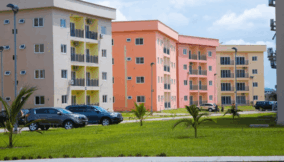
Worries are mounting among many Nigerians over the unchecked growth of the short-let apartment business and rising security breaches in gated communities, including highbrow neighbourhoods in the country’s major cities, especially Lagos.
Growing business travels and the need for security and privacy have driven up demand for short-let rentals, turning prime neighbourhoods into playgrounds accessible not only to the highest bidders, but also to criminally minded elements.
Besides mounting pressure on urban housing markets, the growth of this new form of rentals has also brought with it security breaches, as was recently recorded in Banana Island in Lagos, where transient occupants punctured its security architecture.
Banana Island is an artificial island located off the foreshore of Ikoyi, Lagos. It is shaped like a real banana and is a well-planned mixed development, including residential, commercial, and recreational buildings.
The island is known for its upscale living, luxury properties, and high density of affluent residents, making it one of the most expensive neighborhoods in Nigeria, providing homes for the very rich and influential members of Nigerian society. The buzzwords for this enclave are security and exclusivity.
The reported arrest of eight suspected criminals, alleged to be occupants of the short-let apartments in that elite community, led to the ban of such facilities, including all Airbnb-style rentals, by the management of the estate.
A resident of the exclusive estate, who spoke to BusinessDay, explained that the decision to ban the operations of the short-let apartments was aimed at protecting the estate’s residents’ security, privacy, and the peaceful coexistence in the community.
According to the resident, who said his mind was troubled and spoke on the condition of anonymity, the arrested suspected criminals were using short-term apartments as bases for robbery within the gated community.
“The management of the estate reasoned that the transient nature of short-term rentals undermines collective security and residents’ privacy,” the resident noted, stressing that the ban was a significant step towards maintaining the estate’s reputation as a secure and exclusive enclave.
Banana Island is, however, not an isolated case in terms of robbery and sundry thieving in gated communities across many locations in Lagos. A lady who introduced herself simply as Bisi, also told BusinessDay that there have been many reported security breaches in the estate she lives in Ogba area of Lagos.
“It is not long since some robbers were arrested in the estate where I live, and all of them were found out to be these short-stay tenants. They will come, rent an apartment for two-three days during which they strike and check out. And this happens in many other estates,” Bisi stated.
Hakeem Odukale is the chairman of the landlords and residents’ association in a moderate estate in the Ojo area of Lagos. He too told BusinessDay that all cases of robbery he has had to deal with in his estate are traced to short-stay tenants in one-room or two-room apartments in the estate.
“People pay so much to live in estates and gated communities because of the security, privacy and peace of mind they offer. But it is no longer so. Landlords and investors’ quest for quick money has changed all that, and it seems nowhere is safe any longer,” Odukale lamented.
Short-let apartments have become a growing phenomenon in rental markets across Nigeria, such that what began as a flexible, peer-to-peer model for travellers seeking homely accommodation has evolved into a booming commercial enterprise.
Another major negative side of this growth is a quiet transformation that is reshaping neighbourhoods as investors and property owners are now converting long-term residential homes into short-term rental properties.
In Lagos, especially in high-demand locations like Ikoyi, Lekki Phase 1, Oniru, Victoria Island and parts of Ikeja, entire blocks once dominated by long-term tenants have quietly become short-let hubs.
The reason for this trend is not far-fetched. Landlords see the numbers quite attractive, because a two-bedroom apartment, for instance, which might earn about N2.5 million yearly as a long-term rental, can generate double or even triple that amount through short stays.
During festive periods, like Detty December, a landlord can make upwards of N10 million in two to three weeks from the same-size apartment without worrying about tenant risks or property maintenance costs.
Another downside of this development is that it puts long-term tenants under intense pressure to seek new accommodation amid shrinking consumer purchasing power.
Housing development analysts note that every apartment converted for short-term rentals reduces housing stock available for working families. They also note that even though short-let business offers income opportunities for property owners and boosts tourism, “its growth has to be checked now or else it may worsen housing shortage and drive up rents.”

Join BusinessDay whatsapp Channel, to stay up to date
Open In Whatsapp