

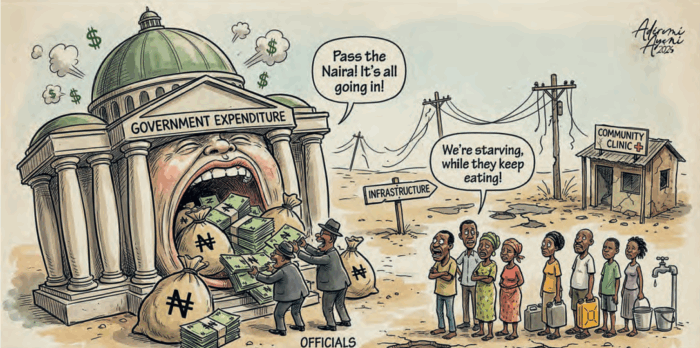
Nigeria’s democracy is at a critical stage where institutional efficiency is no longer optional, but essential. With mounting fiscal pressures, a slowing economy, and deepening public frustration over governance inefficiencies, the structure of the National Assembly has become a strategic question. The bicameral legislature, comprising the Senate and the House of Representatives, was designed to strengthen federalism and deepen legislative scrutiny. However, after nearly 25 years, evidence increasingly tilts towards a rethink. Many of the world’s most effective democracies operate unicameral systems and have demonstrated that cost efficiency, legislative speed, and strong accountability can coexist within such arrangements. For Nigeria, grappling with urgent governance and economic challenges, this debate is not only timely, but unavoidable.
In theory, two chambers provide checks and balances. In practice, Nigeria’s bicameral system has evolved into a duplicative and expensive structure, with two full sets of legislators, administrative backbones, layers of committees, and two cycles of bill consideration, harmonisation, and passage, alongside parallel streams of allowances and overhead costs. This duplication not only drives up expenditure but also slows policymaking at a time when Nigeria urgently needs pro-growth legislation, such as power sector reforms, to move more quickly. The central question, therefore, is whether the bicameral system delivers sufficient value to justify its cost.
Globally, more than half of national parliaments are unicameral, and their experiences underscore a key lesson: effectiveness depends on institutional quality, not the number of chambers. New Zealand abolished its upper house in 1950 after it became politically redundant and ineffective. Subsequently, the country strengthened its committee system, expanded public participation, and built one of the most efficient and transparent parliaments in the Commonwealth. Similarly, Denmark, Sweden, and Finland, which are among the world’s most trusted democracies, operate unicameral legislatures supported by powerful committees, advanced research units, and extensive digital transparency. Even within a federal context, Nebraska in the United States offers a compelling example. Its unicameral, non-partisan legislature is renowned for simplicity, reduced administrative costs, and clearer accountability. These cases show that Nigeria would not be breaking new ground but aligning with a proven global trend towards streamlined and accountable legislatures.
The potential gains from unicameralism are significant. First, running two chambers is inherently expensive. A single legislature would significantly reduce expenditure on personnel, administration, and logistics, freeing scarce public resources for infrastructure, healthcare, education, and social protection. Second, a dual-chamber system creates multiple negotiation points, committees, and interfaces where opaque deals can flourish; unicameral consolidation narrows these pathways, limits duplicated scrutiny and enhances transparency. Third, a unicameral legislature eliminates inter-chamber harmonisation delays, enabling quicker passage of time-sensitive priority legislation without sacrificing debate or oversight. Fourth, a single legislature concentrates responsibility, which makes it easier for citizens, civil society, and the media to track performance and demand accountability.
Critics fear that unicameralism could centralise power or weaken the representation of smaller states and ethnic nationalities. These concerns are valid, but not unmanageable. Smart institutional design can safeguard federal balance through guaranteed minimum representation for each state, strong oversight committees with minority participation, and a Parliamentary Budget Office to independently vet spending and economic bills. Similarly, digital transparency tools, including live proceedings, online voting records, and bill trackers, can further strengthen accountability, while constitutionally entrenched protections can guard against executive overreach. With these safeguards, unicameralism can enhance both efficiency and inclusiveness rather than weaken federalism.
Why is the time for reform now? Nigeria faces a tightening fiscal environment, rising unemployment, and growing public demand for leaner and more accountable governance. Every naira counts, while every delay carries economic consequences. Every inefficiency erodes public trust. Importantly, with general elections just over a year away, there is sufficient time for sober debate, consultation, and constitutional adjustment. A well-designed unicameral legislature will not solve all governance problems, but it can eliminate structural waste, streamline decision-making, and create a more agile legislative environment. It would also send a strong signal to investors, development partners, and citizens that Nigeria is serious about institutional modernisation, reducing waste and corruption, and improving efficiency.
What would be the practical structure of the proposed unicameral legislature? To ensure representativeness and accommodate Nigeria’s diversity, the geographical structure of the current House of Representatives, with minor adjustments where necessary, should form the backbone of the unicameral assembly. This approach, based on smaller and more numerous constituencies, allows for broader inclusion and more direct representation of minority groups across the country, avoiding the concentration of representation inherent in larger senatorial districts. Salaries, allowances, pensions, and staff structures can then be harmonised through legislation, producing a financially and politically viable institution aligned with current national wage realities and benchmarked against international best practices.
The choice is not simply between one chamber or two, but between institutional weight and legislative efficiency. Around the world, unicameral systems have shown that strong scrutiny, faster lawmaking, and lower costs can coexist. Unicameralism is not a silver bullet, but when combined with transparency, robust committee systems, and constitutional safeguards, it offers Nigeria a credible path towards a more transparent, responsive, and accountable democracy. A leaner National Assembly may well be the structural reform that positions Nigeria for its next phase of democratic and economic development.

Join BusinessDay whatsapp Channel, to stay up to date
Open In Whatsapp


