


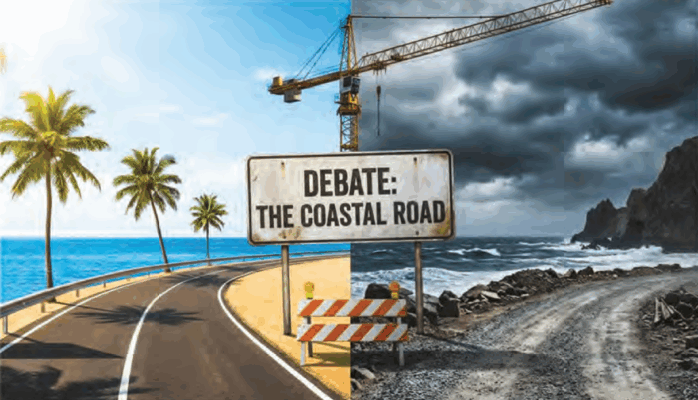
One of the burdens of a deeply entrenched narrative of corruption in Nigerian politics and governance, now deeply woven into everyday rhetoric, is the learned, pathologising self-image it produces among the public. Nigerians, increasingly conditioned to see themselves, their leaders, and their institutions through a lens of dysfunction, find it difficult to unite around critical national questions. And yet, divided by sharp group identities and entrenched biases, this remarkably diverse population displays an almost effortless unity around one tragic consensus: that the Nigerian state and everything it produces, is inherently contemptible.
So deeply sedimented into the fabric of national thinking, and reinforced by a widespread failure to interrogate facts, this narrative traps even those who suffer from its distortions. They become unwittingly complicit in a pervasive instinct for national fault-finding and condemnation. It is against this synchronised public bias that the Lagos–Calabar Coastal Highway Project has, so far, been poorly examined, leaving several questions unanswered about the merit or otherwise of this enormous project.
Ranking as one of the largest infrastructure undertakings in Nigeria’s history, the Lagos – Calabar Coastal Road is an ambitious 700-kilometre highway project designed to link Lagos to Calabar by running through eight coastal states of Ogun, Ondo, Edo, Delta, Bayelsa, Rivers, and Akwa Ibom, with the end in Cross River. Envisioned as a multi-modal transport corridor, with provisions for integrated rail lines in some sections, the project aims to improve connectivity along Nigeria’s southern coast, boost trade, reduce travel times, and stimulate economic growth for more than 30 million Nigerians. Backed by a mix of government funding, syndicated international loans, and public private partnership (PPP) arrangements, the project has been promoted as a game-changer for regional integration and job creation.
Despite its portrayal as a bold development vision, the project has generated considerable tension, ranging from concerns about transparency, environmental risks, and property demolitions to debates over its cost, prioritisation, and long-term economic viability. Central to the political controversy is that, from the outset, the project did not pass through the statutory appropriation process of the National Assembly and failed to comply with the public tendering, concessioning, and procurement procedures mandated by Nigeria’s regulatory framework. This departure from legal and institutional norms outlined in the Public Procurement Act and relevant infrastructure concessioning guidelines, has heightened anxieties about transparency, accountability, value for money, and even the legality of the contract award, deepening public unease for the project.
Still, a sober and genuinely national conversation about the Lagos–Calabar Coastal Highway must rise above reflexive outrage or blind endorsement. If Nigeria is ever to outgrow the dead narratives that have constrained our national imagination, we must learn to interrogate large infrastructure interventions with more rigour and less pessimism.
The tall boast by one commentator that the project has the potential to add 45 billion dollars to the country’s GDP, further buttresses the importance of a rigorous clear-eyed analysis. Such a bold GDP projection must be interrogated against actual trade volumes, freight economics, tourism market depth, and long-term maintenance liabilities. Beyond the politics, the project raises profound socio-economic, environmental, and fiscal questions that deserve a thoughtful, depoliticised analysis.
At full scale, the highway has the potential to dramatically reshape mobility and unlock significant economic value along Nigeria’s southern corridor. Construction alone could stimulate demand in steel, cement, quarrying, and logistics, with spillover effects for small businesses across the eight coastal states. Government claims also promise the project will create over 10,000 direct and indirect jobs, although the real impact depends on the quality, duration, and geographical distribution of those jobs. Complementing this, if properly implemented, the highway could open a vibrant tourism economy and emerging new markets for agriculture, fisheries, real estate, hospitality, and urban development, along Nigeria’s largely underdeveloped coastline
Connectivity remains the clearest strengths of the project. For residents, businesses, farmers, port operators, and manufacturers, the highway could significantly reduce travel times between Lagos and the eastern coastal states. Improved haulage capacity could reduce pressure on the Lagos metropolitan road network, especially if the rail line planned for the median of the highway is fully implemented. A functional freight corridor could be transformative for the Lekki Industrial Axis, the Dangote Refinery, and the Lekki Deep Seaport, potentially redirecting long-haul cargo movements away from the already overloaded Apapa and Surulere arteries.
But these socio-economic opportunities sit alongside serious environmental, community and fiscal challenges, which cannot be simply glossed over. The Nigerian coastline is geologically fragile, increasingly vulnerable to coastal erosion, sea-level rise, flooding, and saltwater intrusion. Large concrete infrastructure — if improperly sited or poorly maintained — can accelerate shoreline degradation, destabilise coastal communities, and trigger habitat loss in mangrove, estuarine, and aquatic ecosystems. Extensive land acquisition tied to the project, also risks displacing long-standing communities and eroding fragile livelihoods built around fishing, informal commerce, and subsistence activities. Regrettably, social impact assessments designed to mitigate are not helped by Nigeria’s checkered history with environmental compliance.
Another critical question, which goes beyond the much narrower “cost per kilometre” is whether this project can pay for itself — either through direct revenue mechanisms like tolls, concessions, freight charges, and tourism gains. Without these, the financial burden may fall heavily on public debt, raising concerns about Nigeria’s debt-to-revenue ratio already one of the highest globally.
The task of renewing a national narrative that dispels the Nigerian state and its leaders as irrevocably corrupt is certainly not helped when large-scale government initiatives appear to sidestep due process, deepening citizen mistrust. Nigeria’s democratic institutions, especially the National Assembly, must insist on transparent procurement, environmental compliance, and proper fiscal oversight. Citizens must insist on facts rather than instinctive condemnation. And the government must demonstrate that bold visions can coexist with adherence to the rule of law. Only then can Nigeria begin to break free from the dead narratives that have for too long been the norm.

Join BusinessDay whatsapp Channel, to stay up to date
Open In Whatsapp


