

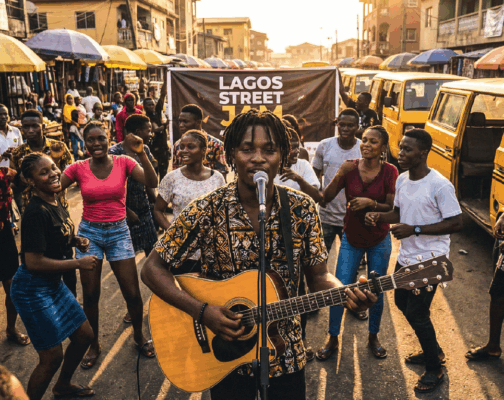
Music has always been one of society’s most honest mirrors, reflecting its aspirations, contradictions, values, and tensions. In Nigeria, it has historically served as a tool for storytelling, cultural preservation, political commentary, and the projection of local identity into the world. However, the rapid transformation of Nigeria’s musical landscape raises a serious concern about its influence and what values are now being amplified to younger generations in the age of digital exposure and algorithmic influence.
Historically, Nigerian music was a force for cultural pride, political critique, and nationalism. Icons like Fela Anikulapo-Kuti, Tony Allen, King Sunny Ade, and Majek Fashek used their art to shape social consciousness, influence national discourse, and celebrate local identity. Their work shows how music can elevate collective awareness while grounding youth in cultural values.
Over the years, Nigeria’s music industry has grown into a globally recognised powerhouse valued at more than $2 billion, according to PwC’s Entertainment and Media Outlook. But as its influence expands, its lyrical content has increasingly shifted – majorly due to Western influence – towards themes of substance use, nudity, hypersexuality, transactional relationships, cybercrime symbolism, and the commodification of the body. This pattern is not unique to Nigeria, but its impact is sharper here because nearly 70 percent of the population is under 30. For many young Nigerians, music, social media, and celebrity culture now function as primary teachers of identity and aspiration, often displacing traditional sources of guidance.
Studies by the American Psychological Association and UNESCO has shown that repeated exposure to explicit audio-visual content can desensitise youth to harmful behaviour, reduce critical reflection, encourage premature sexualisation and promote mimicry of celebrity-driven identities. In Nigeria this is visible in viral trends tied to songs such as “Soapy”, a track by Naira Marley, whose title and choreography simply means “masturbation” and Ayra Starr’s “Hot Body,” which has inspired competitions among teenage girls, leading to increasingly sensual video uploads in a bid to showcase the “hottest body. These examples show how unfiltered digital circulation amplifies explicit content among impressionable audiences with little counterbalance.
The question that naturally emerges is whether regulation would undermine creativity or infringe on freedom. However, the experience of other countries shows it is possible to manage cultural influence without drifting into censorship. The goal is not to police artistic imagination but to guide distribution, encourage responsibility, and ensure vulnerable audiences are not exposed to adult material. Countries like South Korea and the United Kingdom classify music videos by age, while the United States uses advisory labels. Such regulation protects minors without dictating art, and Nigeria needs a similar approach.
More importantly, evidence shows that incentives work far better than bans. Instead of punishing artists for explicit content, Nigeria can promote alternative narratives by rewarding musicians who create culturally grounded, socially responsible, or educationally enriching content. Award categories, tax credits, and national music development funds can reposition positive content as commercially viable. This approach does not limit freedom; it expands the space for values-driven creativity. The government, through the Ministry of Information and Culture and the National Council for Arts and Culture, can champion such programmes without interfering with artistic autonomy.
Digital platforms must also share responsibility. In the age of TikTok, Instagram, YouTube, and audiomack, algorithms – not parents – shape what young people see or hear. Content-rating systems, age gates, and responsible promotion guidelines can be implemented without restricting access for adults. A collaborative approach involving government regulators, music streaming services, and telecommunications companies can significantly reduce the exposure of minors to explicit content while preserving free choice for older audiences.
However, regulation alone cannot resolve the cultural drift. Nigeria suffers from a collapse of alternative cultural ecosystems that historically provided balance: children’s music programmes, folk-music recording initiatives, school music clubs, cultural education centres, and properly funded public broadcasting. When positive cultural content is not promoted, young people naturally gravitate toward what is most visible, most glamorous, or most algorithmically rewarded. The challenge, therefore, is not the existence of explicit music but the absence of strong, appealing alternatives.
The music industry itself must embrace a broader sense of responsibility. Producers, record labels, promoters, distributors, journalists, and influencers shape public taste as much as artists do. Their choices – what they amplify, what they ignore, what they promote for virality – have long-term social consequences. A more intentional approach to cultural representation is not an attack on freedom but an investment in the moral and psychological wellbeing of Nigeria’s youth.
The debate over musical transformation in Nigeria is ultimately about nation-building. Music as a powerful export, shapes the nation’s imagination. If dominant themes normalise self-destruction, transactional relationships, and materialism, they become reflective in societal values. Yet music can also uplift, inspire, and unify, promoting dignity, pride, social responsibility, and emotional intelligence. It can help build a generation that is grounded, creative, resilient, culturally rooted, and globally competitive.
The solution is not censorship but responsibility. It is not banning creativity but guiding cultural ecosystems and not returning to the past but shaping a future grounded in values that strengthen the Nigerian soul. Nigeria must reinvest in music as a strategic cultural asset, one that shapes identity, amplifies positive values, and empowers a generation deserving more than what algorithm-driven content currently offers.

Join BusinessDay whatsapp Channel, to stay up to date
Open In Whatsapp


