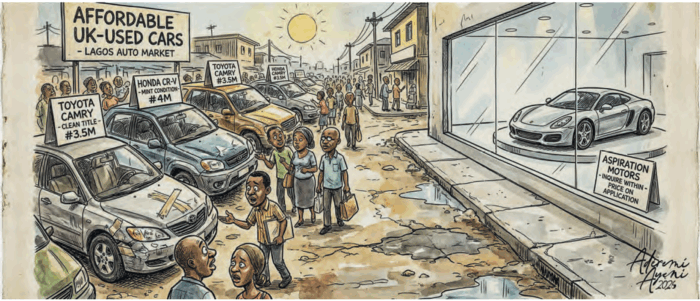
The weak purchasing power of Nigerians has become one of the clearest indicators of a deeper economic dysfunction. When a country of over 200 million people, rich in labour and natural resources, cannot sustain mass access to durable household goods, or quality clothing, edible food, and brand-new cars, the problem is not taste or thrift, but structure. Even affluent Nigerians overwhelmingly prefer “UK-used” vehicles and second-hand imports, not out of cultural inclination, but because new goods are priced far beyond what incomes and the curren