Nigeria is scrapping its long-criticised Excess Dividend Tax (EDT) as part of sweeping reforms to clean up its corporate tax regime, a move welcomed by businesses and tax experts as positive for investment and transparency.
The controversial EDT had effectively penalised companies by levying an additional 30 percent tax on profits that had already been taxed or were exempt, simply because those profits were paid out as dividends. The policy discouraged reinvestment, profit repatriation, and the establishment of holding structures within Nigeria.
By removing this punitive tax, authorities aim to encourage companies to retain capital within Nigeria and to foster a more attractive environment for both domestic and international investors. “The removal of Excess Dividend Tax eliminates a disincentive to reinvestment and signals a clear shift toward transparency and global best practices,” said Christopher Akinbobola, a tax consultant.
However, while the reforms offer relief from ad hoc levies like the EDT, Nigeria is simultaneously closing the door on its past reputation as a haven for aggressive tax planning by multinationals.
Read also: Nigeria’s tax overhaul: Charting a course between progress and peril
From January 2026, a raft of new measures will ensure corporations pay a fairer share, aligning Nigeria with global tax standards and boosting chronically weak tax receipts.
Nigeria embraces global minimum tax
At the heart of the reforms is Nigeria’s adoption of the 15 percent Global Minimum Tax (GMT) under the OECD’s Pillar Two initiative, which applies to multinational groups with revenues above €750 million. The new rules require Nigerian companies with foreign subsidiaries in lower-tax jurisdictions to “top up” taxes to meet the minimum threshold at home.
For example, if a Nigerian company’s subsidiary in Ghana pays only 10 percent corporate tax, Nigeria will claim the remaining 5 percent to reach the 15 percent minimum effective tax rate (ETR). “It’s a clear message that profits cannot simply be shifted abroad to avoid domestic tax obligations,” Akinbobola said.
Controlled foreign company rules clamp down on offshore profits
Complementing the GMT is Nigeria’s strengthened Controlled Foreign Company (CFC) regime. Previously, profits retained abroad escaped Nigerian tax as long as they weren’t repatriated. The new rules empower Nigeria’s tax authority to assess and tax those profits if the foreign entity is deemed capable of paying dividends to its Nigerian parent without impairing its business.
The change eliminates a popular avenue for Nigerian firms to warehouse profits in low-tax jurisdictions and is expected to increase tax revenues by bringing previously untaxed income within Nigeria’s reach.
No more splitting contracts to evade tax
Foreign multinationals operating in Nigeria will also face tighter rules on how they structure contracts. The new ‘Force of Attraction’ principle allows Nigeria to tax profits on contracts tied to the country, even if parts of the work occur outside Nigeria or through related entities.
Previously, companies could limit tax exposure by separating contracts between Nigerian and foreign firms. Now, any economic activity connected to Nigeria can be taxed together, curbing avoidance strategies common in engineering, consulting, and oil services.
Minimum tax for non-resident companies
Additionally, non-resident companies with Nigerian operations will no longer be able to minimise taxes through inflated expenses. New provisions impose a minimum tax of either four percent of Nigerian-source income or the applicable withholding tax rate, whichever is higher.
For example, a foreign firm earning N100 million from Nigerian contracts cannot pay less than N4 million in tax, regardless of deductions. This ensures minimum contributions from companies that might otherwise exploit aggressive accounting to shrink taxable profits.
Free zones no longer blanket exemptions
Companies operating in Nigeria’s Free Zones are also being brought under tighter scrutiny. While tax exemptions remain for exports, any Free Zone entity selling more than 25 percent of its output into Nigeria’s domestic market will face taxation on those earnings. By January 2028, all domestic sales from Free Zone companies will be fully taxable.
This move aims to address longstanding concerns from local manufacturers about unfair competition from Free Zone firms enjoying exemptions while serving Nigeria’s domestic market. The reforms effectively align Free Zone operations more closely with their original purpose of export promotion.
Ending Nigeria’s era as a tax haven
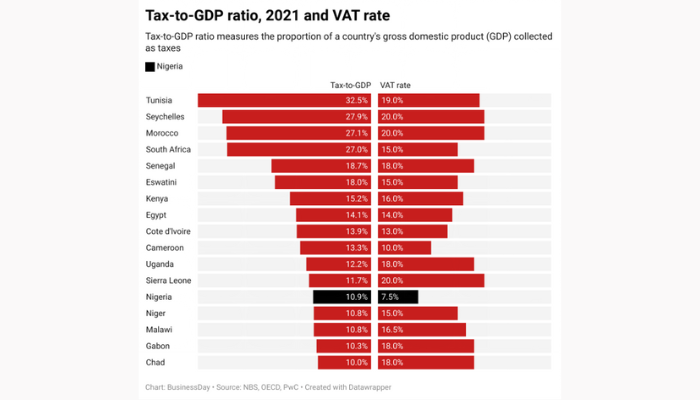
Nigeria’s reforms mark the end of its loose tax regime that previously allowed multinationals to exploit gaps and loopholes to minimise liabilities. Transfer pricing abuses, tax holidays through Free Zones, and the absence of minimum effective tax rules had contributed to Nigeria’s historically low tax-to-GDP ratio of 10.86 percent in 2023, well below Africa’s average.
“These reforms are designed to expand the tax base and reduce the incentive for profit shifting,” Akinbobola said. “Multinationals will face greater compliance demands and will need to revisit structures that rely on tax havens or preferential regimes.”
Pressure on multinationals to reassess strategies
The new measures come with heightened compliance costs and potential double-taxation risks where dispute resolution is weak. Companies will need to strengthen tax governance, ensure foreign operations have genuine economic substance, and carefully manage exposure to permanent establishment rules.
“Many will need to reassess their value chains to align profits with real value creation,” Akinbobola said. “Tax treaties will become critical tools for managing cross-border tax risks, and robust internal controls will be essential.”
Read also: Free Trade Zones face 2028 deadline as Nigeria overhauls tax rules
Building a more predictable tax environment
The Nigerian government sees these changes as essential for modernising the tax system, improving fiscal sustainability, and providing a transparent framework that appeals to serious investors. “It’s about creating a level playing field,” said a government official.
The removal of arbitrary levies like the EDT, coupled with globally recognised standards on minimum taxation and transparency, positions Nigeria as less of a tax haven and more of a rules-based economy seeking to boost revenues without deterring legitimate business.
With oil revenues waning and debt levels rising, Nigeria is betting that these reforms will enhance compliance, widen the tax net, and strengthen public finances, while signaling to the world that its days as a soft touch for tax arbitrage are over.

Join BusinessDay whatsapp Channel, to stay up to date
Open In Whatsapp