


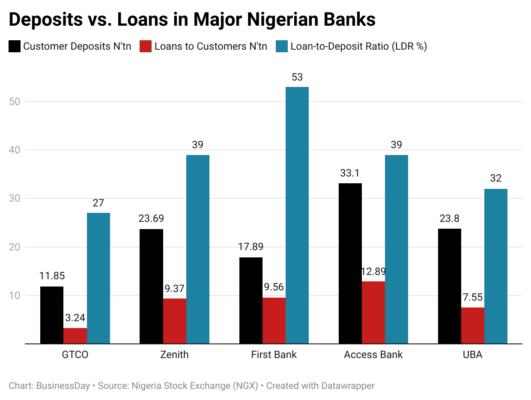
When Nigerians queue at bank counters or tap “transfer” on their phones, they believe their deposits fuel the economy, funding small businesses, mortgages, and manufacturing.
But a deep look into the 2025 third-quarter financial statements of the country’s biggest lenders reveals a different reality: only a fraction of customers’ deposits is used to finance the real economy.
The rest is tied up in government securities, pledged assets, or parked as liquidity buffers, the quiet machinery that keeps banks profitable but leaves businesses st


