Nigerian commercial banks have raised their maximum lending rates to manufacturers over the past five years, sparking negative ripple effects across production, pricing, employment, and overall economic activity.
Data obtained by BusinessDay from the Central Bank of Nigeria (CBN) reveal that 10 banks collectively increased their maximum borrowing costs to manufacturers by a staggering 98 percentage points between February 2021 and February 2025. The trend reflects a broader tightening in credit conditions faced by the manufacturing sector, which is already under pressure from multiple structural and macroeconomic headwinds.
The maximum lending rate refers to the highest interest rate that lenders, including banks, microfinance institutions and credit providers, can charge borrowers.
As of February 21, 2025, the data show that Access Bank charged manufacturers 33 percent annually to access loans, representing a 4.5 percentage point rise from the 28.5 percent charged on February 19, 2021.
Read also: MAN laments 35% lending rates, says it will stoke prices, discourage investment
At First Bank of Nigeria, the lending rate to manufacturers surged by 12 percentage points to reach 36 percent, up from 24 percent in 2021. GTBank followed a similar trend, increasing its borrowing costs to the sector to 29 percent in 2025, from 23 percent in 2021, a difference of six percentage points.
The United Bank for Africa (UBA) raised its rates by eight percentage points from 24 percent in 2021 to 32 percent in February this year. Zenith Bank charged 38.5 percent on loans to manufacturers as of February 21, 2025, up by 8.5 percentage points from the 30 percent charged four years ago.
Sterling Bank’s lending rates also moved upward from 30 percent in 2021 to 37 percent by February 21, 2025, indicating a seven percentage point increase. Ecobank increased its interest rate on manufacturers’ loans from 25 percent to 35 percent within the same period, a hike of 10 percentage points. Fidelity Bank’s rate remained static at 36 percent over the five-year span.
Rand Merchant Bank recorded one of the steepest hikes, with borrowing costs surging by 27 percentage points to 44.5 percent from 17.5 percent. FCMB also significantly raised its rates from 30 percent in February 2021 to 45 percent in February 2025, an increase of 15 percentage points, according to the CBN data.
In a remarkable case this year alone, Stanbic IBTC charged manufacturers a maximum lending rate of 48 percent as of February 21, 2025, while offering a prime lending rate of just 1 percent. Prime lending typically refers to the rate offered by commercial banks to their most creditworthy and low-risk customers, often large corporations with strong credit histories.
FSDH Merchant Bank Limited, on the other hand, provided loans to manufacturers at a prime rate of nine percent and a maximum lending rate of 33 percent as of the same date, the CBN’s data show.
Other banks’ rates
Other banks also reflected similar upward trends in their rates to manufacturers. FBN Quest Merchant Bank raised its rates from 18 percent in 2021 to 33 percent in 2025. Globus Bank moved from 18 percent to 35 percent over the same period, while Keystone Bank raised its lending rate from 34 percent to 36 percent.
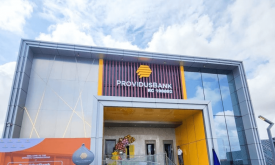
Nova Merchant Bank’s rate increased from 20 percent in 2021 to 29 percent in 2025. Polaris Bank adjusted its rates from 31 percent to 36 percent, with Providus Bank raising its rates from 30 percent to 35 percent.
Standard Chartered Bank moved from 25 percent to 30 percent. SunTrust Bank recorded one of the steepest hikes from 18 percent in 2021 to 36 percent in 2025.
TitanTrust Bank, which charged 20 percent in 2021, lent to manufacturers at 32 percent as of February 21, 2025. Union Bank raised its rate from 30.5 percent in 2021 to 35 percent in 2025. Unity Bank posted one of the highest increases, with its rate moving from 25 percent to 40 percent. Wema Bank’s lending cost rose from 29 percent in 2021 to 33.5 percent in February 2025, according to the CBN data.
Effects of rising lending rate
Muda Yusuf, CEO of the Centre for the Promotion of Private Enterprise (CPPE), said the rising cost of funds is taking a severe toll on the operations of manufacturing firms, especially in terms of their financing expenses. “If you look at the financial statements of many manufacturers,” Yusuf explained, “you will see a sharp rise in their financing costs. This is affecting their margins negatively, which is not good for the manufacturing sector.” According to him, the surge in credit costs directly increases operational expenses and weakens the competitiveness of firms.
Read also: MAN urges CBN to resolve unsettled FX forward, stop banks from harassing manufacturers
This explains why manufacturers continue to appeal to the CBN to lower interest rates, Yusuf further said.
He added that the challenges extend beyond high borrowing costs. “The exchange rate has stabilised somewhat but remains high, and then you have logistics problems, erratic power supply, and very high energy costs,” he said.
These issues, coupled with declining consumer purchasing power, have created a highly strained operating environment.
“From the cost of logistics to the exchange rate and energy costs, all these factors are making it very difficult for manufacturers to survive,” Yusuf said. He reiterated that an interest rate cut by the CBN would offer relief to the sector, helping to ease the heavy burden of financing.
Segun Ajayi-Kadir, director general of the Manufacturers Association of Nigeria (MAN), voiced similar concerns. In a statement released on May 20, he said, “We are perturbed that when most progressive economies are charting a course toward industrial recovery and macroeconomic stability, Nigeria’s monetary stance tends to lead us in a different direction.”
In line with its commitment to transparency, the CBN has mandated that lending rates from all Deposit Money Banks (DMBs) be made public to help businesses make informed borrowing decisions.

Join BusinessDay whatsapp Channel, to stay up to date
Open In Whatsapp