The purpose of this article, a follow-up to last week’s article titled, “Nigeria and the global LNG surge 2026-2030,” is to exhort Nigerian private investors to rise up to the challenge of investing in the Nigerian liquefied national gas (LNG) sector for export. Two key domestic investors have already broken the barrier of massive investment in the oil and gas sector. They are Aliko Dangote, with his behemoth – the highly celebrated $20 billion Dangote Petroleum Refinery and Petrochemicals, a subsidiary of Dangote Industries Ltd.; and Julius Rone, CEO of UTM Offshore Limited, promoter of the $5 billion and Nigeria’s first floating liquefied natural gas plant (FLNG), the construction of which is set to begin in 2026. Leading Nigerian indigenous oil and gas companies like Seplat, Oando, Aradel and Heirs Energies have made tremendous strides in the last decade and are now leading oil and gas companies on the African continent. These indigenous Nigerian companies and investors in the Nigerian oil and gas sector and others like them provide the nucleus of burgeoning investors with potential for massive investment in natural gas liquefaction in Nigeria for export, in collaboration with key international players in the global LNG market like TotalEnergies.
Nigeria currently has 210.54 trillion cubic feet (tcf) of proven gas reserves, which ranks as the ninth largest proven gas reserves globally, with only 1%-1.5% of it developed, making it one of the least developed gas sectors in the world. This is primarily because the development of the Nigerian gas sector has historically been under the dominant purview of the government largely through the Nigerian National Petroleum Company (NNPC). Thus over the years the development of the gas sector has been hampered by politicisation and lack of strategic focus which has resulted in slow development of new gas projects, particularly LNG projects due to indecisiveness, midstream abandonment of projects and poor investment climate, among others. Complex technical requirements, huge financial outlay and the sales contracting requirements combined to put LNG ventures out of the reach of public and private investors in frontier and emerging markets like Nigeria without enormous foreign direct investment (FDI) by leading international oil companies (IOCs). The situation has been compounded by the lack of technical and financial wherewithal by indigenous investors. That however is gradually changing.
The United States has about a quarter of the proven natural gas reserves of Russia, the country with the largest proven natural gas reserves in the world (1,300-1,700 tcf), but the United States is the dominant player in the LNG market globally. It alone accounted for 80 billion cubic meter per year (bcm/year) capacity of the final investment decisions (FIDs) made in 2025 out of 90 bcm/year globally. This is primarily because of the high level of technical expertise and enormous financial strength of the American economy, which is unrivalled globally. Key investors and developers in the American LNG industry include Cheniere Energy, the largest producer and key investor in the Sabine Pass and Corpus Christi LNG plants; TotalEnergies, major exporter involved in the Cameron LNG and the Rio Grande LNG projects; ExxonMobil and QatarEnergy, joint investors in the Golden Pass LNG project; Venture Global LNG, a major developer in a number of LNG projects including the Plaguemines LNG; and ConnocoPhillips, which is heavily involved in upstream gas development with equity interests in Port Arthur LNG. A number of equity firms are also involved in financing American LNG projects, including PIMCO, Brookfield, KKR, Blackstone, York Capital Management and GIP. This is a bird eye’s view of the constellation of technical, financial and market interests that together make up the United States LNG ecosystem or industry. The key lessons to learn from the Nigerian point of view are first, the need to develop or deepen the engineering and technical skills of indigenous operators in the Nigerian gas sector. This can best be achieved through public-private-partnerships between the Nigerian Content Development and Monitoring Board (NCDMB), the Petroleum Technology Development Fund (PTDF), local global best practice oil and gas training organisations and indigenous oil and gas companies for rapid acquisition of liquefied natural gas (LNG) development skills. Second, there is the need for leading indigenous oil and gas companies to work collaboratively with NNPC and foreign technical partners and international oil companies to rapidly expand Nigeria’s liquefaction capacity (ability to liquefy and bottle natural gas for export through establishing LNG plants). Third is the need to develop innovative project financing models involving a wider reach of financiers and investors from across the globe including oil and gas investors from Gulf nations who currently have huge portfolios of LNG investment in the United States. Nigerian equity firms will have a major role to play in collaboration with other global equity firms; and regional equity firms and pension funds, especially from South Africa, in financing gas development infrastructure, including gas pipelines from upstream to downstream for delivery of gas to LNG plants.
There is also a huge role for Nigerian financial institutions. With their hugely expanded capital base, tier-1 banks in Nigeria can now join to syndicate chunks of infrastructure requirements for development of LNG plants in Nigeria. The huge role Afriexim Bank is playing in providing financing facilities of $5 billion for the UTM Offshore FLNG in Nigeria is worthy of commendation. It shows there are significant roles African and Middle East development finance institutions (DFIs) can play in the development of the African gas sector.
In the next five years (2026-2030) Nigerian oil and gas companies and investors in the oil and gas sector, with particular emphasis on gas, should work with an extensive network of stakeholders and strategic partners cutting across the private and public sectors and international business, technical and financial partners and service providers to structure deals that will deliver a number of FLNGs and LNG plants in Nigeria. This should include whatever plan NNPC has in mind for LNG projects in the next five to ten years; and should include the revival of the abandoned Brass LNG and the Olokola LNG projects or the development of entirely new ones in their place.
Nigeria can draw inspiration from Qatar, the 3.2 million population Gulf state which holds the third largest proven reserves of natural gas deposits in the world and is also among the top three exporters of LNG along with the United States and Australia. Qatar also ranks among the top 5 or 6 producers of dry natural gas globally and produces over 77 million tons of LNG annually.
The Federal Government of Nigeria should develop a robust investor friendly business environment for investment in rapid development of LNG and FLNG plants in Nigeria, with the goal of increasing Nigeria’s LNG export capacity from 30 million tonnes per annum (mtpa) in 2026 to 50 mtpa by 2030 and 80 mtpa by 2035. It should be a private sector driven LNG plants/infrastructure development strategy, unlike the current system which depends entirely on NNPC’s LNG project development initiative. NNPC should continue to have a role to play, but the process and climate should be largely private sector driven. Aliko Dangote and Julius Rone have demonstrated that an ambitious project development vision with diligent execution has the capacity to overcome technical and financial obstacles.
Nigeria has the potential to double and triple its LNG export in the next five to ten years if all hands are on deck.
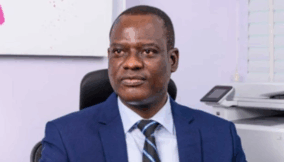
• Mr. Igbinoba is Team Lead/CEO at ProServe Options Consulting, Lagos

Join BusinessDay whatsapp Channel, to stay up to date
Open In Whatsapp