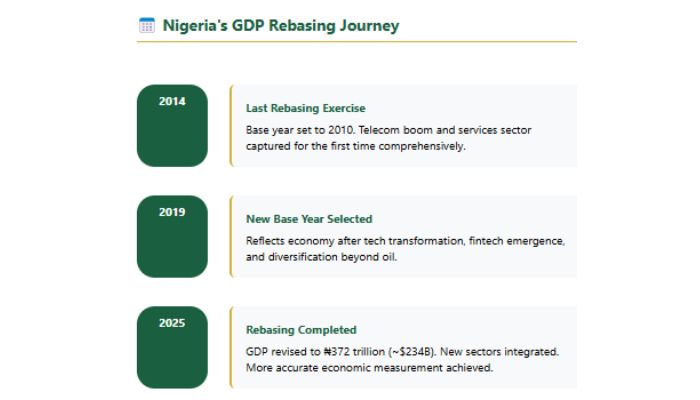
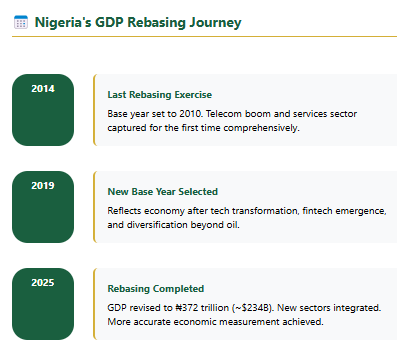
Earlier this year, Nigeria quietly carried out one of the most important economic exercises in over a decade: the rebasing of its Gross Domestic Product (GDP). On the surface, it may appear to be a technical statistical update, the kind that excites economists but leaves most people unmoved. In reality, GDP rebasing is far more consequential. It is a recalibration of how Nigeria sees itself economically and how the rest of the world understands the country’s true productive capacity. The last time Nigeria undertook this exercise was in 2014, using 2010 as the reference year. Since then, the economy has changed dramatically. Entirely new sectors have emerged, consumption patterns have shifted, and technology has reshaped how value is created. Updating the base year to 2019 was therefore not just overdue, it was necessary. A helpful way to think about GDP rebasing, as discussed recently on the Entrepreneurship Policy Pod by the Faith Institute of Faith Foundation, is to imagine updating a family photograph taken many years ago. The child in that old picture is now an adult. New members have joined the family. If the photograph is not refreshed, it no longer tells the true story. Nigeria’s economy has undergone a similar transformation, and rebasing allows that evolution to finally be reflected in the data.
Read also: Adequate funding can help recover 3% of GDP lost to malnutrition- Expert
A Clearer and More Accurate Economic Picture
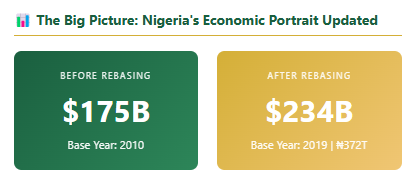
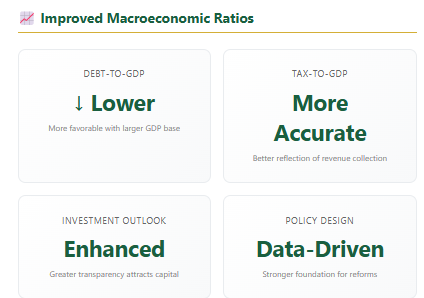
At its core, GDP rebasing updates the reference year used to calculate the size and structure of an economy so that it better reflects current realities. In Nigeria’s case, shifting the base year from 2010 to 2019 allowed economic activities that were either invisible or under-measured a decade ago to be properly captured. The impact has been significant. Nigeria’s nominal GDP is now estimated at about ₦372 trillion, roughly $234 billion, compared to the pre-rebasing estimate of around $175 billion. This increase does not mean Nigerians suddenly became richer overnight. Rather, it means the economy is now being measured more accurately, with greater recognition of structural changes and sectoral diversification. As Wale Adelana, Partner at KPMG Nigeria, explained during the podcast discussion, rebasing serves several important purposes. It reflects the true and dynamic structure of the economy as it exists today. It allows for more accurate macroeconomic ratios, such as debt-to-GDP and tax-to-GDP, which are critical for policy and investor confidence. Perhaps most importantly, it provides a stronger empirical foundation for designing targeted policies that support business growth.
What Changed in the Measurement
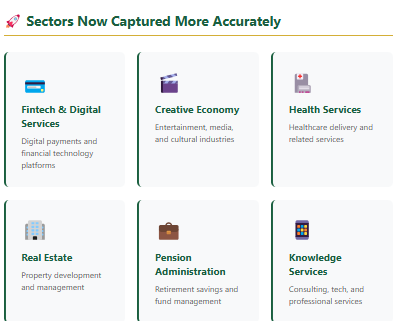
Beyond updating the base year, the rebasing process expanded sector coverage and aligned Nigeria’s national accounts with international standards. The National Bureau of Statistics incorporated additional industries, updated classification systems, and relied on broader datasets, including business surveys and household consumption data. This process brought high-growth sectors into clearer focus. Fintech, digital services, the creative economy, health-related services, pension administration, and real estate now feature more prominently in the national accounts. These are sectors that barely registered in earlier GDP calculations but now play a meaningful role in economic activity and employment.
Read also: Agric sector contributes 51.29% to Cross River GDP, others trail
That said, rebasing is not a perfect exercise. Significant gaps remain, particularly around the informal economy. Everyday economic activities such as roadside vehicle repairs, informal logistics, petty trade, and small-scale artisanal work continue to be difficult to capture comprehensively. These activities employ millions of Nigerians and contribute meaningfully to livelihoods, yet they remain largely outside formal measurement frameworks. While progress has been made compared to previous rebasing exercises, continued methodological improvements are essential.
Why GDP Rebasing Matters for MSMEs
For micro, small, and medium enterprises, GDP rebasing is not an abstract statistical event. It sends an important signal about where the economy is heading and where opportunities are emerging. The updated data provides clearer insight into which sectors are expanding and where demand is growing. Digital platforms, fintech-enabled payments, real estate services, creative industries, and knowledge-based services now stand out more clearly as areas of opportunity. For MSMEs, this helps guide strategic decisions around product offerings, market entry, and business expansion.
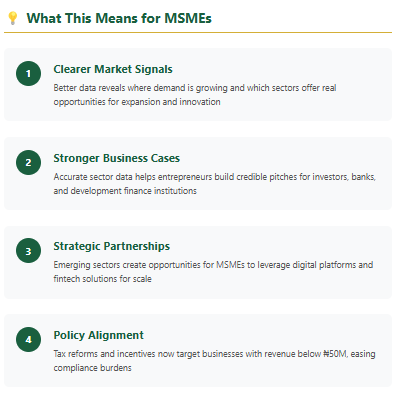
Better data also strengthens business decision-making. With a clearer picture of market size and sector performance, entrepreneurs can build stronger business cases when engaging investors, banks, venture capital firms, and development finance institutions. Accurate data improves credibility and reduces uncertainty, both of which are critical for accessing finance. Rebasing also highlights the growing importance of partnerships and strategic alliances. As new sectors gain prominence, collaboration becomes essential. MSMEs that leverage digital platforms, align with fintech solutions, or partner across value chains are better positioned to scale efficiently in an increasingly interconnected economy.
Read also: Nigeria targets 18% tax-to-GDP ratio through legal, digital restructuring
From Statistics to Policy Action
A larger GDP figure on its own does not reduce poverty or create jobs. GDP measures output, not wellbeing. Translating improved measurement into better living standards requires deliberate and well-targeted policy choices. There are encouraging signs that policymakers are paying attention to what the new data reveals. Ongoing tax reforms, including proposed exemptions for businesses with annual revenues below ₦50 million and reductions in corporate income tax rates, signal a shift towards easing the burden on small businesses. Development finance institutions are also increasingly directing funds toward infrastructure, logistics, real estate, and other sectors highlighted by the rebased data. Importantly, the updated GDP figures also show consumption and spending patterns more clearly. For MSMEs, understanding where households and businesses are spending their money creates opportunities to design products and services that better meet real needs.
What the New Numbers Signal to Investors
For investors, Nigeria’s rebased GDP sends a message of greater transparency and improved economic credibility. It reinforces the view that the country is moving away from a narrow, oil-dependent narrative towards a more diversified, services-driven economy. There are parallels with the early 2000s, when major reforms in telecommunications, pensions, and power helped drive average growth of over 8 percent between 2000 and 2010. Today, reforms in energy, finance, taxation, and digital infrastructure suggest the potential for another growth cycle, albeit under more complex global conditions.
A Moment to Engage, Not Exit For MSMEs and entrepreneurs, the message is clear. This is not the time to retreat. It is a moment to reassess, reposition, and engage more strategically with the evolving economy. Updated data should be used to refine business models, align with emerging sectors, and track policy incentives. Platforms such as industry associations and advocacy groups can also play a critical role in shaping reforms that accelerate business growth. Nigeria’s economic portrait has been updated. The challenge now is to ensure that businesses, especially MSMEs, are not standing outside the frame, but are actively shaping and benefiting from the next phase of the country’s economic story.
Dr. Oluyemi Adeosun, Former Chief Economist, BusinessDay Media Nigeria

Join BusinessDay whatsapp Channel, to stay up to date
Open In Whatsapp