The global energy shock as a result of the conflict in the Middle East has led to oil and gas supply constraints and increased oil prices, which have triggered inflationary pressures and far-reaching fiscal and balance of payment downsides for many countries across the globe. At the microeconomic level, business operations, transport costs and household spending have been severely impacted. Emerging markets will be burdened with increased risks of “currency depreciation, increased import bills, and tighter external financing.” Twenty-one million barrels of petroleum liquids are affected by the closure or near closure of the Strait of Hormuz. The Energy Information Administration (EIA) of the United States estimates that Saudi Arabia’s East-West Pipeline and the Abu Dhabi Crude Oil Pipeline could provide alternative routes for 6.5 million barrels per day, still leaving 14.5 million barrels per day held up by the Hormuz chokepoint. The 3 to 4 million barrels per day spare capacity of the Organisation of Petroleum Exporting Countries (OPEC) and the 1.2 billion barrel of IEA countries may help bridge the gap of global crude oil supply, but not if the crisis and the attendant supply chain disruptions extend beyond three to four months.
Similarly, 1.5 million tonnes per week of liquefied natural gas (LNG) from Qatar and United Arab Emirates (UAE) have been shut out by the closure of the Strait of Hormuz, severely constraining global supply of gas. As a result, according to the International Energy Agency (IEA), the JKM (Asian Spot) benchmark has risen from $10.84/one million British thermal units (mmBtu) at the end of February 2026 to $19.28/mmBtu, a sharp rise of nearly a hundred percent.
While it is expected that the current two-week ceasefire in the Iran war will offer an opportunity for negotiations that will address the critical issues of Iran’s nuclear ambition and the management of the Strait of Hormuz, the entire crisis represents a lost opportunity for African oil and gas producers, particularly Nigeria. While the Nigeria LNG Ltd’s Train 7 is expected to add 8 million tonnes per annun (mtpa) to its existing 22 mtpa capacity, the plant has faced operational constraints, mainly due to oil theft and pipeline vandalism that have affected gas supply to the plant. Though significant progress has been made under the President Bola Ahmed Tinubu Administration to improve security and the business environment in the oil and gas sector, the business environment remains a challenge primarily due to the lingering problem of oil theft.
There has been significant increase in Nigeria’s crude oil production in the last two years (2024-2026). OPEC puts Nigeria’s current crude oil production at 1.46 million barrels per day (mbd), which is close to the OPEC quota for Nigeria of 1.5 mbd, though the Nigerian Upstream Petroleum Regulatory Commission (NUPRC)’s figure is significantly higher at 1.84 mbd.
The implementation of the Petroleum Industry Act (PIA) and the issuance of landmark executive orders by the President have led to a significant improvement in investment incentives and overall improvement in the Nigerian oil and gas industry. Notable breakthroughs and final investment decisions (FID) for major oil and gas projects have been recorded including the Shell’s $5 billion Bonga North project, Shell’s 2 billion HI shallow water gas field, and the TotalEnergies $550 million Ubeta gas project.
But some of the major oil and gas deals in Africa, especially in new LNG plants are taking place in East Africa. These include the $42 billion Tanzania LNG mega project promoted by four major investors including ExxonMobil and TotalEnergies, which targets a final investment decision in mid-2026; the Rovuma LNG project in Mozambique led by ExxonMobil at a mouth-watering sum of $30 billion for a major onshore LNG plant to produce 15 mtpa of gas; the $24.5 Mozambique LNG project led by TotalEnergies expected to come on stream in 2029; and the $10 billion Ethiopian LNG project in Ogaden.
Often, as the country with the largest crude oil and proven natural gas reserves in Africa and as the largest crude oil producer and leading LNG exporter in Africa, Nigeria often behaves or takes it for granted that oil and gas matters in Africa, especially Africa South of the Sahara, revolve around it. But as can be seen above, the centre of gravity in LNG projects has shifted from West Africa to East Africa. Nigeria’s leadership in the African oil and gas sector has been seriously affected by too many years of policy vacuum and lack of a sufficiently attractive business environment and set of fiscal incentives which the PIA and the more business-like approach of the current Administration seek to fill. But a great deal of damage has been done. East Africa is now in the ascendancy in terms of new mega LNG projects.
Nigeria needs a new multi-pronged strategic approach that takes into consideration the following factors: the challenge of the ongoing global energy shock and the great opportunity to fill the gap in crude oil and gas supply; the need to accelerate securing FIDs for major deepwater gas projects to create leeway and provide sufficient feedstock for new major LNG projects in Nigeria; the need to accelerate the implementation of the $25 billion Nigeria-Morroca gas pipeline project; the need to accelerate the realisation of two alternative gas pipelines through Niger Republic and Chad Republic to Europe; the need to empower major Nigeria upstream oil and gas companies to the point where they can be major players in deepwater gas exploration; the need to undertake a strategic tour of the Gulf States after the cessation of hostilities in the Middle East to study business and public policy models for the development of the oil and gas sector in Nigeria, especially gas, with Qatar and Saudi Arabia in mind, particularly. Above all, there is the need to enthrone a new Nigerian oil and gas development (business and public policy) collaborative models that gives the Nigerian private sector a major leadership role in significantly repositioning the Nigerian oil and gas industry for vibrant growth and global competitiveness.
The Nigerian private sector has recently demonstrated that they have come of age in undertaking major big ticket projects in the oil and gas industry: from the breath-taking achievement in the now celebrated Dangote Refinery and Petrochemicals, the UTM Floating LNG Project and the impressive footprints of a number of Nigerian upstream oil and gas companies. The plan by Dangote Refinery and Petrochemicals to more than double its production capacity in three year’s time is further testimony to the capacity of Nigerian investors to undertake big ticket projects in the oil and gas industry. The way forward for Nigeria in repositioning its oil and gas sector for global competitiveness and leadership role in Africa is through a collaborative public-private-partnership that puts the Nigeria private sector in a more prominent leadership position to leverage on their ever evolving capacity for groundbreaking entrepreneurial initiatives.
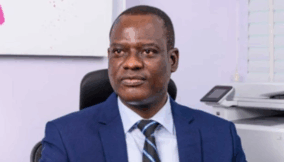
Mr. Igbinoba is Team Lead/CEO at ProServe Options Consulting, Lagos

Join BusinessDay whatsapp Channel, to stay up to date
Open In Whatsapp