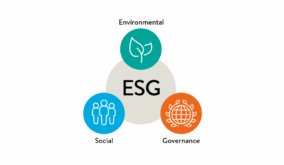
In boardrooms across the world, three letters now shape corporate sustainability: E-S-G. Environmental. Social. Governance. These three letters are now universally accepted as a framework for serious investors and businesses to measure an organisation’s sustainability, ethical impact, and risk management beyond the numbers.
Many organisations still view ESG, with inclusion as a key part of the social pillar, as a superficial issue pursued only to meet superficial standards. However, inclusion involves creating an equitable, safe workplace and reflects the organisation’s ethical values, which are visible, felt, and respected. It concerns who is represented at the top table, who is listened to, who gets promoted, and who receives fair pay. It also questions whether talent is rewarded justly and whether employees can thrive in a transparent, merit-based environment without needing to be part of an “old boy” network or an exclusive “in crowd”.
It is an environment where people are recognised first as people before their gender or anything else, and as such, they are recognised for the unique skills and talents that deliver results for the business. It is about mitigating the potential damage of “groupthink” by ensuring diverse perspectives from employees, communities, vendors, and other critical stakeholders. Companies, no matter how large or successful they are, continue to thrive only if they are well integrated into the critical facets of the society in which they operate.
More importantly, if we now accept that ESG, as a key operating principle, is non-negotiable, it is noteworthy that inclusion is a driver for the other ESG pillars. Such is its importance – Environmental (E) suggests that a diverse workforce can help identify environmental impacts in communities and develop comprehensive sustainability norms, whilst Governance (G) underpins the necessity of inclusive leadership. It is now received wisdom that diverse boards and management make better decisions.
In a country as diverse, youthful, and dynamic as Nigeria, inclusion is essential. It makes economic sense and is a smart business strategy. Companies that cultivate inclusive cultures tend to outperform their competitors. Conversely, those who ignore inclusion may eventually fail.
Inclusive companies attract and retain talent because they accept people of all hues, genders, and persuasions, provided they have skills and talents that can be harnessed meaningfully. They retain institutional knowledge. They innovate faster. They understand markets better. And they report stellar ESG outcomes because serious investors now look beyond profit margins to people metrics. Why? The connection with the bottom line is irrefutable.
Therefore, the “S” in ESG is no longer a footnote. Global capital is watching diversity disclosures. Regulators are asking tougher questions. The bright young talents are choosing employers whose values align with theirs and rejecting those that do not.
Beyond metrics, inclusion is human. The world is a hugely complex place, and every human being brings their unique aura and ability to connect with the world around them. Inclusion is as simple as the young graduate who sees someone like her on the executive team and believes she belongs there. It is the differently abled professional given the tools to excel. It is the middle-aged manager working in an organisation that respects the resilience of the nursing mother on his staff. It is the woman whose leadership is not questioned or qualified but celebrated.
Nigeria’s future will be shaped by organisations bold enough to embed inclusion into their strategy, not just CSR. The companies that win tomorrow will be those that treat inclusion as foundational.
It is time we celebrate them.
BusinessDay Media believes Nigeria needs to recognise and spotlight its most inclusive companies and institutions, those building cultures in which diversity translates into measurable performance and sustainable growth. Celebrating inclusion is not symbolic; it sets standards, inspires peers and strengthens our corporate ecosystem.
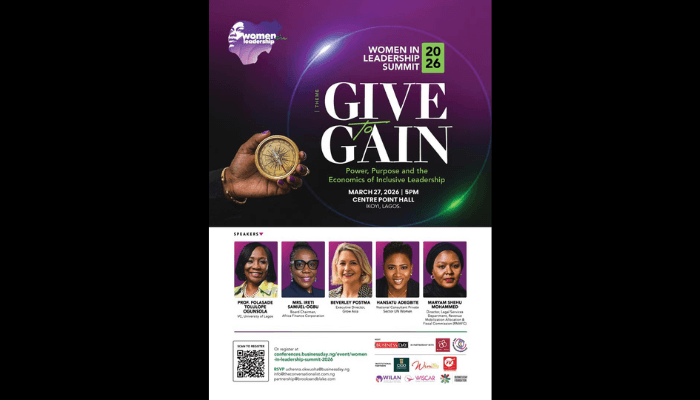
This conversation continues at the Women in Leadership Summit, taking place on 27th March 2026 at Centrepoint Event Centre, where leaders, board members, policymakers, and executives will explore inclusion as a core ESG and business growth lever.
Be part of the movement shaping Nigeria’s most future-ready organisations.
Inclusion is not charity. It is a competitive advantage. And the time to lead is now.
Olufunmilayo Onajide is the Executive Chairman of Brooks & Blake Limited.

Join BusinessDay whatsapp Channel, to stay up to date
Open In Whatsapp