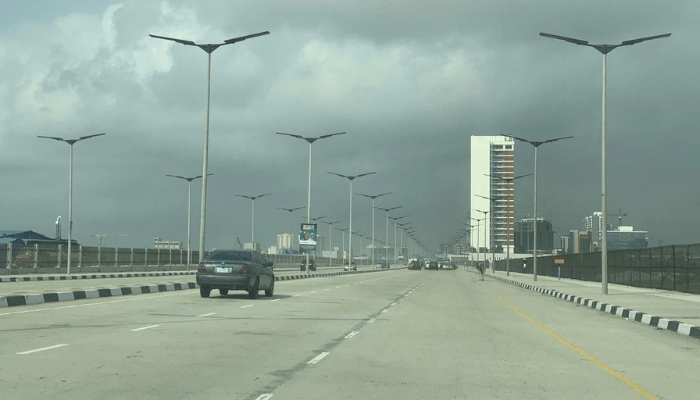
Fifty years after its initial conception, the controversial Lagos–Calabar Coastal Highway is finally showing signs that it may realise its long-promised potential: diverting traffic, reducing congestion, and unlocking new economic opportunities in an increasingly gridlocked Lagos. In December 2025, the Federal Ministry of Works and Housing opened the first operational segment of the road to public use, even as the contractor, Hitech Construction Company Limited, continued work towards the planned formal inauguration of Section One in May 2026.
The question now is whether the Lagos–Calabar Coastal Road can overcome the familiar “Nigerian factor” and achieve the same success as Nigeria LNG Limited—one of the country’s most significant infrastructure projects.

A familiar story of delay—and promise
Nigeria LNG itself experienced nearly 50 years of delay. The concept of monetising Nigeria’s extensive gas reserves first appeared in the First National Development Plan in 1964, but the project was not commissioned until 1999, after years of policy reversals, financing challenges, and political indecision. Today, NLNG serves as a benchmark for what long-delayed Nigerian megaprojects can become when execution ultimately aligns with intention.
There are early signs that the Lagos segment of the coastal highway may follow a similar path. Motorists are already using parts of the road, even as construction equipment and incomplete sections remain clearly visible. Works Minister David Umahi, In late December 2025, the public urged commuters to start using the road, a call that has been embraced—especially by residents along the Lekki–Epe axis.
Time savings that change behaviour
One notable example of the road’s potential occurred on January 30, 2026, when a Lagos Business School (LBS) delegation travelled from Awoyaya to Ilupeju for a 1:00 pm meeting with Nestlé Nigeria executives. The meeting centred on the seventh year of their joint flagship programme, Advancing Nutrition, Health and Environmental Awareness Through the Media.
Four members of the LBS team live along the Lekki–Epe corridor. Coordinated by Theresa Daniel-Akibor, they departed Awoyaya at 11:00 am and arrived in Ilupeju with time to spare—an outcome that surprised their Nestlé counterparts, who had expected the familiar Lagos traffic ordeal. The difference was the Lagos Coastal Road.
Under normal conditions, the Abijo–Lekki Toll Gate–Victoria Island journey could take close to two hours. On the coastal road, it now averages 30 minutes.
Early user experiences
Businessman John Ogunlela, who frequently travels the Epe–Ibadan route, is an avid early adopter. He told BusinessDay that he has driven on the coastal road six or seven times.
“Unlike the usual practice of road construction companies, the contractor has made provisions for motorists to use the road while construction is ongoing,” he said. “That was my first impression.”
Ogunlela has driven from the zero point on Victoria Island to exits at Jakande, Awoyaya, Sangotedo, and Eleko. He describes the Victoria Island end as visually appealing, though traffic narrows near Alpha Beach due to a bridge under construction. Beyond that bottleneck, the road opens up significantly, allowing sustained movement for several kilometres.
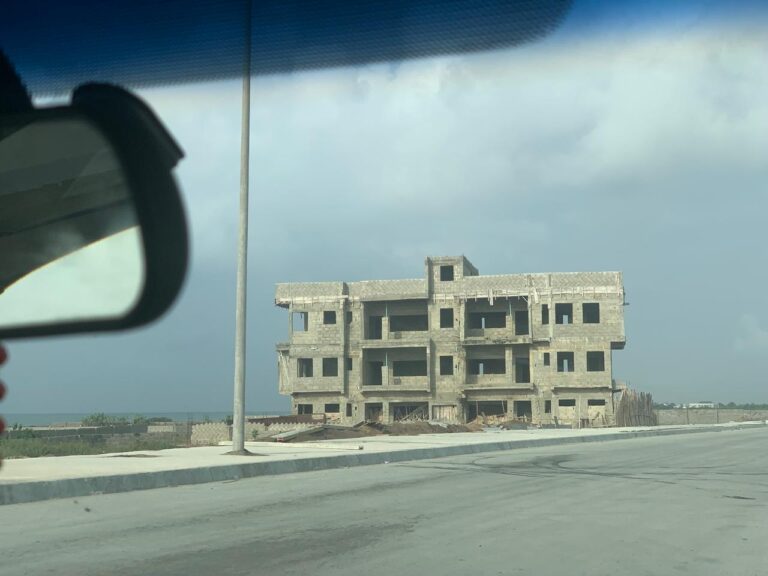
Unfinished stretches remain, particularly where aggregate surfacing is still awaiting steel reinforcement and concrete. These sections are bumpy and dusty, especially around Sangotedo and Eleko, where sand dredging is ongoing. Yet Ogunlela notes that newly completed segments are opened almost weekly.
“I drove from km 0 on Victoria Island to Ẹlẹko in 55 minutes,” he said. “It should be faster now because a newly completed section several kilometres long has just been opened.”
Business Day accepted the minister’s invitation to assess the road firsthand. Our correspondent has used the route repeatedly through January and early February and confirms both the time savings and the transitional nature of the infrastructure.
Scale, cost, and design questions
The Lagos–Calabar Coastal Highway is designed as a 700-kilometre dual-carriageway linking Victoria Island in Lagos to Calabar in Cross River State, traversing nine coastal states. Its stated objective is to enhance national connectivity, economic integration, and coastal resilience.
It costs N7.5 billion per kilometre. Minister Umahi has defended the project’s ₦7.5 billion per kilometre cost by citing reinforced concrete pavement, six lanes, bridges, interchanges, and complex deep-swamp engineering. He has also confirmed that tolling—expected to last between five and ten years—will be implemented to recover expenses.
However, BusinessDay observed that the Lagos end currently delivers three lanes per carriageway rather than the six lanes repeatedly promised by the minister. This does not render the road substandard, but it highlights a familiar Nigerian deviation between declared ambition and delivered reality.
Globally, standard intercity highways often operate efficiently with four lanes—two in each direction—while urban highways expand to six or more lanes based on traffic demand. The Third Mainland Bridge, for example, has four lanes on each side.
The coastal road’s current layout still meets essential highway standards: controlled access, high-speed design, durable pavement, and safety features. The issue lies less in engineering adequacy than in accountability for specified standards.
Guidance for road users
As the Ministry of Works and Hitech push toward full opening by May 2026, several practical lessons have emerged:
Time Saved Is Significant: The road substantially reduces travel time. A journey from Abijo to Victoria Island, which normally takes two hours, now takes about 30 minutes.
Resist Speeding: This is not yet a finished highway. Treat it as an active construction site.
Expect Continuous Changes: The road’s layout shifts weekly as work advances.
Beware of Local Habits: In more developed areas, from Jakande to Victoria Island, commercial motorcycles and some drivers flagrantly disobey traffic rules, driving one-way and creating hazards.
5. Safety is Paramount: These behaviours have already caused fatalities, with at least two reported deaths in December.
6. Access Control is a Challenge: Hitech is striving to implement limited highway access, but entrenched behaviours from Lagos drivers make this a “tall order”.
7. Urban driving habits intrude near developed areas such as Jakande, Oniru, and Victoria Island, including dangerous one-way motorcycle riding.
8. Travel time may be reduced as more vehicles join the road. Work on the Lagos-Epe Road means that more vehicles are diverting to the Coastal Road. It has led to more time spent on the ongoing bridge construction.
9. Traffic furniture does not exist yet. As you drive along, there is no guidance unless you stop and ask. People get their bearings from the names of places along the existing Lagos-Epe Road.
10.There are many estates along the right side of the road from Victoria Island to Eleko. Their presence confirms that the road project has been planned for a long time.
11.The solar-powered streetlights work. But only in the completed areas; drivers follow the dark in the uncompleted sections at great risk.
The road teaches lessons in geography. Remember the geography lessons about the visual perception effect? The Lagos Coastal Road demonstrates how the “things look far, then suddenly close” visual effect works. It features motion parallax in which distant objects (buildings, signage, gantries, bridges, and vehicles) remain visually “pinned” to the horizon for a long time, then suddenly move forward as the parallax effect kicks in.
Why does this matter for Lagos coastal road users?
-Speed perception is reduced → risk of unintentional speeding
-Overtaking judgement can be distorted.
-Signage needs earlier placement than on urban roads
-Driver education should highlight the effects, especially for first-time users.
On the Lagos Coastal Road, flat coastal geography + wide lanes + smooth surface + ocean haze + higher speeds combine to produce a textbook case of sudden distance collapse—where far objects seem to rush forward.
Financing, phasing, and momentum
A major milestone was reached in December 2025 with the finalisation of a $1.126 billion financing package for Phase 1, Section 2 (Eleko to Ode-Omi), complementing the $747 million secured earlier in July for Phase 1, Section 1. The funds are now available for deployment, lending credibility to the government’s execution timetable.
The project is officially scheduled for completion by 2031.
Controversy: Cost, displacement, and the environment
Despite construction momentum, the Lagos–Calabar Coastal Highway remains deeply contentious.
Cost and transparency: Estimated at £11–12.5 billion, the project was awarded to Hitech without open competitive bidding, raising allegations of favouritism.
Displacements: Homes and businesses, including parts of Landmark Beach Resort, were demolished amid claims of inadequate notice and compensation.
Environmental risks: The route cuts through mangroves, wetlands, and forest reserves, threatening fragile ecosystems in the Niger Delta.
Real estate investor Stella Okengwu has been one of the most vocal critics. She alleges massive under-compensation, claiming that investors who paid over ₦150 million per plot received only ₦25–30 million. She further alleged attempts at extortion by officials and described the process as falling far short of global standards for eminent domain.
ESIA: A lingering red flag
The Environmental and Social Impact Assessment (ESIA) remains a key unresolved issue. Construction started before the final ESIA was finished, with government officials citing a “preliminary” certification that permitted site clearance but not full-scale development. Communities affected by blocked access and realignments argue that these disruptions are direct results of inadequate prior environmental assessment.
A road at a crossroads
The Lagos–Calabar Coastal Highway is no longer a theoretical project. Cars are moving. Time is being saved. Economic behaviour is already adjusting.
Whether it ultimately becomes a national asset on the scale of NLNG—or another cautionary tale of ambition undermined by governance failures—will depend on transparency, discipline, environmental stewardship, and the state’s willingness to align delivery with promise.
For now, the road is open. The verdict is still under consideration.
Lagos Coastal Road as an axis of opportunity
The Lagos Coastal Road is more than just a transportation route; it is a crucial economic hub with the potential to reshape Lagos State’s spatial development, competitiveness, and long-term growth trajectory. When completed to specification and properly managed, the road can act as a catalyst for investment, productivity, climate resilience, and regional integration rather than simply being a mobility project.
1. Strategic Context Lagos is Africa’s largest city economy, yet it faces significant challenges from severe congestion, land scarcity, and infrastructural bottlenecks along its traditional north–south and mainland–island routes. The coastal corridor introduces a new east–west development backbone, linking Victoria Island, Lekki, Epe, and future coastal extensions. This facilitates unlocking underutilised coastal lands and shifts economic activity away from overloaded urban centres.
2. Economic Opportunity Corridor: As an axis of opportunity, the coastal road enables the following:
– Real estate and urban expansion: Planned mixed-use developments, residential estates, hospitality, and commercial zones can emerge along the corridor, easing pressure on central Lagos.
– Industrial and logistics growth: Proximity to Lekki Deep Sea Port, the Dangote Refinery, free trade zones, and industrial parks positions the road as a logistical backbone for exports, imports, and manufacturing.
– Tourism and leisure economy: Beachfront development, resorts, conference facilities, and cultural attractions can boost Lagos as a competitive coastal tourism destination.
– SME and service sector growth: Construction, retail, transport services, and related businesses will benefit from rising demand and population movement.
3. Investment and Capital Mobilisation: Infrastructure of this scale signals policy intent and increases investor confidence. The coastal road provides a solid anchor for:
– Public-private partnerships (PPPs)
– Land value capture and structured real estate financing
– Long-term institutional capital (pension funds, sovereign investors)
– Diaspora and foreign direct investment
When aligned with clear zoning, transparent land management, and enforceable development standards, the corridor becomes a predictable investment environment rather than a speculative one.
4. Climate Resilience and Environmental Imperatives: The coastal road sits at the intersection of economic growth and climate risk. Lagos is highly vulnerable to sea-level rise and coastal erosion. With strong shoreline protection, drainage systems, and environmental buffers, the road can serve as:
– A coastal defence asset.
– A platform for climate-resilient urban planning.
– An example of infrastructure adapted to future climate realities.
Neglecting environmental safeguards could turn this opportunity into a long-term liability.
5. Social and Spatial Inclusion: As an opportunity corridor, the road must avoid becoming an exclusive enclave. Deliberate policies are essential to ensure:
– Affordable housing alongside premium developments.
– Access roads and transportation links for local communities.
– Job creation for residents during construction and operation
– Integration with mass transit systems to prevent car-dependent sprawl
Inclusive planning will determine whether the corridor reduces or widens socio-economic divides.
6. Governance as the Crucial Element: Ultimately, the value of the Lagos Coastal Road hinges on strong governance. Clear land-use plans, transparent concession agreements, regulatory enforcement, and consistent communication will decide whether the road becomes:
– An internationally competitive coastal development corridor, or
– A congested, speculative strip repeating familiar urban failures.
The Lagos Coastal Road presents an opportunity because it redefines infrastructure as economic architecture. If Lagos aligns its transport, land-use, climate-resilience, and investment policies along this corridor, it can lay the foundation for the city’s next growth phase—more productive, more resilient, and more globally competitive. The potential is there, but realising it requires deliberate planning, effective governance, and continuous effort.

Join BusinessDay whatsapp Channel, to stay up to date
Open In Whatsapp