Regulators are catching up, and businesses must be ready. ESG reporting will soon be non-negotiable.
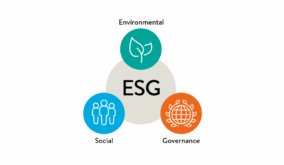
For many years, Environmental, Social and Governance (ESG) reporting in Nigeria was treated as a voluntary exercise, something progressive companies did to appeal to international investors or burnish their corporate image. That era is ending.
Across the world, regulators are moving ESG from the realm of aspiration to the domain of obligation. Nigeria is gradually following that path, and businesses that assume ESG compliance is optional may soon find themselves playing a difficult game of catch-up.
The reality is simple: ESG reporting will increasingly become a regulatory expectation, and we are already seeing the early signals.
The Securities and Exchange Commission Nigeria (SEC) has issued sustainability disclosure guidelines for publicly listed companies. The Nigerian Exchange Limited (NGX) now requires listed companies to publish sustainability reports as part of their annual disclosures. Meanwhile, the Central Bank of Nigeria (CBN) has introduced the Nigerian Sustainable Banking Principles, pushing financial institutions to integrate ESG considerations into lending and investment decisions.
These developments are not isolated regulatory experiments. They are the early building blocks of a broader governance architecture that will shape how businesses operate in the coming decade.
Across Africa, similar regulatory shifts are underway.
South Africa remains the continent’s most advanced ESG reporting environment, largely driven by the Johannesburg Stock Exchange (JSE), which requires integrated reporting aligned with global sustainability standards. Kenya’s Nairobi Securities Exchange (NSE) has also introduced ESG disclosure guidelines encouraging companies to report on environmental impact, social responsibility and governance practices.
The direction of travel is unmistakable: ESG compliance is becoming part of mainstream corporate regulation.
For Nigerian businesses, whether they are listed companies, large private enterprises, or even fast-growing SMEs, the message is clear. Preparation must begin now.
The first step is governance readiness.
ESG cannot remain an afterthought delegated to corporate communications teams once a year during report preparation. It must sit where it truly belongs: in the boardroom. Boards need structured oversight of ESG risks, sustainability committees with appropriate authority, and management accountability for ESG performance.
Without strong governance structures, ESG reporting becomes a box-ticking exercise rather than a strategic discipline.
The second step is data discipline.
One of the biggest challenges Nigerian companies face in ESG reporting is the absence of reliable internal data systems. Measuring carbon emissions, tracking workplace diversity, documenting community impact, and monitoring governance practices require structured data-collection processes.
Companies that invest early in ESG data systems will have a significant advantage once regulators begin demanding more rigorous disclosures.
The third step is strategic integration.
Too often, ESG is treated as a compliance burden rather than a value driver. Yet companies that embed sustainability into their core strategy often unlock new growth opportunities.
Consider the agricultural sector, where climate-smart farming practices are improving productivity while protecting ecosystems. Or the energy sector, where the transition toward cleaner fuels and renewable investments is increasingly attracting international capital.
Even within Nigeria’s financial services industry, banks that integrate ESG risk assessment into lending decisions are beginning to reduce exposure to environmental liabilities and governance risks. In other words, ESG compliance is not merely about satisfying regulators; it is now also about building more resilient businesses.
Investors are also paying attention.
Global asset managers and development finance institutions are increasingly aligning their investment decisions with sustainability criteria. Nigerian companies seeking international partnerships, cross-border financing or capital market access will increasingly find ESG disclosure to be a prerequisite.
The regulatory push, therefore, mirrors a broader market reality.
However, one critical lesson from global markets is worth emphasising: regulation typically accelerates trends that are already underway.
Nigeria’s emerging ESG regulatory framework should therefore not be seen as an impending compliance hurdle but rather as a signal of where the future of business governance is heading.
Forward-thinking companies are already positioning themselves accordingly. They are mapping their environmental footprint, strengthening governance systems, investing in transparent reporting processes and aligning their business strategies with sustainability goals.
More importantly, they recognise that ESG compliance is not just about avoiding regulatory sanctions; it is about earning long-term trust from investors, employees, customers and communities. And in today’s interconnected economy, trust is a powerful competitive advantage.
As Nigeria’s regulatory ecosystem continues to evolve, the companies that will thrive are not those that wait for enforcement notices but those that prepare ahead of the curve.
Because in the near future, ESG reporting will not simply be good practice. It will be standard practice.
Sarah Esangbedo Ajose-Adeogun is the Founder and Managing Partner at Teasoo Consulting Limited, a foremost ESG consulting firm. She is a former Community Content Manager at Shell Petroleum Development Company and served as the Special Adviser on Strategy, Policy, Projects, and Performance Management to the Government of Edo State. She is also the host of the #SarahSpeaks podcast on YouTube @WinningBigWithSarah, where she shares insights on leadership, strategy, and sustainable growth.

Join BusinessDay whatsapp Channel, to stay up to date
Open In Whatsapp