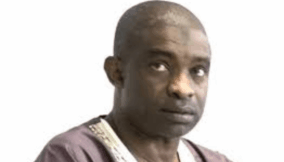
Senate President Godswill Akpabio on Thursday decried the deteriorating state of rail transport in Nigeria, declaring that a bicycle, motorcycle or commercial tricycle, popularly known as Keke Napep, is now faster than the Abuja–Kaduna train service.
Akpabio made the remark during plenary as the Senate reviewed the sharp decline in rail services across the country, particularly on the Abuja–Kaduna–Kano corridor.
“After operating for barely 10 years, the Abuja–Kaduna train service has dropped drastically. If you are using a bicycle, you will get to Kaduna faster than the train.
“We gather that even Keke Napep will get to Kaduna faster than the train,” Akpabio said.
He noted that a journey that initially took about one and a half hours when the service commenced now lasts more than three hours, underscoring what he described as alarming decay in the nation’s railway system.
The Senate President was re-echoing concerns earlier raised by Senator Abdul Ningi (PDP, Bauchi Central), who spoke under personal explanation to draw attention to what he described as the “tragic” state of the Abuja–Kaduna rail line.
Ningi recalled that the rail line, constructed and commissioned in 2015 during the administration of former President Goodluck Jonathan and later recommissioned under late President Muhammadu Buhari, initially operated at near-full capacity.
Read also: Akpabio urges urgency as UN warns 35m Nigerians may face hunger
“From 2015, the railway started commuting 10 tranches of movement; five from Abuja to Kaduna and five from Kaduna to Abuja,” Ningi said.
“My investigation told me that when they started commuting, they were carrying about 10,000 passengers a day.”
According to him, the situation has since worsened drastically.
“Last two weeks, I visited Kaduna like I used to with the railway, and what I found was simply a tragic Nigerian story.
“I met the manager and he gave me the statistics. The 10,000 passengers they were carrying daily has dropped to about 800 or 900,” Ningi said.
He added that the number of daily trips had also reduced from 10 to just two.
“The 10 shuttles they were doing a day was reduced to two times a day,” he said, noting that when the service was operating optimally, it generated about ₦1.8 billion in monthly revenue.
Ningi further revealed that only one train now departs Abuja for Kaduna in the morning and returns the next day.
“As we speak now, there is no line except one that goes to Kaduna, sleeps there and comes back in the morning to Abuja. If you want to go to Kaduna, you must take the 7am train. If you are coming back, you must be at the station by 1.30pm. Otherwise, forget it,” he said.
The lawmaker also alleged that some of the equipment supplied for the rail project were second-hand, raising concerns that Nigeria may have been short-changed despite billions of naira invested in the project.
“When the railway started, it was one and a half hours to Kaduna. Last week when I went, we spent three and a half hours. It was moving at a very slow speed, leaving passengers with no alternatives,” he said.
Describing the situation as disturbing, Ningi warned that continued neglect of the rail system amounted to a waste of scarce national resources.
“This is very disturbing. It will not only disturb me, it must disturb this Senate and Nigerians. As it looks, nobody is ready to do anything about it,” he added.
In response, Akpabio announced the immediate inauguration of an ad hoc committee on the holistic investigation into the railway system in Nigeria, which was set up by the Senate in November 2025.
The committee, chaired by former Edo State governor, Senator Adams Oshiomhole, has been given six weeks to probe the state of rail services and make recommendations.
Akpabio stressed that the Senate would no longer ignore the decay in the railway sector, noting that the findings of the committee would guide urgent legislative intervention.

Join BusinessDay whatsapp Channel, to stay up to date
Open In Whatsapp