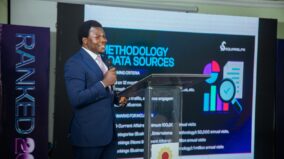
Nigeria has called on fellow resource-rich countries to transform the Extractive Industries Transparency Initiative (EITI) from a routine disclosure exercise into a bold governance tool for reform, accountability, and inclusive economic growth.

Orji Ogbonnaya Orji, executive secretary of the Nigeria Extractive Industries Transparency Initiative (NEITI), made the appeal in Amman, Jordan, while addressing an international EITI peer-learning session organised with support from the World Bank to guide Iraq’s entry into the initiative.

Orji said Nigeria’s 20-year journey with the EITI had shown how the framework could be tailored to local contexts to confront the governance challenges of natural resource wealth.

“NEITI’s experience has shown that the EITI can deliver far more than public disclosure. It is a platform for institutional reform, citizens’ dialogue, accountability advocacy, and process re-engineering,” Orji said

He outlined Nigeria’s unique model as a reference point for other nations, highlighting statutory backing, high-level multi-stakeholder group, independent secretariat, Inter-agency task team, Policy briefs and open data platforms as well as Integration with fiscal and climate reform.

Read also: Wemy Industries eyes export push with debut at IATF

These reforms have delivered measurable results, including disclosure of $6.018 billion in outstanding liabilities, recovery of unpaid revenues, and credible data that informed Nigeria’s fuel subsidy removal debate, debt sustainability strategies, and investment policies.

Orji stressed that peer learning is central to the EITI process, noting Nigeria’s readiness to share lessons with Iraq and other Middle Eastern nations while learning from their own approaches.

“Few countries have walked this path as far as Nigeria,” he said. “We built and anchored implementation on a strong legal foundation to institutionalise reforms. Peer learning offers every EITI country the chance to adapt and apply lessons that work.”

He concluded by urging resource-rich nations to view transparency not as a compliance checkbox but as a transformative governance platform.

“Natural wealth must serve citizens, not elite interests. Nigeria’s EITI experience shows that with courage, credible data, and institutional strength, resource dependence can become a force for stability and inclusive growth,” Orji said.

Nigeria joined the EITI in 2003 and began implementation in 2004. Its distinctive adaptation of the initiative continues to attract global attention and inspire reform partnerships.

Ruth Tene, Assistant Editor, Agric/Solid Minerals/INEC Ruth Tene is an award-winning journalist with over 15 years experience in developmental reporting across several newsrooms, as a reporter, editor and other managerial roles. She holds a Postgraduate Diploma in Journalism from the University of Maiduguri among several other certifications She has attended several trainings and certifications both locally and internationally and has been recognized for her impactful work in humanitarian reporting, receiving the Gold Award for Humanitarian Services from the Amazing Grace Foundation. She is also a recipient of the Home Alliance Fellowship, reflecting her commitment to fostering a more humane, safer and more sustainable planet. An active member of professional journalism bodies, Ruth is affiliated with the Nigeria Union of Journalists (NUJ), the National Association of Women Journalists (NAWOJ), and the Agricultural Correspondents Association of Nigeria (ACAN), where she continues to advocate for excellence, ethical reporting, and development-focused journalism.

Join BusinessDay whatsapp Channel, to stay up to date

Open In Whatsapp