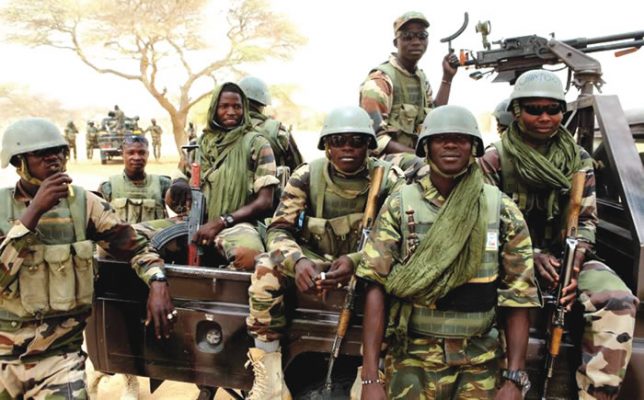
Nigeria’s armed forces have suffered 454 soldier fatalities in ambushes between 2019 and 2025, a new security report has revealed, warning that insurgent and bandit groups have evolved into a highly coordinated network capable of targeting even senior military commanders.

The report, titled The Kill Zone, describes the period as one defined by “a persistent and deadly campaign of ambushes” against security forces across the country.

Published by SBM Intelligence, an Africa-focused geopolitical research and consulting firm, the document shows that the military is now engaged in what it calls “a protracted war of attrition”, with insurgents increasingly focusing on high-value officers, attacking forward bases, and deploying drones and explosive devices with growing efficiency.

According to the report, Boko Haram (JAS), the Islamic State West Africa Province (ISWAP) and armed bandit groups carried out most of the attacks, with Borno State accounting for more than 60% of recorded ambushes.

“The primary perpetrators were Boko Haram (JAS)… and ISWAP, alongside highly active bandit groups,” SBM Intelligence wrote, noting a “worrying geographic spread of violence” from the Northeast to the Northwest and parts of the South.

“Beyond these primary actors, other armed groups contribute to the pervasive insecurity. These include the secessionist Indigenous People of Biafra (IPOB), various ethnic militias, and numerous unidentified gunmen,” the report stated.

“While their activities are generally less concentrated than the insurgencies in the north, violent incidents linked to these groups, including ambushes of security personnel, have been regularly recorded in the Southeast and South-South regions of the country.”

Read also: Troops rescue 67 victims, arrest 94 suspects in major operations

A tactical evolution

From fake checkpoints to drone warfare
One of the most alarming findings is the increasing sophistication of insurgent tactics. The report documents insurgents’ use of IEDs, commercial drones rigged with explosives, fake checkpoints, and coordinated multi-stage ambushes designed to isolate troops and cut off reinforcements.

“Their operations have expanded to include isolating the Nigerian military’s ‘supercamps’… by destroying key infrastructure such as bridges and roads,” the report states.

The insurgents are now deliberately targeting senior officers. Notable cases include: Brigadier-General Dzarma Zirkusu, killed in an ISWAP ambush near Askira Uba in 2021, a Major and several personnel killed in Munya, Niger State, in 2023 and Brigadier-General Uba, ambushed and killed in Damboa, Borno, in November 2025.

Beyond the Northeast, the Northwest has emerged as a major battleground. Bandits, the report notes, have developed “a calculated approach” to ambushes, in which one group attacks a location specifically to lure security reinforcements into a second ambush. An example is the March 2023 massacre of 51 vigilantes in Zamfara’s Maru LGA, the report noted.

Military stretched thin, morale low

Despite the scale of the threat, SBM Intelligence says the military remains overstretched, under-equipped, and hampered by intelligence failures.

The armed forces “grapple with inadequate equipment… morale is frequently low,” and corruption has weakened operations, the report states. It highlights chronic shortages of mine-resistant vehicles, delayed troop rotations, and welfare challenges affecting operational effectiveness.

The report also warns that the collapse of regional cooperation, including Niger’s withdrawal from the Multinational Joint Task Force, has created “operational vacuums along Nigeria’s borders” now exploited by both terrorists and criminal networks.

SBM Intelligence concludes that Nigeria must urgently overhaul its counterinsurgency strategy. It recommends better intelligence gathering, stronger protection for patrol units, structured collaboration with local defence groups, and a revival of regional security partnerships.

“With the trajectory of violence deeply concerning,” the report warns, “a fundamental strategic review is necessary to counter the evolving tactics of militant groups and stem the significant losses undermining Nigeria’s security and stability.”

Taofeek Oyedokun is a correspondent at BusinessDay with years of experience reporting on political economy, public policy, migration, environment/climate change, and social justice. A graduate of Political Science from the University of Lagos, he has also earned multiple professional certificates in journalism and media-related training. Known for his clear, data-driven reporting, Oyedokun covers a wide range of national and international socioeconomic issues, bringing depth, balance, and public-interest focus to his work.

Join BusinessDay whatsapp Channel, to stay up to date

Open In Whatsapp