

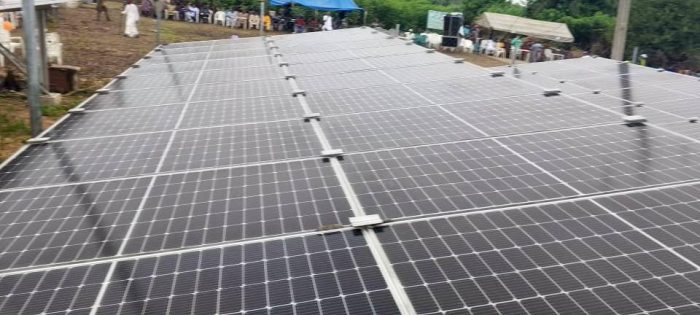
Nigeria has launched a major renewable energy initiative worth $750 million to improve electricity across the country. The new program focuses on installing 1,350 solar mini-grids, mainly in rural and underserved areas where reliable power supply has long been a challenge.
The government believes this initiative will help reduce dependence on the national grid and provide a stable and affordable source of electricity to communities that currently face frequent outages or have no access to power at all.
Many parts of Nigeria still struggle with unreliable electricity, forcing households and businesses to rely on alternative power sources. Through the deployment of solar mini-grids, the government aims to bring decentralised energy solutions that can operate independently from the main grid. These mini-grids are designed to generate and distribute electricity locally, making them particularly useful for remote communities that are difficult to connect to large transmission networks.
An important aspect of the project is that it will not only serve off-grid areas but also support the national power system. Around 250 of the planned mini-grids will be connected to the existing electricity network. This integration is expected to strengthen the overall grid by supplying additional renewable energy and improving power stability in regions where the electricity supply is often weak or inconsistent.
The initiative is also designed as a partnership between the public and private sectors. While the government has committed $750 million to kick-start the program, it expects the project to attract significant additional investment from private companies and financial institutions. Authorities estimate that the program could generate as much as $1.1 billion in private sector funding. This investment will help speed up project implementation and support the long-term operation and maintenance of the solar systems.
Nigeria’s shift toward solar power is partly driven by the high cost and environmental impact of traditional energy sources. Many households and small businesses currently depend on petrol and diesel generators to meet their electricity needs. These generators are expensive to run and contribute to noise and air pollution. By expanding solar mini-grids, the government hopes to provide a cleaner and more affordable alternative.
The new program also supports Nigeria’s broader environmental and energy goals. It builds on earlier efforts such as the Nigeria Electrification Project, which aimed to expand electricity access using renewable energy technologies. By promoting solar power and reducing reliance on fossil fuels, the country is taking steps toward building a more sustainable energy sector.
If successfully implemented, the installation of 1,350 solar mini-grids could significantly improve electricity access for millions of Nigerians. The initiative is expected to support economic growth in rural areas, improve living conditions, and help the country move closer to achieving universal access to electricity while promoting a greener energy future.


Join BusinessDay whatsapp Channel, to stay up to date
Open In Whatsapp


