Nigeria and the European Union have reaffirmed their strategic partnership on security, trade, and development, as both sides convened for the 8th Nigeria–EU Ministerial Dialogue in Abuja on Monday.
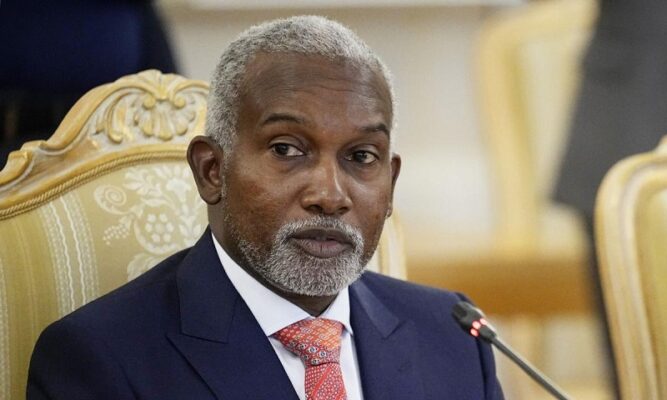
The meeting was led by Yusuf Tuggar,
Nigeria’s Minister of Foreign Affairs, while the EU delegation was headed by Kaja Kallas, who also serves as Vice-President of the European Commission.
Kallas commended Nigeria’s efforts in combating terrorism, particularly against insurgent groups such as Boko Haram, describing the country as a “bulwark” in the regional fight against extremism.
Kallas disclosed that the EU has mobilised over €700 million in the past decade to support Nigeria’s counter-terrorism operations, rule of law initiatives, and regional stabilisation efforts, including assistance to the Multinational Joint Task Force in the Lake Chad Basin.
“The newly institutionalised EU–Nigeria Peace, Security and Defence Dialogue provides a structured framework for strengthening cooperation on intelligence sharing, cybersecurity, maritime security in the Gulf of Guinea, and tackling transnational organised crime”, she noted.
In his remarks, Tuggar emphasised the need for deeper collaboration to address worsening insecurity across the Sahel, warning that instability, unconstitutional changes of government, and the rise of non-state armed groups pose significant threats to the region.
He stressed that effective responses must combine military action with governance reforms, economic opportunities, and inclusive diplomacy.
Nigeria also called for expanded EU support in counterterrorism training, technical assistance, and stabilisation programmes in conflict-affected communities.
Both sides underscored the importance of economic ties, with the EU remaining Nigeria’s largest trading partner, accounting for more than a quarter of the country’s total trade.
The dialogue highlighted opportunities to deepen cooperation in energy, particularly in gas development and local processing of strategic minerals critical to emerging technologies.
Tuggar noted that while Nigeria has long been an oil exporter, the country is positioning itself as a major gas hub, with growing private sector investments in refining and domestic energy markets.
The EU, on its part, announced new funding initiatives under its Global Gateway programme, including grants and concessional loans to support projects in digital infrastructure, agriculture, and healthcare.
Nigeria also used the platform to showcase its expanding digital economy, positioning itself as a leading fintech and innovation hub in Africa.
Tuggar also highlighted ongoing collaboration with European partners on fibre-optic expansion, e-government systems, and startup development, with additional support coming from EU-backed financing and technical partnerships.
Both sides agreed to deepen cooperation in digital regulation, infrastructure, and research under programmes such as Horizon Europe, with the aim of boosting financial inclusion and cross-border investment.
On migration, while reaffirming Nigeria’s commitment to constructive dialogue, Tuggar stressed the need for balanced and humane migration policies, alongside efforts to combat human trafficking and create legal pathways for mobility.
He raised concerns over the EU’s Carbon Border Adjustment Mechanism, warning that it could negatively impact developing economies and hinder industrialisation efforts.
The Minister called for fair climate financing, technology transfer, and transitional arrangements to ensure that climate policies do not disproportionately affect emerging markets.
At the same time, Nigeria reiterated its commitment to climate action, including plans to develop a high-integrity carbon market aimed at generating up to $3 billion annually by 2030.
Both parties described the dialogue as a critical step toward translating long-standing cooperation into tangible outcomes.
Kallas reaffirmed the EU’s commitment to Nigeria, describing the country as a “political heavyweight” and a key partner for regional stability.
She also announced plans for an EU–Nigeria Business Forum in Lagos later this year to boost private sector collaboration.
“Nigeria remains committed to a balanced foreign policy and to strengthening ties with global partners”, Tuggar said

Join BusinessDay whatsapp Channel, to stay up to date
Open In Whatsapp