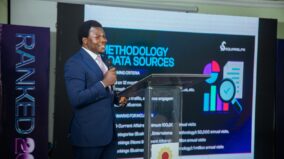
Dele Alake, Minister of Solid Minerals Development, says Nigeria has attracted over $2.5 billion in foreign direct investment (FDI) into its mining sector within two years, signaling renewed investor confidence driven by regulatory reforms and a shift toward integrated industrial development.
Speaking at the Powering Africa Summit in the United States, Alake linked the inflows to policy changes aimed at de-risking the sector, including licensing digitization, stronger tenure security, and improved access to geological data.
He said the reforms are repositioning mining as a viable pillar of economic diversification, with clearer rules and reduced bureaucratic friction improving project bankability and long-term capital commitments.
In a statement signed by Segun Tomori, Special Adviser to the Minister on Media, it stated that beyond domestic reforms, the minister outlined a regional growth model anchored on cross-border energy and logistics corridors, arguing that infrastructure integration would determine how much value Africa captures from its mineral resources.
Read also: FG accuses mining firm of smear campaign during Tinubu’s UK visit
He cited models such as the Lobito Corridor and proposed similar frameworks across West Africa, including the Lagos–Abidjan corridor, to aggregate demand, lower energy costs, and support large-scale mineral processing.
According to him, shared energy systems within such corridors could unlock downstream industries by enabling local beneficiation, manufacturing, and export-led growth rather than raw mineral exports.
On incentives, Alake said Nigeria is offering tax waivers on mining equipment imports and guarantees on profit repatriation, moves designed to attract long-term capital and improve returns for investors.
He added that enforcement had been strengthened through the deployment of mining marshals, with over 350 illegal operators arrested and more than 150 facing prosecution, a step the government said, is critical to restoring investor confidence.
At the summit, Sarah Whitten, Senior Vice President, US Export-Import Bank, said financing appetite remains strong but depends on policy stability and credible project structures.
She noted that institutions such as the Export-Import Bank of the United States are positioned to catalyse private capital, particularly in capital-intensive critical minerals projects, but stressed that sustained government commitment is essential to unlock large-scale funding.

Join BusinessDay whatsapp Channel, to stay up to date
Open In Whatsapp