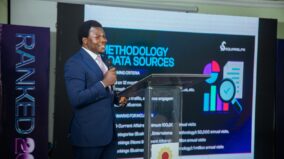
The Financial Reporting Council (FRC) has reaffirmed its commitment to pushing Nigerian companies toward sustainability reporting that is not only compliant but also credible, leading, and globally competitive.
The Council said, on Wednesday, that its goal is to ensure Nigerian firms meet international best practices and position themselves as strong players in the global sustainability landscape.
Rabiu Olowo, Executive Secretary and Chief Executive Officer of the FRC, made this known at the Climate Governance Initiative (CGI) Nigeria Directors’ Engagement Series held in Lagos.
He reminded participants that Nigeria, through the FRC, became the first country in Africa to announce the early adoption of the International Sustainability Standards Board (ISSB) standards at COP 27 in Sharm El-Sheikh, Egypt, in 2022.
Read also: FRC clinches UNCTAD-ISAR Honour, stands out as Africa’s only recipient
He said the announcement was followed immediately by concrete actions, including the establishment of the Adoption Readiness Working Group (ARWG), a technical think tank made up of major stakeholders in Nigeria’s financial reporting and corporate governance ecosystem.
Olowo urged directors to view IFRS S1 and S2 as strategic tools rather than regulatory burdens. “These frameworks will help your organisations anticipate risks, seize emerging opportunities, and build trust with stakeholders. The future of business is sustainable, transparent, climate-conscious, and governed by data-driven decision-making,” he said.
During her presentation, Tomi Adepoju, Partner and Head of Enterprise Risk and ESG Services at KPMG Nigeria, used practical examples to highlight why some board members still hesitate to prioritise sustainability reporting.
She recounted her experience with a CEO who told her, “I do not believe in sustainability,” explaining that the CEO only proceeded with the process because his board mandated it. “That is why board leadership is so important,” she emphasised.
Adepoju also illustrated how governance failures intensify Nigeria’s climate-related challenges. She referenced the long-delayed dam project between Nigeria and Cameroon, which was intended to regulate water flow and prevent severe flooding. “Because our own dam was never completed, each time Cameroon releases water, communities in Nigeria suffer. Farmlands are destroyed, lives are lost. This is a governance issue that has become a social issue and then an environmental one. That is ESG in real life,” she said.
Experts from the FRC, including Innocent Okwuosa and Abubakar Razaq, guided directors through their responsibilities under IFRS S1 and S2. They outlined Nigeria’s adoption roadmap and emphasised the need for boards to ensure companies collect high-quality data and strengthen their internal reporting systems.
A panel session moderated by Adepoju featured Olowo; Remi Odunlami of FirstBank; A. B. Mahmoud, of MTN Nigeria; and Taiwo Osindero of Seplat Energy. The panel explored practical implementation challenges.
Read also: FRC, SEC urge audit committees to expand capacity development to boost investor confidence
Odunlami noted that “Boards need training. Many directors are only now beginning to understand how climate risks affect financial performance.” Mahmoud stressed the importance of stronger collaboration between regulators and the private sector to support compliance, while Osindero urged companies to invest in improved systems, saying, “If the data is weak, the reporting will be weak.”
Kehinde Fadare of KPMG delivered a summary of key lessons from the engagement, encouraging directors to take ownership of the transition. “If boards do not lead this transition, companies will fall behind. This is now part of global business practice,” he said.
Adebajo noted that CGI Nigeria would continue to support directors through tools, training, and partnerships. He called on Nigerian boards to embrace climate governance early, stressing that global standards are tightening and companies must be proactive to remain competitive.

Join BusinessDay whatsapp Channel, to stay up to date
Open In Whatsapp