…with the Triple Helix model, others
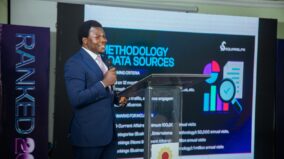
Okechukwu Onuchuku, Professor of Economics and Vice Chancellor of Ignatius Ajuru University of Education (IAUOE), has advised Nigerian economic planners to build a new economic order on the 774 Local Government Areas (LGAs).
Onuchuku, gave the advice in a keynote speech at the inauguration of Obio/Akpor Business and Economic Forum (OBEF) in Port Harcourt, on Thursday.
Obio/Akpor, now run, by Gift Worlu, a University lecturer and management expert, is regarded, as the largest and biggest LGA in Rivers State and Nigeria, constituting a major part of the Port Harcourt metropolis.
It is often described as an economic hotspot in the Niger Delta, characterized by a mix of heavy industrial activity, rapid urbanization, and a strong commercial oil and gas service sector.
OBEF, according to the LGA boss, was set up to galvanise the economy of the area (more than half of the Rivers State capital) and to bring all the factors to bear on rapid growth.
The Vice Chancellor suggested the LGAs to become the takeoff point of the economy focusing the factors of production in them, directing funding, manpower, and productive assets to each LGA in Nigeria, saying they can form the unit of productivity.
He gave the first models as the PPP (public, private partnership model),which he said, would involve businesses and entrepreneurs in a given LGA to work with the LGA authority to execute nominated economic ventures per year.
The next is the Self-Help/Community Participating model, which provides a platform for various communities and willing individuals to execute certain projects every given year with the LGA as the coordinating force.
The third is what he called the ‘Triple Helix model’ which he said would create a platform with universities and research centres (for research), industry (for investment), and the LGA for funding and regulatory function, all into a partnership that would have set goals and timelines.
Speaking on the topic: ‘Role of Critical Stakeholders in Shaping the Local Economy’, Onuchuku identified the stakeholders of Obio/Akpor LGA, and the kind of economy that is in operation in the area but warned that productivity must be the watchword at all times.
He mentioned the challenges facing LGAs in Nigeria and Obio/Akpor in particular and said that LGAs should build the computer base of Nigeria in their areas, so they can help train pupils and students in their areas to write external examinations that are now written on Computer-Based Tests (CBT).
He said that students were failing University entrance examinations not because they were not knowledgeable but because of lack of computer literacy.
Worlu, the LGA boss, said that OBEF is intended to serve three critical purposes: First, to create a structured platform for engagement between the Local Government and the stakeholder community where opportunities and challenges can be openly discussed, and practical solutions co-created.
“Second, to promote a business-friendly environment by listening to your concerns, improving our policies, and strengthening institutional support systems including digital platforms for permits, payments, and approvals that enable businesses and institutions, as well as households to thrive in an increasingly tech-driven economy.
“Third, to encourage shared responsibility for development, where businesses operating within Obio/Akpor actively contribute to the socio-economic advancement of our communities through compliance, job creation, and corporate social responsibility initiatives.”
Obio/Akpor had organized its first economic summit in December 2025, and is now poised to drive its economic with new gusto. The latest event was used to communicate the OBEF meeting framework (frequency, eligibility, hosting, etc). There was also call for volunteers, networking, and an interactive session.

Join BusinessDay whatsapp Channel, to stay up to date
Open In Whatsapp