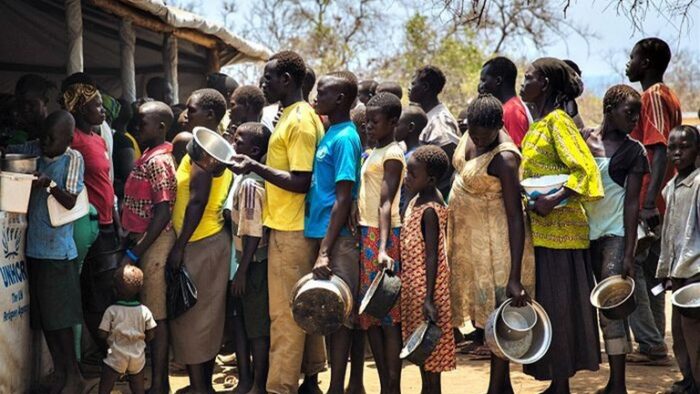
Nigeria, Africa’s most populous country, is facing a troubling contradiction at the heart of its agricultural policy: while government spending on food production is reaching record highs, hunger is tightening its grip on millions.
An investigation conducted by BusinessDay into Federal and some State Governments’ budgets in Northern Nigeria, indicates that conditions on the ground reveals a widening disconnect between financial commitments and food security outcomes.
Budget documents for the 2026 fiscal year show a clear shift towards agriculture as a pillar of economic recovery. Across all tiers of Government, allocations for farming, irrigation and livestock development now run into hundreds of billions of naira. Yet projections from global development institutions paint a starkly different picture—millions of Nigerians are expected to face acute food shortages this year.
Nowhere is this paradox more pronounced than in North-West Nigeria, a region historically known as the Country’s food basket but now grappling with one of its worst agricultural crises in decades.
In Jigawa State, N75 billion has been earmarked for agriculture and livestock within a N901.84 billion budget, representing the largest clearly defined sectoral allocation in the region. Kaduna State has also taken an aggressive approach, dedicating 11.65% of its N985.9 billion budget to agriculture and food security. A decentralised initiative further allocates N100 million to each of its 255 wards, a move designed to stimulate grassroots farming.
Kano State, meanwhile, has proposed N26.36 billion for agriculture out of a N1.47 trillion budget, complemented by N64 billion for water supply and rural development—funds expected to support irrigation systems and year-round farming.
Other States, including Katsina, Kebbi, Sokoto, and Zamfara, have embedded agricultural investments within broader capital expenditure frameworks. Though not all have published consolidated figures, conservative estimates suggest the region’s total agricultural spending exceeds ₦100 billion.
Despite this surge in funding, food insecurity continues to worsen.
Ubale Sani, a Professor of Agriculture Study at Bayero University, Kano, described the situation as a “structural crisis that money alone cannot fix.” According to him, an estimated six million people across Northern Nigeria could face acute food insecurity in 2026, driven by a combination of conflict, climate variability, and economic strain.
“Insecurity has rendered large portions of farmland unusable,” he explained. “Farmers in parts of Katsina, Zamfara, and Sokoto cannot access their land. Entire planting and harvesting cycles have been disrupted.”
Field reports confirm that in many rural communities, displacement has become the norm. Farmers who once cultivated staple crops are now confined to urban peripheries or internally displaced persons camps, unable to contribute to food production. The result is a shrinking food supply and rising market prices.
Even in relatively stable areas, farmers face mounting challenges. Inflation has driven up the cost of inputs such as fertiliser and seeds, while high transportation costs erode already thin profit margins. Limited access to affordable credit further constrains production, particularly for smallholder farmers who form the backbone of Nigeria’s agricultural system.
At the federal level, the Government continues to prioritise food security through programmes targeting fertiliser distribution, mechanisation, and strategic grain reserves. However, findings indicate significant overlap between federal and state initiatives, often executed without effective coordination.
Policy analysts point to delays in fund releases, weak monitoring systems, and persistent inefficiencies as recurring issues. In some cases, allocated funds fail to translate into tangible support for farmers, raising concerns about accountability and transparency.
Hassan Yaro, Chief Executive Officer of HASYAR Farm in Kano, argued that the focus on budgetary increases missed the deeper issues undermining the sector.
“Throwing money at agriculture without fixing systemic barriers is like pouring water into a basket,” he said.
Yaro and other stakeholders advocate for a multi-pronged approach. First, they stress the need for improved rural security. Without safe access to farmland, investments in seeds, fertiliser, and machinery will continue to yield limited results.
Infrastructure is another critical gap. Poor rural roads, inadequate storage facilities, and limited irrigation systems contribute to high post-harvest losses and seasonal production cycles. Expanding irrigation infrastructure beyond isolated projects in states like Kano and Kebbi could significantly stabilise output.
Equally important is policy coordination. Experts argue that a unified national food strategy—clearly defining the roles of federal, state, and local governments—would reduce duplication and improve resource utilisation.
Transparency in input distribution also remains a major concern. Fertilisers, seeds, and equipment often fail to reach smallholder farmers, who produce the majority of Nigeria’s food. Strengthening monitoring mechanisms and leveraging digital tools could improve accountability.
There is also growing consensus on the need for data-driven planning. Reliable, real-time agricultural data would enable policymakers to respond more effectively to emerging challenges, from price fluctuations to climate-related disruptions.
Beyond production, private sector engagement is seen as essential. Investments in storage, processing, and logistics could strengthen value chains, reduce waste, and create more stable markets for farmers.
The consequences of the crisis extend far beyond agriculture. Health experts warn of rising malnutrition rates, particularly among children, with long-term implications for growth, cognitive development, and survival. In many rural communities, limited access to nutritious food is compounding already fragile healthcare systems, creating what some describe as a “silent emergency.”
Humanitarian agencies are also sounding the alarm over funding gaps that could hinder emergency food assistance efforts, leaving vulnerable populations increasingly exposed.
As Nigeria moves through the 2026 fiscal year, the stakes could not be higher. The scale of investment in agriculture is unprecedented, but so too is the persistence of hunger.
The central question remains: can Nigeria convert financial commitment into food security?
For now, the evidence suggests a sobering reality—while budgets continue to rise, so too does the number of empty plates.

Join BusinessDay whatsapp Channel, to stay up to date
Open In Whatsapp