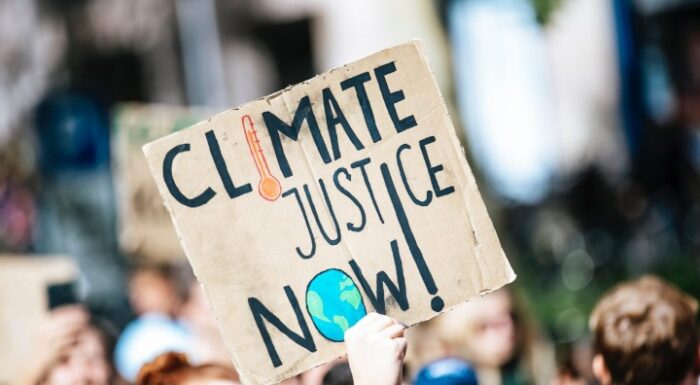
A new United Nations Environment Programme (UNEP) report has warned that global efforts to curb climate change remain dangerously inadequate, with the planet on course for a 2.3°C to 2.5°C temperature rise — a scenario that poses serious economic and environmental risks for Africa’s emerging markets.
The findings, released ahead of the COP30 Leaders Summit in Belém, Brazil, highlight the widening gap between climate pledges and real progress. The report warns that even if all current commitments are fulfilled, emissions will still exceed the levels required to meet the Paris Agreement’s 1.5°C goal, leaving developing regions like Africa particularly vulnerable.
Climate campaign group 350.org has urged African governments and financial institutions to leverage COP30 as a platform to attract investment in renewable energy and climate-resilient infrastructure — and to phase out dependence on fossil fuels.
“This report confirms what millions already feel: governments are still failing to deliver on their promises,” said Savio Carvalho, Head of Regions at 350.org. “COP30 must be a turning point where leaders stop making excuses, phase out fossil fuels, and scale up renewable energy in a way that is fast, fair, and equitable.”
With over 600 million Africans still lacking access to electricity, the report’s findings highlight both the risks of climate inaction and the continent’s potential to lead in clean energy innovation.
Experts say that channeling finance into solar, wind, and hydro projects, along with carbon-smart agriculture, could unlock new growth sectors and reduce long-term climate vulnerability.
Ilan Zugman, managing director, 350.org, Latin America, emphasised that protecting biodiversity hotspots like the Amazon — and Africa’s own Congo Basin — must be at the center of sustainable finance agendas.
“Indigenous and traditional communities are safeguarding the ecosystems that sustain our planet. Investment strategies must recognize their leadership and protect these vital regions,” he said.
Read also: African grassroots movements call for climate justice, end to exploitation ahead of COP30
From the Pacific, Jacynta Fa’amau, 350.org’s pacific campaigner, warned that climate change is already disrupting small island economies.
“Every fraction of a degree counts for survival. COP30 must urgently drive the phase-out of fossil fuels and ramp up global support for renewables,” she said.
African economies, from Nigeria to Kenya and South Africa, are expected to use COP30 to push for climate finance reforms, greater access to green bonds, and stronger international support for adaptation and loss-and-damage mechanisms.
Analysts note that the transition offers a business opportunity worth billions, if Africa can align public policy with private investment to build a low-carbon future.

Join BusinessDay whatsapp Channel, to stay up to date
Open In Whatsapp