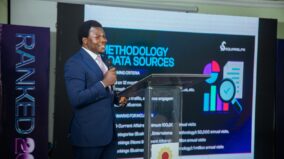
Fola Tinubu, managing director and chief executive officer of Primero Transport Services Limited, operators of the Lagos Bus Rapid Transport (BRT) scheme has stated that rising diesel prices and persistent foreign exchange volatility are the biggest pressure squeezing operators, which further led to the recent 13 percent increase in BRT fares.

Tinubu, who was a guest on BusinessDay Television Big Story breakfast show on Monday, spoke against the backdrop of the recent 13 percent fare hike approved for the BRT operators by Governor Babajide Sanwo-Olu, noting that operating costs have surged sharply in recent years, leaving operators struggling to sustain fleet maintenance and service delivery.

He noted that diesel, the company’s largest cost centre, has risen from about N115 per litre at the inception of the scheme to as high as N1,600 before moderating to around N1,000, significantly increasing daily operating expenses.

Read also: Commuters rage over LASG’s 13% BRT fare hike, as new rate takes effect Monday

At the same time, he noted that the depreciation of the naira has sharply driven up the cost of imported spare parts, with tyres previously purchased for about N40,000 now costing between N250,000 and N500,000, depending on the grade.

“Diesel, when we started, was about 115 Naira a litre. It went to about 1,600 before, it settled at around 1,000 now.

“A tire that we were buying at about 40,000 or before, we’re now buying about 250,000 Naira. European and American made, we were buying at 45,000. We don’t even go near it right now because they’re selling for about 500,000,” Tinubu said.

Recently, the Lagos state government, in a statement, while announcing the 13 percent increase in BRT fares attributed the hike to rising operational costs, including increased expenses for vehicle maintenance, spare parts, and staff salaries, particularly following the implementation of the new national minimum wage structure, as challenges Bus Operating Companies (BOCs) continue to grapple with.

According to Tinubu, the 13 percent adjustment can only provide temporary relief and does not fully address the structural challenges facing operators, noting that the cost of running the BRT system has risen sharply due to foreign exchange pressures and the import-dependent nature of critical components.

“Virtually all major inputs into our operations, spare parts, tyres and other mechanical components, are imported and directly affected by exchange rate volatility,” he said.

He added that beyond vehicle maintenance, operators must contend with high diesel prices and growing personnel expenses, including salaries for drivers, conductors and administrative staff. These cumulative costs, he noted, have significantly eroded margins in a sector where fares remain regulated by government authorities.

Tinubu explained that while fare regulation is aimed at protecting commuters, it has left operators bearing much of the financial strain.

“The recent increase offers immediate succour, but it does not solve the broader issue of sustainability,” he said, warning that persistent losses could discourage private investment in the transport sector.

He called for a tripartite dialogue involving the state government, operators and other stakeholders to agree on a framework that balances affordability for commuters with reasonable returns for investors. Without such an arrangement, he cautioned, the BRT scheme could face operational risks.

Read also: Fresh BRT fare hike raises transport inflation fears in Lagos

The Lagos Metropolitan Area Transport Authority (LAMATA), the regulator of the BRT scheme had equally defended the recent 13 percent fare increase, saying it was necessary to keep operators afloat amid spiralling operational costs. However, commuters argue that the increment is excessive at a time when household incomes are already under pressure.

Tinubu said the government, operators, and critical stakeholders must sit to discuss the proper funding model for the BRT system to prevent it from shutting down like other transportation schemes in Lagos, since its fare is regulated by the government, warning that a weakened BRT system could create room for unregulated commercial buses to dominate key routes, potentially leading to higher fares and poorer service standards.

Juliet Onyema is a transport journalist who reports on Nigeria’s transport and automobile industry. She covers emerging Electric Vehicles (EVs), ranging from adoption to usage, automobile firms and transport policies which affect them, and also recurring trends affecting commuters’ mobility interstate and intrastate.

Join BusinessDay whatsapp Channel, to stay up to date

Open In Whatsapp