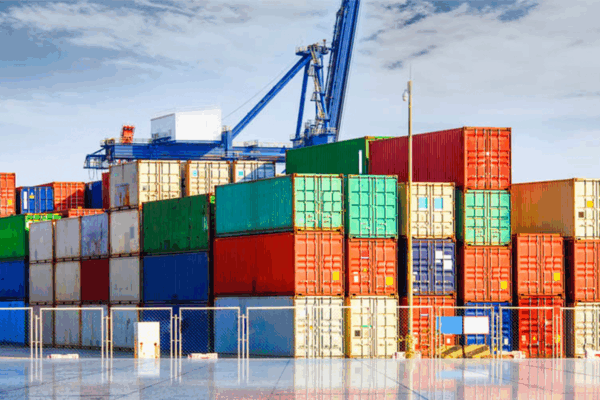
More than 90 percent of Africa’s external trade moves through seaports, making them among the continent’s most strategic economic assets.
Yet, despite rising trade volumes, only four African container ports made it into the 2025 global top 100 ranking—an indication of the structural constraints still limiting maritime capacity and competitiveness.
Against this backdrop, a handful of ports continue to dominate the continent’s cargo landscape in 2026, driven by a mix of geography, infrastructure, and investment.
Here are the largest ports in Africa by Cargo volume in 2026
Read also: 33 banks raise N4.65trn to meet new capital thresholds
Tanger Med Port- Morocco
Positioned at the Strait of Gibraltar, Tanger Med sits at one of the world’s most critical maritime crossroads, linking Europe, Africa, and the Americas. Its strategic location has underpinned its rise as Africa’s most globally connected port and a leading transshipment hub.
The port handled more than 10.2 million TEUs in 2024, representing an 18.9 percent increase, before climbing further to approximately 11.1 million containers in 2025. This sustained growth has cemented its standing among the world’s top ports, ranking within the global top 20 according to maritime consultancy Alphaliner.
Tanger Med’s strength lies not only in volume but also in efficiency. With highly automated terminals operating to global standards and connections to over 180 ports worldwide, it has become the backbone of containerised trade into and out of Africa. The port also anchors a wider industrial and logistics ecosystem that generates billions in export value, reinforcing Morocco’s position in global supply chains.
Port of Durban – South Africa
On Africa’s southern coast, the Port of Durban remains the continent’s busiest multi-purpose port and the largest container terminal in sub-Saharan Africa. Handling roughly 65 percent of South Africa’s container traffic, it serves as the primary gateway for the country’s industrial economy and the wider Southern African Development Community region.
Durban processes more than 30 million tonnes of cargo annually and accommodates around 4,500 commercial vessels each year. Its extensive infrastructure includes 58 berths, over 300 kilometres of rail track, and two major container terminals, Pier 1 and Pier 2.
A long-term $7 billion expansion plan aimed at boosting capacity to over 11 million TEUs by 2031 reflects both the scale of demand and the urgency of modernisation. Its diversified cargo profile—ranging from vehicles and petroleum to agricultural goods—continues to underpin its central role in regional trade.
Read also: Nigeria tightens vehicle importations with mandatory pre-shipment certification
Port Said – Egypt
At the northern entrance of the Suez Canal, Port Said occupies one of the most strategically valuable locations in global shipping. Its proximity to one of the world’s busiest maritime corridors gives it a natural advantage in both transit and transshipment activities.
Handling over 3.9 million TEUs annually, the port serves as a critical logistics hub for vessels crossing between Europe, Asia, and Africa. It also supports a significant free zone established in 1975, which has attracted industrial and commercial activity linked to maritime trade.
Port Said continues to benefit from steady traffic generated by the Suez Canal, positioning it as a key node in North Africa’s maritime network.
Lekki Deep Sea Port – Nigeria
Nigeria’s maritime ambitions are increasingly centred on the Lekki Deep Sea Port, a $1.5 billion project that has quickly established itself as one of West Africa’s most advanced port facilities. Fully operational since April 2023, Lekki is the country’s largest and deepest seaport, with a draught of 16.5 metres capable of handling vessels of up to 18,000 TEUs.
Located within the Lagos Free Zone, the port is designed as a fully automated, 24/7 operation with modern cargo inspection systems and integrated logistics infrastructure. It has an annual capacity of 2.5 million TEUs and includes dedicated terminals for containers, liquid bulk, and dry cargo.
Developed under a public-private partnership involving China Harbour Engineering Company, Tolaram Group, the Lagos State government, and the Nigerian Ports Authority, Lekki represents a shift towards high-efficiency port operations in West Africa, with strong potential to serve as a regional transshipment hub.
Port of Abidjan – Côte d’Ivoire
The Port of Abidjan remains one of West Africa’s most important maritime gateways and a central pillar of Côte d’Ivoire’s economy. Handling more than 25 million tonnes of cargo annually, it serves not only domestic trade but also landlocked countries, including Burkina Faso, Mali, and Niger.
Developed around the Vridi Canal, which allows deep-sea vessels to access the port, Abidjan has evolved into a major transshipment and intermodal hub. It is widely regarded as one of the busiest ports in the region, attracting major global shipping lines and supporting a broad mix of cargo flows.
Ongoing modernisation efforts are aimed at expanding capacity and improving efficiency, ensuring the port keeps pace with the region’s economic growth and rising trade volumes.

Join BusinessDay whatsapp Channel, to stay up to date
Open In Whatsapp