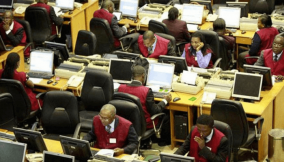
The Nigerian capital market is standing at the precipice of a major structural revival with the FTSE Russell reclassification to Frontier Market status.
The formal upgrade in September acts as a hard deadline for institutional funds to re-establish positions. Historically, the period between the announcement (April) and the effective date (September) sees a pre-emptive rally as domestic and savvy foreign investors front-run the anticipated index-tracking inflows.
Though the upgrade doesn’t just increase tracker fund investment, it tends to trigger a sectoral re-rating where the rising tide of foreign capital lifts fundamentally sound mid-cap stocks in its wake.
The banking ‘Big Three’
Banking stocks are the primary targets for FTSE inclusion due to their high free float (shares available to the public) and massive trading volumes.
GTCO Plc has risen this year by 47.74 percent. GTCO’s recent rally, which impacted its year-to-date (YtD) return shows the stock is historically the banking favourite for foreign portfolio investors due to its high efficiency and transparency. It currently leads the pack of the ‘Big Three’ banks that will benefit from the Frontier Market status windfall.
Zenith Bank Plc (+82.20% YtD), a dividend powerhouse a must-have for any fund manager tracking the Nigerian market.
FBN Holdings Plc (+6.78% YtD) after significant internal restructuring has seen massive volume spikes in early 2026. Its deep integration into the Nigerian economy makes it a staple for frontier indices.
Industrial giants
Aside the three banking stocks, industrial stocks offer the size required for FTSE inclusion.
For instance, Dangote Cement Plc (+33% YtD) as the largest listed company in Nigeria is the elephant in the room. Even with a relatively lower free float compared to banks, its sheer scale ensures it will receive a significant weight in the re-entry.
BUA Cement Plc (+83.03% YtD) is a very strong candidate for the FTSE Frontier Index re-entry in September 2026. While its massive size makes it impossible to ignore, its relatively low free float is the main factor that will determine how much of a windfall it actually receives.
Consumer Goods cornerstone
Nestlé Nigeria Plc (+65.98% YtD) is essentially a cornerstone stock for the FTSE re-entry. It is almost inconceivable that Nigeria returns to the Frontier Index without Nestlé being included. Investors should expect significant front-running activity – where large institutional players buy in anticipation of the official inclusion – between now and early September.
Telecom dominators
Despite FX volatility in previous years, MTN Nigeria Plc (+45.79% YtD) remains the most investable telecom stock. Its high cash-flow generation in Naira makes it a primary candidate for funds looking for defensive growth.
Already listed in London, but Airtel Africa Plc dual-listing status and massive Nigerian operations mean that a boost in Nigeria’s market status often leads to increased cross-border arbitrage and local buying.
Oil& Gas high yield players
As oil prices remain constructive in 2026, Seplat Energy Plc (+64.40% YtD) is dual-listed on London Stock Exchange (LSE) and NGX which serves as the primary gateway for energy exposure on the local bourse.
Aradel Holdings Plc (+90.90% YtD) is another primary contender for the FTSE re-entry windfall in September 2026. In fact, following its recent listing on the Nigerian Exchange Limited (NGX), it has quickly become one of the most compelling non-banking stories for international funds. Aradel is not just a candidate; it is likely to be the poster child for the 2026 Nigerian index re-entry. It offers the size, the sector, and the liquidity that global trackers require.
What market analysts said
“The dominant catalyst in the near term remains the FTSE Russell Frontier Market reclassification, effective September 2026. This development restores Nigeria to the FTSE Frontier Index after a three-year absence. It is expected to trigger a mandatory reallocation by global tracker funds and frontier-market ETFs into Nigerian equities, particularly large-cap names such as MTNN, Dangote Cement, GTCO, and Zenith Bank. Pre-positioning ahead of the September effective date is likely already underway and could sustain buying pressure in blue chips over the coming weeks,” Vetiva research analysts said.
“FTSE Russell has confirmed Nigeria’s reclassification from Unclassified to Frontier Market, effective 21 September 2026, reflecting improved market accessibility driven by stronger FX liquidity and the resolution of repatriation bottlenecks that triggered the 2023 downgrade. The market now meets the five FTSE Quality of Markets criteria, including regulatory oversight, FX convertibility, transparency, settlement efficiency, and post-trade infrastructure. This points to a more stable and efficient market, while also improving market visibility as investors tracking the FTSE Russell Frontier Market Index will need to gain exposure to the Nigerian market,” said Meristem Research analysts.
According to them, similar to how improved external classifications, such as sovereign credit rating upgrades, supported confidence last year, “we see the FTSE decision as a further catalyst reinforcing the ongoing rally and supporting our bullish 2026FY outlook. The NGX All-Share Index is already at 203,161.81 (+30.56percent YtD), with market capitalisation at NGN130.60trn following a 51.19 percent gain in 2025. This has been supported by easing inflation, relative currency stability, a 50bps MPR cut, strong earnings, and attractive dividend yields. We expect the reclassification to provide an additional tailwind to market performance going forward”.
“We expect the reclassification to improve investor confidence, attract fund inflows into the Nigerian market, boost foreign participation, and strengthen buying activity, particularly in liquid, fundamentally sound stocks,” Meristem Research analysts further said.
“We believe that the reclassification is very positive for the Nigerian market, especially considering its likely impact on its visibility and credibility to foreign portfolio investors. It may also serve as the first of a few other similar moves by other major index providers, such as the MSCI. The decision is also consistent with the significant reform progress, mostly with respect to or in relation to currency and monetary policy. This progress has reversed the critical drivers of the effective deletion of Nigerian stocks on the index in September 2023, which were mainly related to the difficulties experienced by international investors with respect to the repatriation of capital from the country,” CardinalStone research analysts said.
“We expect the reclassification to provide support to the Nigerian equities market, with stocks previously linked to the index likely to see notable traction between the announcement and the effective date of September 21, 2026. Thus, stocks such as GTCO and Zenith in the banking space and MTNN, Dangote Cement, Seplat, and Nestle in our non-banking universe are likely to benefit from improved sentiments. The indices’ broad sectoral coverage and the material changes to Nigeria’s stock market since September 2023 (including huge listings) suggest that the index may eventually capture stocks such as Aradel,” they further noted.
FTSE Russell and reasons for Nigeria’s reclassification
FTSE Russell is a leading global provider of index and benchmark solutions, spanning diverse asset classes and investment objectives. They help investors make better-informed investment decisions, manage risk, and seize opportunities. Market participants look to FTSE Russell for its expertise in developing and managing global index solutions across asset classes. Asset owners, asset managers, ETF providers and investment banks choose FTSE Russell solutions to benchmark their investment performance and create investment funds, ETFs, structured products, and index-based derivatives. FTSE Russell clients use its solutions for asset allocation, investment strategy analysis and risk management, and value FTSE Russell for its robust governance process and operational integrity.
“Nigeria was added to the Watch List in September 2025 for possible reclassification from Unclassified to Frontier market status. Nigeria was reclassified from Frontier to Unclassified market status from September 2023 due to significant and ongoing delays to the ability of international institutional investors to repatriate capital from Nigeria and the execution of foreign exchange (FX) transactions.
“Market participants have reported that the aforementioned FX queues have been cleared and that international institutional investors are no longer experiencing any material delays in their ability to repatriate capital from Nigeria.
“Consequently, as Nigeria meets the five FTSE Quality of Markets criteria required for attaining Frontier market status within the FTSE Equity Country Classification scheme, and following the feedback received from the FTSE Equity Country Classification Advisory Committee and the FTSE Russell Policy Advisory Board, the FTSE Russell Index Governance Board confirms, and is pleased to announce, the reclassification of Nigeria from Unclassified to Frontier market status, effective from the open on Monday September 21, 2026,” said FTSE Russell.
What NGX Group said
Temi Popoola, Group Managing Director/Chief Executive Officer of Nigerian Exchange Group Plc described the reclassification as a significant milestone for the Nigerian capital market.
He said, “This milestone underscores the progress we have made collectively as a market in strengthening infrastructure, enhancing transparency, and improving investor accessibility”.
“It reflects the sustained collaboration between regulators, market operators, and stakeholders in positioning Nigeria as a competitive destination for global capital. We will continue to work closely across the ecosystem to deepen reforms, address identified gaps, and sustain the momentum towards higher classifications,” Popoola said.

Join BusinessDay whatsapp Channel, to stay up to date
Open In Whatsapp