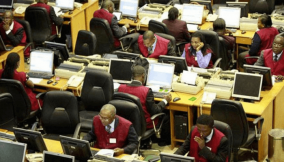
The recent decision by the Nigerian Exchange Limited (NGX) to expand its trading window – effective Monday, April 27, 2026 – marks a pivotal transition for the nation’s capital market.

By moving the opening bell to 9:00 am and extending the closing gong to 4:00 pm, the Exchange is nearly doubling its daily activity window to seven hours.

This reform, approved by the Securities and Exchange Commission (SEC), is not merely a scheduling change; it is a strategic response to Nigeria’s recent reclassification to Frontier Market status by FTSE Russell.

As the market prepares for high-profile listings later this year, including the anticipated entry of the Dangote Refinery, this expansion serves as a critical foundation for a more modern, accessible, and globally competitive financial ecosystem.

Reform reflects strong regulatory collaboration…

“This reform reflects strong regulatory collaboration and underscores the Securities and Exchange Commission’s continued commitment to advancing market development initiatives. Alongside Nigeria’s Frontier Market reclassification, it signals a deliberate shift towards a more accessible, liquid, and globally competitive market.

“The implementation follows extensive stakeholder engagement, ensuring alignment and operational readiness ahead of the go-live date. NGX Regulation Limited will continue to provide robust oversight to support a smooth and orderly transition, while maintaining high standards of transparency and investor protection,” the NGX said recently while announcing the new trading window.

The extension of the trading hours of the Nigerian Exchange Limited from the current schedule of 9:30 a.m. to 2:30 p.m. to a 9:00 am to 4:00 pm window represents a strategic move toward deeper market integration and increased liquidity.

By adding two hours to the trading day, the Exchange aligns itself more closely with global financial hubs, offering several key advantages for investors and the broader economy.

“With this development, NGX reinforces its position as a leading multi-asset exchange, deepening liquidity, improving market access, and supporting efficient capital formation within Nigeria’s financial markets,” the NGX said.

The six key benefits…

The shift from the previous 9:30 am – 2:30 pm schedule to the new 9:00 am – 4:00 pm window offers no fewer than six distinct advantages for the Nigerian market and investors.

Broader retail access: For the local investing public, extra half an hour in the morning and nearly two in the afternoon provides a better buffer for those managing portfolios alongside other professional responsibilities, encouraging a more inclusive culture of equity investment.

Read also: NGX expands trading window from 9 am to 4 pm

Increased market liquidity and volume: A longer trading window provides more time for investors to execute trades, which naturally leads to higher transaction volumes. This increased activity reduces bid-ask spreads, making it more cost-effective for both institutional and retail investors to enter and exit positions.

Improved investor responsiveness: Both retail and institutional traders gain the flexibility to react immediately to market-moving news. Instead of waiting for the next day’s open, investors can adjust their portfolios as events unfold, leading to a more dynamic and transparent marketplace.

Improved price discovery: Markets react to news in real-time. Extending the hours allows the NGX to capture and reflect a broader range of domestic and international corporate announcements, economic data releases, and geopolitical shifts within a single session. This results in more accurate asset pricing and reduces the volatility often seen during catch-up periods at the market open.

Increased foreign participation: Aligning the closing time with the afternoon sessions in Europe and the morning sessions in the Americas makes the NGX more accessible to global fund managers. This synchronisation is key to attracting the foreign portfolio investment (FPI) typical of frontier and emerging markets.

Sectoral dynamism: The extra hours provide a better buffer for high-cap sectors – such as banking, telecommunications, and consumer goods – to absorb intraday shocks. It allows the market to settle into more stable trends, providing a clearer picture of sectoral performance for analysts and consultants.

A global trend: the “always-on” market

The NGX’s move aligns with a global shift toward extended trading hours as exchanges compete for international capital.

NYSE

For instance, the New York Stock Exchange (NYSE) is actively moving to expand its trading window through its NYSE Arca electronic exchange. The plan is to extend trading to 22 hours a day – from 1:30 am to 11:30 pm (ET) – five days a week.

This is part of a broader industry push – including similar moves by Nasdaq – to meet the rising demand for around-the-clock access to U.S. markets. While the US SEC granted accelerated approval for the rule change in early 2025, the full rollout has been targeted for late 2026. The delay is due to several critical infrastructure dependencies.

For instance, the National Securities Clearing Corporation (NSCC) has filed rule changes this April to update its systems to support these extended hours, with production testing targeted for June 2026. By expanding its trading window, the NYSE aims to capture volume from international investors in Asia and Europe who previously had to wait for the U.S. morning to trade major equities.

Nasdaq

Nasdaq is also expanding its trading hours. On April 10, the US SEC officially granted accelerated approval for Nasdaq to move to a 23-hour trading day, five days a week (known as the 23/5 model). This is a step beyond the NYSE Arca’s 22-hour plan. Nasdaq received SEC approval to run a Day Session (4:00 am – 8:00 pm) and a Night Session (9:00 pm – 4:00 am). The one-hour gap (8:00 pm – 9:00 pm) is reserved for system maintenance and corporate action processing.

Cboe Global Markets

Unlike the NYSE or Nasdaq, which are primarily equities-first exchanges moving into overnight hours, Cboe is a derivatives-first exchange. They are using their existing global infrastructure for the VIX and S&P 500 options as the blueprint for how they will handle overnight stock trading. As with the other exchanges, Cboe’s December 2026 launch is contingent on the NSCC (National Securities Clearing Corporation) successfully completing its transition to a 24×5 clearing model this summer.

Tokyo Stock Exchange

The Tokyo Stock Exchange (TSE) recently implemented its first major trading hour extension in 70 years. Unlike the 22- or 23-hour “always-on” shifts currently being rolled out in the U.S. by the NYSE and Nasdaq, the Tokyo Stock Exchange expansion is more modest but significant for the Japanese market.

The extension, which officially went live in the second half of 2024 (late 2024) and remains the standard till today, added 30 minutes to the afternoon session. Along with the 30-minute extension, the TSE introduced a Closing Auction (or Closing Bid) period. The window: from 3:25 pm to 3:30 pm allows for a single price to be determined for the market close, helping to stabilise volatility during the final minutes of trading and aligning the TSE with international standards used in London and New York.

Iheanyi Nwachukwu, is a creative content writer with almost two decades journalism experience writing on banking, finance, capital markets, and tax. The multiple awards winning journalist is Assistant Editor, BusinessDay. Iheanyi holds BSc Degree in Economics from Imo State University; Master of Science (MSc) Degree in Management from University of Lagos. Iheanyi has attended several work-related trainings including (i) Advanced Writing and Reporting Skills (Pan African University, Lagos); (ii) News Agency Journalism (Indian Institute of Mass Communication {IIMC}, New Delhi, India); and (iii) Capital Markets Development and Regulations (International Law Institute {ILI} of Georgetown University, Washington DC, USA). Other trainings Iheanyi attended include: Economic/Political Risk Analysis (By Thomson Reuters Foundation); International Financial Journalism (IFJ) (By PMA Media Training, UK); Effective Business Writing Skills (By Phillips Consulting); Reporting on Corporate Governance (By International Finance Corporation (IFC) & Thomson Reuters Foundation UK); etc. In addition, he has participated in high-level economy & markets events in Dubai, South Africa, Morocco, and other African countries like Zambia, Ghana and Gambia.

Join BusinessDay whatsapp Channel, to stay up to date

Open In Whatsapp