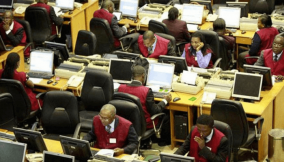
Nigeria’s capital market has seen a remarkable 125 percent growth in capitalisation since April 2024. The market value has risen from about N55 trillion in 2024 to over N123.93 trillion.
Emomotimi Agama, the Director General, Securities and Exchange Commission (SEC) said the market’s contribution to the nation’s Gross Domestic Product (GDP) has increased significantly from 13 percent to 33 percent within the same period, underscoring the sector’s expanding role in economic development.
He spoke in Lagos during his inaugural address to members of the Capital Market Working Group on Market Liquidity at the Commission’s office.
Read also: Nigeria’s Securities Exchange bets on new reforms to lure private capital
The SEC DG described the growth figures as evidence of strong investor confidence and the resilience of the Nigerian capital market under the current administration, but stressed that market size alone was not enough without corresponding depth and liquidity.
“Since this administration came into being in April 2024, we have seen market capitalisation grow from about N55 trillion to over N123.93 trillion. Our contribution to GDP has moved from 13 percent to 33 percent. These are impressive figures, but they tell only part of the story,” he said.
According to him, liquidity remains critical to sustaining the growth momentum, noting that a market must be deep and efficient to effectively perform its primary function of capital formation.
“A capital market is often described as the barometer of an economy’s health. But for that barometer to be accurate, the market must be more than just large—it must be liquid,” he said.
Agama identified key structural challenges, including high transaction impact costs for institutional investors and the concentration of trading activities in a limited number of highly capitalised stocks, which he said leaves the broader market relatively shallow.
He warned that without sufficient liquidity, investors may be reluctant to enter the market if they are uncertain about their ability to exit positions without significant price distortions.
To address these concerns, the SEC inaugurated a multi-stakeholder Working Group comprising exchanges, custodians, fund managers, dealing members and other market operators. The group is expected to develop practical recommendations to improve trading efficiency, deepen participation and enhance price discovery.
Among its mandates are a comprehensive review of trading and settlement infrastructure, identification of technical and structural bottlenecks affecting transaction speed, and proposals to make Nigeria’s settlement cycle more competitive with other emerging markets.
The group is also expected to recommend measures to broaden retail participation, with the SEC targeting the onboarding of up to 20 million new investors through digital platforms, dematerialisation of share certificates and fintech partnerships.
Agama noted that product innovation would also be central to improving liquidity, particularly through the accelerated development of derivatives and other asset classes that can provide hedging opportunities and deepen market activity.
He added that the recently enacted Investments and Securities Act (ISA) 2025 has expanded the Commission’s regulatory oversight to include digital assets, creating an opportunity to channel speculative interest into regulated and productive investment channels.
Emphasising the strategic importance of the sector, the SEC DG said it plays a critical role in financing infrastructure, supporting businesses and driving job creation.
“The capital market is not gambling; it is the engine of national development. It finances roads, powers factories and creates jobs,” he said.
Agama urged members of the Working Group to produce bold and practical recommendations that would strengthen liquidity and support the Federal Government’s broader ambition of building a trillion-dollar economy.
He added that while the recent surge in market capitalisation and GDP contribution reflects strong progress, the next phase of reforms would focus on ensuring that the market is not only large, but deep, inclusive and globally competitive.
In his remarks, Temi Popoola, Group CEO of NGX, who is the chairman of the Committee thanked the SEC for the opportunity and assured the DG that the team understands its mandate and will diagnose structural constraints with candour, align on practical reforms, and deliver measurable actions that will deepen liquidity, restore confidence, and strengthen the resilience of our market.

Join BusinessDay whatsapp Channel, to stay up to date
Open In Whatsapp