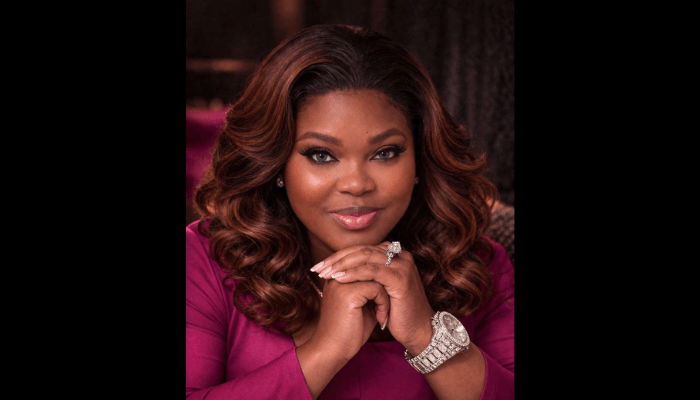
Joyful Uwem Eyo, an integrative coach, has empowered families and institutions across Africa and beyond to cultivate emotionally intelligent, confident, and conscious individuals. In this interview with NGOZI OKPALAKUNNE, Uwem Eyo a member of the John Maxwell Leadership Team, spoke on Nigeria’s rising mental health concerns and how integrative coaching can help. She also shared strategies for achieving a better work-life balance. Excerpts:
What sparked your interest in becoming an integrative coach and what is your style?
My journey into integrative coaching was sparked by a deep realisation that many of the challenges people face are not just behavioral, they are rooted in unaddressed emotional experiences, subconscious patterns, and learned conditioning. I saw that people could have knowledge, even desire change, but still feel stuck. That gap between knowing and becoming is what drew me into this work.
Personally, and professionally, I’ve always been drawn to understanding people and why they think the way they do, why they react the way they do, and how early life experiences shape adulthood.
Over time, I realised that lasting transformation requires more than surface-level solutions. It requires working with the whole person, the mind, emotions, and identity. That’s what led me to integrative coaching.
My style is both compassionate and structured. I create a safe, non-judgmental space where clients feel seen and heard, but I also bring clarity, direction, and accountability. I am not just there to listen; I am there to guide transformation.
How can you differentiate integrative coaching from traditional coaching?
The key difference lies in depth and scope. Traditional coaching tends to focus on specific goals, performance, productivity, or achieving measurable outcomes. It’s often structured around action plans, accountability, and skill development. Integrative coaching, however, takes a more holistic approach. It looks at the individual as a whole, mind, emotions, beliefs, past experiences, and even subconscious patterns.
Take for example in traditional coaching, if a client struggles with consistency, the coach may focus on systems, discipline, and time management. In integrative coaching, we would also explore emotional triggers, identity, limiting beliefs, and even past conditioning that may be driving that inconsistency.
So, while traditional coaching is excellent for external results, integrative coaching bridges both internal transformation and external success, creating more sustainable and aligned outcomes.
What area of life do you specialise in coaching clients and how do you help people achieve growth and development?
I specialise in coaching across key areas that shape both personal and collective success, emotional intelligence, parenting and family systems, relationship dynamics, personal mastery, and leadership development. My work supports individuals as well as organisations that want to build healthier, more effective people and cultures.
On the individual level, I work with parents, couples, and individuals who feel stuck in recurring emotional patterns, struggling relationships, or identity transitions. I help them understand the deeper drivers behind their behaviors, often rooted in past experiences, limiting beliefs, or unprocessed emotions and guide them toward lasting transformation.
On the organisational level, I work with leaders, teams, educators, and caregivers to build emotionally intelligent systems. This includes leadership development, workplace culture transformation, conflict resolution, and communication effectiveness. I also provide specialised trainings for sectors like education, hospitality, and caregiving, where emotional intelligence directly impacts performance and outcomes.
In terms of how I help people achieve growth, I use an integrative approach, combining self-awareness, emotional processing, and practical strategy. We don’t just focus on what needs to change externally, we address the internal patterns driving those outcomes. Then we translate that awareness into clear, actionable steps.
With rising mental health concerns in Nigeria, how can integrative coaching contribute to addressing this issue?
Nigeria is currently facing a significant mental health challenge, and the gap between those who need help and those who actually receive it is very wide. Studies show that millions of Nigerians experience mental health conditions, yet over 80–90 percent do not have access to proper care due to stigma, cost, and a shortage of professionals.
This is where integrative coaching can play a powerful and complementary role.
First, integrative coaching increases accessibility. Because it is not always confined to clinical settings, it can reach people in homes, schools, organisations, and communities, especially those who may never walk into a hospital or therapy center due to stigma or cultural beliefs around mental health. In Nigeria, where mental illness is often misunderstood or spiritualised, this approach creates a softer, more acceptable entry point for support.
Second, it focuses on prevention, not just treatment. Many mental health challenges are rooted in unmanaged stress, trauma, emotional suppression, and poor coping mechanisms. Integrative coaching equips individuals with emotional intelligence, self-awareness, and regulation skills early, helping to reduce the likelihood of more severe mental health conditions developing.
In essence, integrative coaching doesn’t replace clinical mental health care, it expands it. It provides early intervention, culturally adaptable support, and practical tools for everyday living. And in a country like Nigeria, where the need is high and resources are limited, that makes it not just valuable, but necessary.
How best can Nigerians take proper care of their mental health?
Taking care of mental health in Nigeria requires both awareness and intentional daily practice, especially in a society where people are often under pressure yet taught to ‘just be strong.’ Mental health care has to become something we normalise, not something we hide.
First, it starts with emotional awareness. Many people are not used to asking themselves, ‘How am I really feeling?’ Learning to recognise emotions, stress, anger, sadness, burnout, is the first step to managing them. You can’t heal what you don’t acknowledge.
Secondly, we need to build healthy support systems. In Nigeria, community is a strength, but many people suffer in silence. Talking to a trusted friend, mentor, coach, or professional can make a significant difference. Seeking help should be seen as wisdom, not weakness.
Also, mental hygiene is important. Just like we take care of our physical body, we must care for our minds. This includes rest, reducing exposure to constant stress or negative information, practicing reflection or journaling, and creating moments of calm, even in a busy environment.
Ultimately, mental health care in Nigeria is about shifting from survival mode to intentional living, where people are not just enduring life, but actually experiencing peace, clarity, and emotional balance.
Can you share strategies on improving work-life balance?
Improving work-life balance is less about perfectly dividing time and more about intentionally managing your energy, priorities, and boundaries. We live in transitory times, especially in Nigeria where many people juggle multiple responsibilities, it requires conscious structure.
First, clarity of priorities is key. Many people feel overwhelmed because everything seems urgent. I help clients identify what truly matters, professionally and personally; so, their time reflects their values, not just their pressures.
Second, boundaries are essential. This means defining when work starts and ends, learning to say no without guilt, and protecting personal time. Without boundaries, work will naturally overflow into every area of life.
Third, I emphasise energy management over time management. You can have time but no energy. So, I guide clients to build routines that support rest, sleep, and mental recovery—because burnout is often an energy issue, not just a scheduling issue.
Ultimately, work-life balance is not about doing less, it’s about living and working in a way that is sustainable, fulfilling, and aligned with who you are.
What is the most common misconception about integrative coaching that you have encountered?
One of the most common misconceptions about integrative coaching is that it’s just ‘regular coaching with a fancy name’ or that it lacks structure and professionalism.
In reality, integrative coaching is highly intentional and deeply structured, it simply goes beyond surface-level goal setting. While traditional coaching often focuses on actions and outcomes, integrative coaching works at multiple levels: mindset, emotions, subconscious patterns, and behaviour.
Another misconception is that it’s the same as therapy. While integrative coaching may draw from psychotherapy-informed tools and approaches like hypnotherapy, it is not a replacement for clinical therapy. Coaching is forward-focused and growth-oriented, helping clients move toward their goals, while responsibly referring cases that require clinical intervention.
Some people also assume it’s ‘too deep’ or only for people with serious issues. But in truth, integrative coaching is for anyone who wants sustainable growth. Whether it’s improving leadership, parenting more consciously, or breaking limiting patterns, the depth simply ensures that the change lasts.
How do you assess Nigerian’s acceptability to this form of coaching?
Assessing Nigerians’ acceptability for integrative coaching requires understanding both our cultural strengths and our evolving mindset as a society. Overall, I would say the acceptance is growing, but it is still in transition.
Traditionally, many Nigerians were raised to normalise endurance, ‘be strong,’ ‘pray about it,’ or ‘keep pushing.’ Because of this, anything that involves emotional exploration or inner work can initially be met with skepticism or even resistance. There is also a tendency to either spiritualise challenges or dismiss them, rather than engage them psychologically.
However, that narrative is changing. We are seeing a significant shift, especially among younger generations, professionals, and even parents who are becoming more aware of emotional intelligence, mental health, and personal development. More people are asking deeper questions, not just ‘How do I succeed?’ but ‘How do I heal, grow, and live better?’

Join BusinessDay whatsapp Channel, to stay up to date
Open In Whatsapp