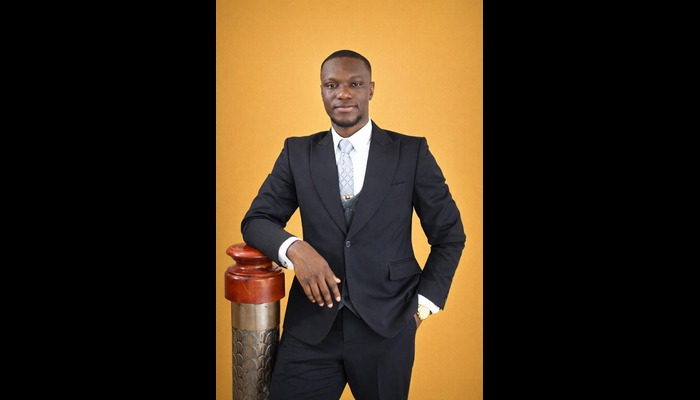
Oluwaseun Akinola is a Nigerian-born, United States-based chemist and environmental expert. He is currently doing his doctoral programme in environmental engineering at the University of Connecticut in the US, where he is a graduate research assistant and also mentors undergraduates. In this interview with REMI FEYISIPO, he spoke about the environmental issues affecting Nigeria, advice for Nigerians hoping to live or study in the US, his research works and their significance to society among others. Excerpt:
How does climate change affect air quality; what are the implications of that, and how can the negative effects of these climate challenges in the air be mitigated?
Climate change modifies both atmospheric chemistry and physical transport processes. Higher temperatures accelerate ozone-forming reactions, while changes in wind patterns and atmospheric stability affect pollutant dispersion. Heat events can also alter emissions profiles through shifts in energy demand. These combined factors can complicate air-quality management, particularly in regions already affected by transported pollution. Mitigation requires coordinated emission-control strategies that account for interstate transport, strengthened monitoring systems, and diversified energy-generation approaches. Forward-looking environmental planning, air quality monitoring station and robust modeling tools are essential to maintain compliance under evolving climate conditions.
Lagos is a big city with a large volume of diverse waste generated every day, which indiscriminately ends up in the streets, landfills, and water bodies. How would you advise the Lagos State government on how to effectively manage waste, the way you have seen it managed in the US or that you have researched about?
Lagos must transit from reactive waste cleanup to structured governance. Strengthening source segregation, enforcing hazardous-waste tracking, incentivising recycling, and investing in waste-to-energy systems would significantly improve outcomes. Digital monitoring systems and public education campaigns are equally important. Waste management should be approached as a public-health protection strategy rather than solely a sanitation issue.
If you were to solve three national problems facing Nigeria with your environmental engineering expertise, which problems would they be, and how would you go about solving them?
First, urban air pollution through integrated urban planning and emission-control strategies.
Second, industrial risk management through stronger compliance and environmental monitoring systems.
Thirdly, climate resilience through science-based infrastructure policy and predictive modelling integration.
Each requires sustained institutional commitment and evidence-driven policy design.
You have a BSc in Industrial Chemistry and an MSc in Analytical Chemistry. What inspired your interest in environmental engineering for your doctoral programme?
Career paths in science are rarely linear, and my journey reflects that reality. Literally, I did not abandon chemistry I just expanded its application.
My interest in environmental science began in secondary school. As a boarding student, I relied on a stream polluted by fishpond waste for domestic water. The conditions were unsafe, and as Head Boy, I raised concerns that led to an investigation and an eventual long-term intervention. That early experience shaped my conviction that environmental problems directly affect health, dignity, and opportunity.
Academically, I studied Industrial Chemistry and later Analytical Chemistry. During my masters programme, I deepened my exposure to atmospheric, soil, and water chemistry, and conducted research assessing health risks of toxic metals in Lagos food systems. That work strengthened my understanding of environmental exposure pathways and public-health implications.
Did you have any engineering background before going for your environmental engineering programme?
Professionally, I worked as a wastewater process engineer at Chevron Nigeria Limited, applying unit operations, thermodynamics, and process chemistry in environmental treatment systems. I also served as an environmental and safety consultant on projects across sectors, including oil and gas, manufacturing, and energy infrastructure, conducting environmental impact assessments, industrial risk evaluations, and regulatory compliance projects.
Through these roles, I observed how industrial systems intersect with environmental protection and public health. It became clear that solving environmental problems requires not only chemical expertise but also systems modelling and policy-informed decision-making. My doctoral work in atmospheric modelling is therefore an extension of my chemistry background, applied at a regional systems scale.
Your profile states that you worked as the Head of Department of the Health, Safety, and Environment (HSE) at Brightest Hope Company in Lagos State before relocating to the US. What major projects did you handle for the company that impacted the environment and public health in Lagos?
As Head of Health, Safety, and Environment at Brightest Hope Company Limited, I led several high-impact regulatory and capital projects that shaped environmental compliance and industrial safety standards. Among the most notable were serving as Project Technical Lead for a federally approved Environmental Impact Assessment (EIA) for a battery manufacturing and recycling facility, leading the EIA for an 8,000 standard cubic meter compressed natural gas decompression station, conducting a fire and explosion risk assessment for a 5-megawatt power generating plant, assessing landfill stability and gas migration risks, and developing operational safety cases and oil spill contingency plans for two petroleum storage depots with a combined capacity exceeding 40 million litres.
These projects required structured hazard identification, environmental risk evaluation, and regulatory coordination, ultimately strengthening environmental safeguards and industrial risk management frameworks in Lagos.
What inspired your choice of the University of Connecticut in the United States for your doctoral program? And how are you coping with the cost of tuition and living, as well as managing the climate and cultural differences?
The University of Connecticut stood out because of the strength of its Environmental Engineering programme, particularly in atmospheric modelling, environmental risk assessment, and climate pollution interactions. The department combines rigorous academic research with meaningful collaboration with industry and policy stakeholders. I intentionally sought a programme where research informs environmental governance and sustainability planning.
Beyond research excellence, UConn fosters a strong support ecosystem. Communities such as the John Lof Leadership Academy and the Graduate Black STEM Society have been instrumental in my development not only as a scholar but also as a leader. These networks provide mentorship, leadership training, and opportunities to contribute beyond research.
I was awarded a competitive graduate research assistantship and am also a Fellow of the NSF-supported Team-TERRA traineeship, which connects environmental risk research to food systems and ecosystem resilience. This support has strengthened both my interdisciplinary exposure and professional growth.
Adapting to the northeastern US climate requires adjustment, but resilience is part of growth. The academic environment has broadened my perspective and sharpened my research focus.
Which area(s) of environmental engineering do you focus on or specialise in, and how does it align with your long-term research goals and career path?
My research cuts across computational modelling of atmospheric composition and processes. I use advanced tools such as the Community Multiscale Air Quality (CMAQ) model, the Weather Research and Forecasting (WRF) model, and the Sparse Matrix Operator Kernel Emissions (SMOKE) system to simulate how pollutants form, move, and transform in the atmosphere.
These models capture both chemical reactions and physical processes, including pollutant transport, dispersion, vertical mixing, and deposition. Through these integrated systems, I investigate how urbanisation, industrialisation, and changing climate conditions interact to influence air quality and associated health risks.
In addition, my work extends to modelling the air-quality implications of different energy-generation pathways under changing climate conditions. By running simulations across multiple future energy system configurations, I assess how shifts in energy production can influence pollution levels and public-health exposure risks.
My long-term goal is to provide predictive tools that quantify environmental risks while also evaluating how alternative development and energy strategies shape future air quality outcomes.
What is your doctoral thesis or work about, its possible findings, and its significance to society?
My doctoral research investigates how cross-state emissions and meteorological variability influence ozone levels in the United States, as many regions across the United States continue to struggle with ozone nonattainment despite reductions in local emissions.
Ground-level ozone forms through nonlinear reactions between nitrogen oxides and volatile organic compounds under sunlight. While emissions reductions have improved air quality over time, recent observations show that ozone exceedances persist, suggesting that factors such as interstate transport and changing climate conditions play significant roles.
Using CMAQ with the Integrated Source Apportionment Method (ISAM), I quantify how emissions from upwind states such as New York and New Jersey contribute to ozone concentrations in downwind areas. I integrate high-resolution meteorological data from WRF and process emissions using the SMOKE modelling system to ensure accurate representation of sector-specific contributions.
In addition to source apportionment, my research evaluates how temperature variability and meteorological patterns influence ozone formation efficiency. This allows us to investigate whether current emission-control strategies sufficiently account for climate and transport interactions.
A particularly important aspect of this work is its direct policy interface. My research group meets regularly with the Connecticut Department of Energy and Environmental Protection (CTDEEP) to review ongoing ozone attainment challenges across the state. During these meetings, we share our modelling progress and technical findings, while CTDEEP provides regulatory updates and observational insights. This exchange ensures that our research remains aligned with real-world air-quality management needs.
The societal significance is substantial. Ozone exposure is linked to respiratory and cardiovascular diseases, and many metropolitan areas remain in nonattainment of federal standards. By quantifying cross-state contributions and climate influences, my research provides data-driven insights that can support more effective interstate pollution management and evidence-based regulatory decisions.
Tell us about your engagements with Team-Terra National Science and the National Aeronautics and Space Administration (NASA) and how they impacted your research and career endeavours?
As an NSF-supported Team-TERRA Fellow, I work within an interdisciplinary cohort of graduate students from Environmental Engineering, Urban and Regional Planning, and Economics. Together, we are developing probabilistic heat-risk maps designed to support more effective allocation of emergency resources during extreme heat events. By integrating environmental modelling with socio-economic vulnerability indicators, our work aims to help policymakers identify communities most at risk during heat stress and improve resilience planning. The programme emphasises translating scientific modelling into stakeholder-relevant tools, which aligns closely with my broader research philosophy bridging technical analysis and real-world application.
In addition, I served as a Graduate Science Mentor with NASAs Student Airborne Research Program (SARP), guiding undergraduate researchers analysing atmospheric data collected from research aircraft. Mentoring within NASAs collaborative research environment strengthened my leadership skills and broadened my engagement with advanced atmospheric science.
Together, these experiences have reinforced my commitment to interdisciplinary research that informs public health and environmental policy.
What is next for you after your doctoral programme, where do you see yourself and your career in five years?
After completing my PhD, I intend to continue working at the intersection of air quality modelling, industrial risk management, and sustainability policy. In five years, I see myself leading interdisciplinary initiatives that support evidence-based environmental governance and regional air-quality planning.
So far, what is your American dream, and are you living that dream?
For me, the American dream is the opportunity to pursue knowledge, innovate responsibly, and contribute meaningfully to society, regardless of background. I am living that dream through research, mentorship, and professional growth while remaining committed to applying my expertise to challenges in Nigeria and beyond.
How would you advise Nigerians hoping to live or study in the US?
To Nigerians aspiring to study abroad, my advice is simple: build competence, remain adaptable, and focus on long-term impact. Sustainable success is built on consistent growth and purpose.

Join BusinessDay whatsapp Channel, to stay up to date
Open In Whatsapp