In recent years, Nigeria’s fiscal trajectory has increasingly leaned on borrowing as a default survival strategy.
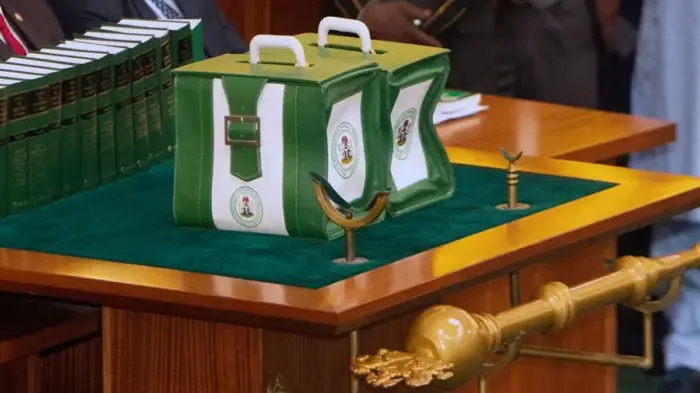
What should ordinarily trigger rigorous legislative scrutiny has instead become a recurring ritual: the President submits a loan request or budget increment, and the National Assembly grants approval with remarkable speed.
The latest proposal, an additional N9 trillion to the 2026 budget has once again thrown this pattern into sharp relief, raising urgent questions about accountability, oversight, and the long-term consequences for Africa’s largest economy.
At the heart of this concern is not merely the size of the borrowing, but the seeming absence of interrogation. The National Assembly, constitutionally empowered to check executive excesses, appears to have settled into a routine of compliance rather than scrutiny.
Each new request is treated as an inevitability rather than a proposal to be rigorously debated, dissected, and justified.
Recent legislative activity underscores this concern
Last Tuesday, the Senate approved a request by President Bola Tinubu to establish a $5 billion structured Total Return Swap (TRS) external financing programme with First Abu Dhabi Bank.
According to the report of the Senate Committee on Local and Foreign Debts, the facility is a derivative-based instrument governed by International Swaps and Derivatives Association (ISDA) rules, designed to provide foreign currency liquidity in tranches over a six-year tenor.
The Committee highlighted several features of the arrangement: the facility is to be collateralised at 133.3 percent with naira-denominated Federal Government securities; it carries pricing benchmarks of SOFR +3.95 percent for the first tranche and slightly higher margins for subsequent tranches; and it includes provisions for monthly mark-to-market valuation, with margin calls in dollars where necessary.
The stated objectives are familiar; budget implementation, infrastructure financing, refinancing of expensive debt, and addressing fiscal shortfalls. Notably, about 40 percent of the proceeds are earmarked for capital projects within the 2025 and 2026 budgets.
The Committee, in its conclusion, described the facility as “an innovative and strategic approach” that offers flexibility, competitive pricing, and support for fiscal stability.
It recommended approval, alongside provisions for quarterly reporting by the Ministry of Finance and the Debt Management Office (DMO).
On the same day. the Senate also approved another external loan. a $1 billion facility backed by UK Export Finance (UKEF) for the rehabilitation of the Lagos Port Complex (Apapa) and Tin Can Island Port. Structured under an Engineering, Procurement, Construction plus Finance (EPC+F) model and arranged by Citibank London, the loan carries a tenor of up to 14 years and is intended to overhaul Nigeria’s aging port infrastructure.
The justification, again, is compelling on paper. The ports, long past their design lifespan, are critical to Nigeria’s trade architecture. Their rehabilitation is expected to improve cargo throughput, reduce logistics costs, and enhance revenue generation. Lawmakers noted that the financing is tied to a “self-liquidating economic asset” and that its long tenor would ease debt servicing pressures.
Taken individually, each loan appears rational, anchored on infrastructure needs, fiscal gaps, or macroeconomic realities. But collectively, they tell a more troubling story.
Since its inauguration, the 10th National Assembly has approved multiple borrowing requests spanning billions of dollars, alongside securitisation arrangements and budget expansions. Yet, there is little evidence of systematic follow-up. The same committee reports that outline detailed financing structures and risk mitigation strategies often stop short of demanding concrete evidence of outcomes from previously approved loans.
This is not without precedent
During the administration of former President Muhammadu Buhari, borrowing became deeply entrenched in fiscal policy.
The Senate under Ahmad Lawan gained notoriety for its swift approvals, including the securitisation of over N22.7 trillion in Ways and Means advances from the Central Bank of Nigeria. Concerns about transparency and sustainability were raised at the time, but approvals proceeded with minimal resistance.
Today, the pattern persists, arguably more sophisticated in structure, but fundamentally unchanged in process.
Nigeria’s debt profile tells a troubling story. As of December 31, 2025, total public debt stood at approximately $103.2 billion (N146.69 trillion), according to figures cited in Senate committee reports.
While the debt-to-GDP ratio of about 36.9 percent remains within official thresholds, the more critical metric, debt service to revenue continues to raise red flags, hovering around 60 percent or higher.
In practical terms, a significant portion of government earnings is consumed by debt servicing, leaving limited fiscal space for development priorities.
This reality raises a fundamental question: what exactly is Nigeria borrowing for, and what has it achieved?
Every loan request is accompanied by assurances of impact, roads will be built, ports rehabilitated, liquidity improved, growth stimulated. Yet, there is no consistent legislative culture of asking: What has been delivered? Where are the projects? What measurable outcomes justify the next round of borrowing?
Even within the committee reports themselves, the emphasis is often on structure, pricing, and compliance with legal frameworks, not on retrospective accountability.
The N9 trillion proposed increase in the 2026 budget amplifies this concern. While the executive cites inflationary pressures and fiscal demands, the deeper issue remains unaddressed: why does Nigeria continually return to borrowing without a transparent accounting of past loans?
In more robust democracies, borrowing approvals are accompanied by strict oversight frameworks—performance audits, milestone tracking, and enforceable consequences for non-delivery. In Nigeria, oversight is frequently reduced to recommendations—quarterly reports, monitoring mandates—that are rarely enforced in the public eye.
This raises uncomfortable questions about institutional independence. Is the National Assembly exercising its constitutional mandate, or has it become a procedural checkpoint for executive decisions?
Beyond governance, the implications for future generations are profound. Debt, when properly managed, can drive development. But when accumulated without accountability, it becomes a generational burden, one that outlives the administrations that incurred it.
Nigeria’s young population, already navigating economic uncertainty, stands to inherit a fiscal landscape defined by obligations rather than opportunities. The moral weight of this reality cannot be ignored.
If the current trajectory continues, borrowing risks becoming not just a policy tool, but a habit—one reinforced by a legislature that approves more than it questions.
The Senate Committee reports on the TRS facility and the UKEF-backed port rehabilitation both contain a telling refrain: calls for “enhanced oversight,” “quarterly reporting,” and “transparency in utilisation.” These are not new prescriptions. They have accompanied loan approvals for years.
What remains missing is enforcement
Until the National Assembly moves from recommendation to action, demanding verifiable outcomes, publishing performance reports, and holding implementing agencies accountable, Nigeria’s debt cycle will remain unbroken.
The N9 trillion budget increment, like the loans before it, is more than a fiscal decision. It is a test of governance.
Will lawmakers interrogate, or will they approve?
Will borrowing translate into tangible development, or remain trapped in a cycle of promises and repayments?
For a country already spending much of its revenue servicing debt, the stakes could not be higher.

Join BusinessDay whatsapp Channel, to stay up to date
Open In Whatsapp