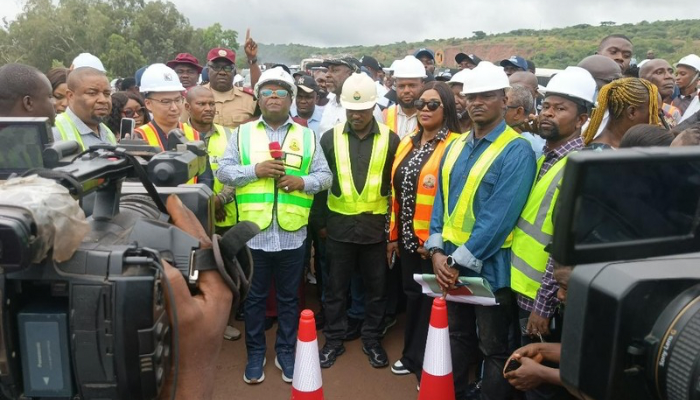
The recent opening of a 15-kilometre stretch of the Enugu–Onitsha Expressway by the Federal Government has drawn mixed but largely positive reactions from road users, residents, and transport operators, many of whom described the development as long overdue while calling for sustained completion and broader economic relief.
For Eberechukwu Okafor, a farmer and sand loader operating along the corridor, the newly opened road represents not just improved mobility but economic opportunity.
“We load sand in tippers, and this new road will bring more customers to us because the road is now durable,” he said.
Another road user, Emmanuel from Kogi State described the project as a “welcome development,” though he stressed that more work must be done to ensure long-term value.
“Half bread is better than none,” he noted. “But the road should not be left this way after the opening. The concrete road should be asphalted. If not, it won’t be durable, and it can be slippery, which increases the risk of accidents.”
Read also: FG opens section of Enugu-Onitsha expressway, assures completion by 2026
He further urged the government to move beyond basic infrastructure provision and address broader socio-economic challenges affecting Nigerians.
“We should have gone past celebrating road construction every year. There are so many other areas that will add meaning to citizens’ lives,” he said, citing water supply and the rising cost of goods and services as urgent concerns.
On the impact of recent economic policies, Emmanuel lamented the hardship faced by citizens following subsidy removal.
“Both the rich and the poor are suffering. Electricity, no subsidy. Petrol no subsidy. Everything is high, and taxes are increasing. The government should find a way to cushion the effects,” he added.
Echoing similar sentiments, Emmanuel Chukwu, tricycle operator, said the improved road would reduce wear and tear on vehicles and enhance safety.
“Our shock absorbers and tyres won’t be bursting again. Casualties will reduce,” he said.
However, he also raised safety concerns about the road’s finishing.
“There should be barriers at the edges. Someone could lose control and fall into those open sides,” he warned.
Chukwu, like many others, tied infrastructure improvements to the broader economic realities confronting citizens.
“We are hungry. The government should reduce food prices and fuel costs. After working, we still spend everything at the filling station,” he lamented.
Motorist Ejike Ikele, who recently travelled across multiple states, commended the quality of ongoing federal road projects, singling out the Ministry of Works for praise.
“If what the minister is doing is replicated across other ministries, Nigeria will be a better place,” he said. “From Lagos to the Southeast, I experienced smoother drives. It shows progress.”
David Umahi, minister of Works, defended the Federal Government’s intervention, attributing the progress to the directive and support of President Bola Ahmed Tinubu.
“When we came on board in 2023, it was taking over seven hours to travel from Enugu to Onitsha. This route had been abandoned despite being one of the most critical in the Southeast,” Umahi said.
He explained that the project, initially awarded at N202 billion, had stalled for years before being reviewed and restructured.
“We reviewed the project and ensured continuity. The total reconstruction now stands at over N350 billion, with sections being handled using reinforced concrete technology designed to last between 50 and 100 years,” he stated.
Umahi added that the first 15-kilometre stretch is about 97 percent complete but was opened to ease Easter traffic.
“The President directed that completed sections be opened so our people will not suffer during the festive period,” he said.
Highlighting the broader scope of federal infrastructure projects in the Southeast, Umahi listed several ongoing road constructions and rehabilitations across the region, insisting that the narrative of marginalisation was changing.
“For the first time, the Southeast is not left behind. Governance is about development, fairness, and infrastructure,” he said.
He also urged Southeast leaders and residents to support the current administration, linking continued development to political alignment.
“We must be strategic. When you appreciate what is being done, more will come,” Umahi added.
Despite the commendations, the mood among many residents reflects cautious optimism welcoming visible progress while insisting that completion, maintenance, and economic relief remain critical.
As one respondent summed it up, “It is good to see the road open, but what matters is finishing it and making life easier for the people using it.”

Join BusinessDay whatsapp Channel, to stay up to date
Open In Whatsapp