…As momentum builds on proposed Anioma State

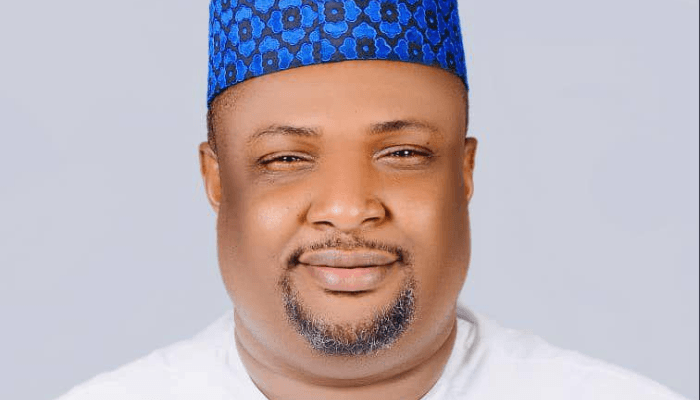
Dormene Mbea, a journalist and public relations expert, has called on President Bola Ahmed Tinubu, and the National Assembly, to extend equal legislative consideration to the creation of Ogoni State, just as momentum continues to build around the proposed Anioma State.

In statement, Mbea urged Godswill Akpabio, Senate president and Abbas Tajudeen, speaker, House of Representatives, to immediately commence the constitutional process required for the creation of Ogoni State.

According to him, for equity, fairness and national cohesion the creation of an Ogoni State from the present Rivers State demanded no less.

He said that recent remarks by Akpabio reaffirmed legislative and political backing for Anioma State, and he argued that such support established a precedent that should not exclude Ogoni aspirations.

Mbea also said that justice within a federal system must be balanced and inclusive, ensuring that no ethnic nationality or region was sidelined in the ongoing discourse on state creation.

He maintained that Ogoni, with Bori as its proposed administrative capital, possessed all the defining characteristics of a viable state.

The PR expert explained that the region has a significant population base, strong economic potential and strategic geographical advantages, including land resources and access to waterways, which position it for sustainable development without excessive reliance on federal allocations.

He further emphasised that the demand for Ogoni State went beyond political recognition and was deeply rooted in the historical experiences of the Ogoni people.

He noted that for decades, Ogonis have endured political marginalisation, economic exclusion and severe environmental degradation arising from oil exploration activities that began in 1958.

Mbea recalled the sacrifices made by Ogoni leaders and citizens during the struggle against military dictatorship, particularly under the regime of Sani Abacha.

He stated that while many regions hesitated during that era, the Ogoni people stood firm in the fight for democracy, environmental justice and human rights, paying a heavy price with the loss of some of their most prominent voices.

Mbea said that those sacrifices were yet to be adequately acknowledged through concrete political action, noting that the creation of Ogoni State would serve as both recognition and restitution for the injustices suffered by the people.

He also pointed to the continued environmental crisis in Ogoniland, describing it as a lingering national concern that required more than policy promises.

He argued that only a state structure controlled by the people can effectively address the scale of environmental restoration, economic rebuilding and social healing required in the region.

Mbea warned that the importance of Ogoni oil to the Nigerian economy must be matched with genuine commitment to justice and fairness for the host communities.

He stressed that any continued engagement with Ogoni resources without addressing the political and structural concerns of the people raised serious moral and national questions.

Mbea urged the Federal Government and the National Assembly to act decisively, insisting that extending the same consideration given to Anioma to Ogoni was not only a matter of fairness, but a necessary step toward strengthening Nigeria’s unity and addressing longstanding grievances in the Niger Delta.

He reiterated that time has come for deliberate action, noting that the creation of Ogoni State remained the most practical pathway to restoring dignity, ensuring development and securing lasting peace in the region.

Join BusinessDay whatsapp Channel, to stay up to date

Open In Whatsapp