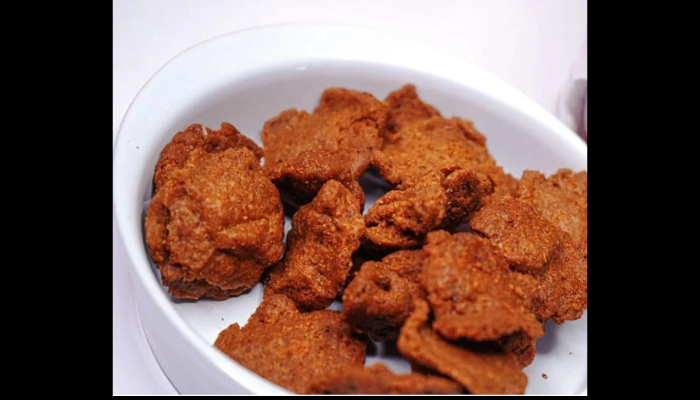
Kulikuli is a popular, crunchy West African snack originating from North Cenern Nigeria, but spreading to every part of the nation. The snack is called African peanut bar or groundnut cake in English.

According to Wikipedia, Kuli-kuli was first made by the Nupe people of Nigeria and is also a popular snack in, Benin, northern Cameroon and Ghana, although today the snack is accepted across the globe, especially as the diaspora travel everywhere with spicy snack.

Made from ground, roasted peanuts (groundnuts), Kulikuli is usually spiced, molded, and deep-fried. It is rich in protein and fat, often eaten alone or paired with Ijebu soaked garri, otherwise known as garium smoothie or cassava flakes. Some people even ground Kulikuli and put into their salad. It is however pertinent to note that kuli, as it is sometimes called is often ground and used as an ingredient for yaji, suya and kilishi.

On a smiley note, while putting this material together, I came to understand that some people even use kulikuli alongside custard, or pap, koko, and fura. But I have not tried this before!

In preparing kuli-kuli, the groundnuts are roasted and then ground into a paste called labu. The paste is then mixed with sugar, some spices and salt to taste, as well as blended pepper.

The paste is stripped of excess oil with water and made into the desired shape (some are flat, oval, square, or round balls, cylinders, etc.). Well, some people even assert that adding some ground potash to the oil increases the boiling point of the oil. This results in the oil being extracted from the kuli-kuli so that more liquid oil is created than when the process started. While being heated and fried, the shaped peanut-paste begins to solidify and harden. It is then removed from the oil and allowed to cool down until ready to be eaten.

The unique seling point of kuli is that it has a very long shelf life. It is good for children and adults and it sold all around Nigeria, West Africa and the continent.

Thus, in the vibrant mosaic of Nigeria’s culinary heritage, few snacks carry the weight of history, identity and resilience like kulikuli.

This crunchy delicacy, made from roasted peanuts after oil extraction, has nourished generations and strengthened communities across Nigeria and West Africa. Yet beyond its modest appearance lies a compelling case for its inscription on the UNESCO Intangible Cultural Heritage (ICH) List.

Kulikuli is not a modern invention driven by commercial ambition. It is a product of indigenous knowledge and resourcefulness. Traditionally prepared by grinding roasted groundnuts into paste, extracting the oil, seasoning the residue and frying it into crisp shapes, kulikuli represents the African ethic of zero waste. Nothing is discarded. Everything is transformed.

The technique has been passed down orally, often from mothers to daughters in homes and markets, especially in northern Nigeria where peanut farming thrives. Over time, regional variations have emerged, yet the essence remains unchanged as community skill, shared labour and culinary continuity.

Nutritionally, kulikuli stands as more than a nostalgic snack. Groundnuts are rich in plant-based protein, making kulikuli an accessible and affordable source of dietary protein for millions. It contains beneficial monounsaturated fats that support heart health, as well as essential minerals such as magnesium and phosphorus that contribute to bone strength and energy metabolism.

In many Nigerian households, particularly in lower-income communities, kulikuli provides sustained energy for farmers, travellers, adventurers, culinary storytellers, traders, artisans and schoolchildren. At a time when global conversations revolve around nutrient-dense, affordable foods, this traditional snack quietly answers that call.

Its economic value is equally significant. Across Nigeria, kulikuli production supports a vast informal economy. Groundnut farmers depend on steady demand, processors operate local mills, market women package and retail the snack, and transporters move it across states and borders.

For many women, particularly in rural communities, kulikuli production is a source of financial independence. What appears as a simple snack is in actual fact a value chain that sustains livelihoods and strengthens local economies.

As African food products gain visibility on the global stage, kulikuli holds untapped export potential, capable of generating foreign exchange while promoting Nigeria’s culinary identity.

Beyond Nigeria’s borders, kulikuli has become a treasured emblem of home for the diaspora. In cities such as London, Toronto and Houston, African stores as well as Nigerian stores prominently stock it alongside staples like garri and palm oil.

At weddings, church gatherings and cultural festivals abroad, bowls of kulikuli evoke childhood memories, roadside markets and festive evenings. The social media platforms reveal diaspora chefs incorporating kuli into salads, desserts and fusion cuisine, proving its adaptability without losing its cultural core. In these moments, kulikuli functions not just as food but as a bridge between continents, binding identity to taste.

The case for inscription on UNESCO’s Intangible Cultural Heritage List rests not merely on taste or nostalgia but on cultural transmission and social meaning. UNESCO recognizes living traditions that communities identify as part of their heritage. Kulikuli fits squarely within this definition. Its preparation methods are handed down through generations. Its presence at ceremonies and everyday life reinforces social bonds. Its survival amid industrial snacks testifies to cultural resilience. Recognizing kulikuli would affirm the ingenuity embedded in indigenous African food systems and elevate Nigeria’s culinary narrative within global heritage discourse.

Heritage is not only found in monuments and artifacts; it resides in kitchens, markets and communal memories. Kulikuli represents sustainability, nutrition, entrepreneurship and identity woven into one crunchy bite.

To nominate it for UNESCO recognition would not merely celebrate a snack, it would honour generations of knowledge, empower present producers and secure a cultural legacy for the future.

Nigeria has long championed its music, textiles and festivals on the world stage. It is time to extend that advocacy to its culinary treasures. Kulikuli deserves global recognition, not only as groundnut cake, but as a living heritage.

Join BusinessDay whatsapp Channel, to stay up to date

Open In Whatsapp