The Nigerian National Petroleum Company (NNPC) Limited, on January 30, 2026, announced Assa North, in Ohaji Egbema Local Government Area and Izombe, in Oguta Local Government Area of Imo State, as hubs in the 2026 Gas Master Plan.
This is the first time Imo State has been included in the Nigerian Gas Master Plan.
Imo State and the broader South-East region were initially excluded from the core central infrastructure planning of the original 2008 Nigeria Gas Master Plan.
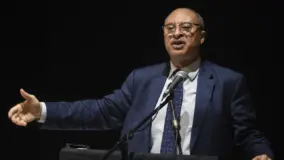
Emeka Mgbudem, state’s commissioner for Petroleum and Natural Gas Development, in an interview, said that the late President Umaru Musa Yar’Adua in October 2008 constituted a committee, which included the then governor Ikedi Ohakim to review the plan and address the marginalisation concerns of the South East, as the initial 2008 plan focused on three main Processing Facilities in the Western Delta, Obiafu ( north of Port Harcourt), Akwa Ibom/ Calabar and major transmission lines, like the Western Delta ( Escravos- Lagos) and South-North lines ( Ajaokuta- Kaduna- Kano).
He said that subsequent revisions aimed to include Imo State failed. But thanked God for the Assa-North/ Ohaji South (ANOH)/Izombe projects, the visionary leadership and strategic foresight of Governor Hope Uzodimma that Imo State which sits on vast gas reserves is now a critical gas hub that will also support the broader Aba- Owerri- Nnewi- Onitsha pipeline project.
“It is my firm and strong opinion that Imo is blessed to have Governor Hope Uzodimma, as our Governor during this period as he keeps securing numerous advantages not just for our state, but for our region.
He called on the entire South East to key into Governor Uzodimma’s alignment with the federal government and support his leadership, as a bridge to national integration.
On the benefits of the inclusion of Imo State in the gas masterplan, Mgbudem said that Assa North feeds the OB3 pipeline, while Izombe focuses on using associated gas to power industries.
“Consequently, these hubs are strategic to Imo’s industrial and economic growth, as they would boost domestic supply and attract anchor tenants to the Orashi Special Energy Zone.
“The Orashi Special Energy Zone is resource-anchored and is being positioned as an international gas hub. The State can achieve being the cheapest industrial power in Africa, as the Zone gives us an edge in agro processing, heavy industries like fertiliser, methanol, refinery, LNG at the lowest tariff per kilowatt hour.
“With the significant inclusion of Imo in the Nigeria Gas Master Plan 2026, the state government would unleash our energy advantage by unlocking our gas potentials to power our homes, light up our cities and digital economies within our State and beyond our borders.
“For us in Imo, natural gas is now not just a resource; it has become a beacon of possibilities. It is the energy that will drive our dreams. Our gas-to-power projects would deliver the cheapest cost of living for Imo citizens.
On the safety of the host communities, he affirmed that they will benefit immensely from the Gas Flare Commercialisation Programme.
He said that the ANOH gas plant (which has delivered its first gas) was specifically designed to operate with zero routine flare, noting that the facility integrates an advanced technology to process gas that was previously flared in the Ohaji South field, aligning with sustainability goals to reduce carbon intensity.
“For the Izombe hub, Seplat is committed to its ‘onshore End of Routine Flaring’ programme. Antan Producing is also advancing its Routine Flare Reduction initiatives to ensure the end of gas flaring. The gas flare reduction project also covers fields in Imo like Ameshi, Akri, Jisike, Agu, Egbema Main/ West, Oguali, Assa, Ibigwe, Ukpichi etc.
“Nigeria is actively implementing the Nigerian Gas Flare Commercialisation Programme (NGFCP) to capture and monetise flared gas.
“NUPRC has granted 28 companies permits to access 49 flare sites primarily in the Niger Delta. We are actively transitioning from treating flare gas as an environmental liability to an economic asset, fostering sustainable development and cleaner energy use.
“Nigeria aims to eliminate routine flare by 2030 and reach net zero emissions by 2060. The current flare capture programme is expected to cut 6 million tonnes of CO2 annually, attract roughly $2bn in investments, create over 100,000 jobs (directly and indirectly), capture 250- 300mmscf of gas daily and unlock nearly 3 gigawatts of potential power generation capacity, helping to address our energy poverty.
In terms of revenue accruals, the commissioner said that the internally generated revenue of the State is expected to increase significantly, competing with the top 3 States in Nigeria, when gas-based industries and the Orashi Special Energy Zone become operational.
He said that the 2 ANOH projects alone, when fully operational, would appreciably contribute to the State’s IGR.
“As a major gas hub, leveraging the 24- hour power supply will attract manufacturing firms, boosting tax sources like PAYE.
“The establishment of Gas City Gates, Collection Centres, Pipelines, Processing Plants, CNG and value chain outfits will attract foreign direct investment and create thousands of jobs, thereby enhancing the economic viability of the state.
“Imo State is now properly positioned in the Global Decade of Gas Map and recognised as a strategic international gas hub courtesy of the transformational leadership of Governor Hope Uzodimma. It can only be better. Imo has risen,” he said.

Join BusinessDay whatsapp Channel, to stay up to date
Open In Whatsapp