Nigeria is at the centre of one of the most ambitious clean-energy transitions on the African continent. This is because the 80 Million Clean Cookstoves Project, initiated by GreenPlinth Africa Limited is reportedly working with the federal and state governments to transform how millions of households cook, reduce deforestation and position Nigeria within the global carbon credit economy.
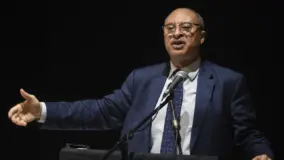
At the heart of the initiative is a $1.5 billion carbon-credit financing framework designed to distribute clean, energy-efficient cookstoves to millions of Nigerian homes at no cost to beneficiaries. The programme has already gained traction through a Memorandum of Understanding with the Lagos State Government, which serves as the anchor state for the project, and Memoranda of Agreement signed with states including Nasarawa. Niger and Benue, expanding the national footprint of the initiative. In this interview, Babatunde Aina, Group Chief Financial Officer of GreenPlinth Africa Limited, spoke with LYDIA ENYIDIYA EKE, and explains the financial architecture, environmental ambition and social impact of a project many analysts describe as a potential turning point in Africa’s climate transition. Excerpts:
The 80 Million Clean Cookstoves Initiative is being described as one of the largest climate intervention programmes in Africa. From a financial standpoint, how significant is the project?
The scale of this programme is truly unprecedented. We are looking at distributing 80 million energy-efficient cookstoves to households across Nigeria, which makes it one of the largest clean-cooking initiatives anywhere in the world. From a financial perspective, the project is supported by a $1.5 billion carbon credit financing structure, which allows us to deploy the stoves free of charge to households while generating verified carbon credits from the emissions reductions achieved. Essentially, we are using climate finance to solve a development challenge. By reducing the amount of firewood used in traditional cooking, we cut carbon emissions, improve public health and help Nigeria participate in the global carbon market. This model demonstrates that environmental sustainability and economic growth can work together.
Why is clean cooking such a critical issue for Nigeria and Africa?
Clean cooking is one of the most urgent but under-reported development challenges in Africa. More than 180 million Nigerians still rely on firewood and traditional stoves for cooking. Across Africa, the figure runs into hundreds of millions. This dependence on biomass fuels creates multiple problems. It contributes to rapid deforestation, indoor air pollution, climate change and serious health risks for women and children, who are most exposed to smoke from traditional stoves. The improved cookstoves we are introducing are designed to reduce fuelwood consumption by over 80 percent, which significantly lowers emissions and protects forests. So when people talk about climate solutions, clean cooking should be at the top of the list.
Lagos State recently signed a Memorandum of Understanding with GreenPlinth Africa. What role does Lagos play in the project?
Lagos is extremely important to this programme. The Memorandum of Understanding signed with the Lagos State Government effectively made the state the anchor partner for the national rollout. Under the arrangement, millions of cookstoves will be distributed across communities in Lagos, beginning with vulnerable areas where access to clean energy solutions is limited. But beyond distribution, Lagos also provides an enabling environment for innovation and partnerships. The state’s commitment to environmental sustainability aligns strongly with the objectives of this programme. What Lagos has done is to demonstrate how state governments can collaborate with private sector climate initiatives to deliver real impact for citizens.
GreenPlinth Africa has also signed Memoranda of Agreement with Niger, Nasarawa and Benue states. Why are these state partnerships so important?
For a project of this scale to succeed, it must be implemented locally with strong institutional partnerships. That is why we have signed Memoranda of Agreement with states such as Niger, Nasarawa and Benue, bringing them directly into the implementation framework. These agreements allow state governments to support community mobilisation, logistics, environmental programmes and beneficiary identification.
Each state also has unique environmental challenges. For example, several northern and middle-belt states are facing increasing deforestation and desertification pressures. By working closely with state authorities, the project becomes more inclusive, more effective and truly national in scope.
One of the unique aspects of the initiative is its link to a massive tree-planting programme. How does that work?
Yes, the cookstoves project is integrated with a large-scale ecosystem restoration initiative.
Every household that receives a cookstove is encouraged to plant 50 economic trees, which will contribute to restoring degraded landscapes across the country. At full implementation, the programme is expected to result in the planting of about four billion trees across Nigeria by 2030.This serves multiple purposes. It helps combat deforestation, restore biodiversity, support sustainable wood supply and create economic opportunities for communities. In essence, we are not just distributing cookstoves, we are building a nationwide environmental restoration movement.
As CFO, you oversee the financial architecture of the project. How does carbon financing support the initiative?
Carbon markets are a key part of the project’s sustainability. Each clean cookstove significantly reduces greenhouse gas emissions by lowering the amount of wood burned for cooking. These emission reductions are verified and converted into carbon credits that can be traded in international carbon markets. The revenue from those credits helps finance the large-scale distribution of the cookstoves and ensures the programme remains economically viable.
Nigeria has enormous potential in this area. With the right policies and projects, the country could generate billions of dollars annually from carbon credit revenues. Our role is to ensure that the financial structure is transparent, credible and aligned with global climate standards.
Beyond climate benefits, what economic opportunities could emerge from this programme?
The economic potential is substantial. Large-scale clean cooking programmes create entire value chains, from manufacturing and distribution to training, environmental monitoring and carbon verification. This translates into job creation, technology transfer and local capacity development.In addition, households will save money because they will spend less on firewood and cooking fuel. When you combine the environmental, economic and health benefits, the impact becomes transformational.
How does this initiative fit into Africa’s broader decarbonisation agenda?
Africa contributes the least to global greenhouse gas emissions, yet it suffers disproportionately from the impacts of climate change. Projects like the 80 Million Clean Cookstoves Initiative show that Africa can also be part of the solution. By reducing emissions at scale, restoring forests and engaging with carbon markets, Nigeria can position itself as a leader in climate innovation on the continent. This is not just about Nigeria, it is about demonstrating what is possible for Africa.
Finally, what message would you like Nigerians to take from this project?
This initiative is ultimately about improving lives. It protects our forests, reduces pollution, improves health outcomes for families and creates economic opportunities. If implemented successfully, the 80 million clean cookstoves programme could become one of the most transformative environmental projects in Africa’s history. And we believe Nigeria has the capacity and the leadership to make that vision a

Join BusinessDay whatsapp Channel, to stay up to date
Open In Whatsapp