…Chairman creates OBEF as Vice Chancellor calls for end to violent revenue collection method
A broad plan to deepen and fast forward the economy of Obio/Akpor, a larger section of the Rivers State, has emerged.
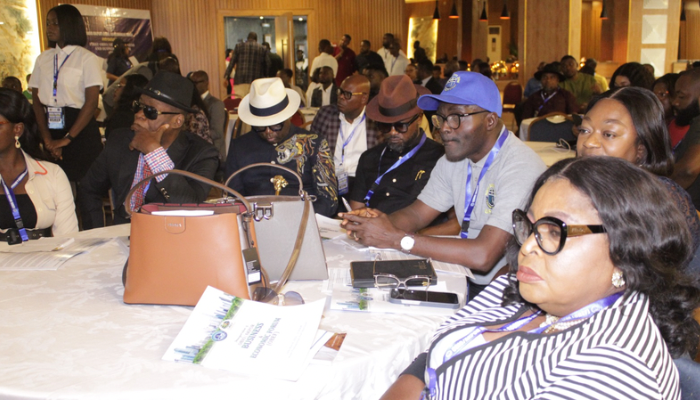
Gift Worlu, a management expert and University of Port Harcourt lecturer, who is now the chairman of Obio/Akpor LGA, has inaugurated the Obio/Akpor Business and Economic Forum (OBEF) charged with the duty to plan the economic pathway of the area.
He said OBEF marks the beginning of a new chapter in their collective resolve and effort to strengthen and future-proof the foundation of the Local Government Area.
“Obio/Akpor is one of the most populous, vibrant, and viable Local Government Area in Nigeria. It boasts a heterogeneous spread of over three million people, thousands of nano, micro, small, medium and big businesses and emerging entrepreneurs, thousands of pre-primary, primary, secondary, and tertiary institutions of learning, and several military, police, and other para-military posts, stations and bases.

“Obio/Akpor is also the gateway to the capital city of Port Harcourt, and a part of the Greater Port Harcourt metropolis. It, therefore, presents a complex tapestry of opportunities as well as challenges, requiring outside-the-box thinking and action, without which we cannot secure the peace and inclusive prosperity of the current generation, let alone guarantee the survival of future generations yet unborn.”
He talked about the creation of ‘OBALGA ARISE framework’, saying they have realised that socio-economic development does not occur in isolation; rather it thrives in an atmosphere of dialogue, collaboration, synergy, and shared vision among stakeholders in the private
and public sectors of the economy. “0BEF is conceived as a structured quarterly platform where business, politics, the intelligentsia, and the broader stakeholder community intersect and interact toward building and sustaining a better society.”
He said the Forum is intended to serve three critical purposes: First, to create a structured platform for engagement between the Local Government and the stakeholder community where opportunities and challenges can be openly discussed, and practical solutions co-created.
“Second, to promote a business-friendly environment by listening to your concerns, improving our policies, and strengthening institutional support systems including digital platforms for permits, payments and approvals that enable businesses and institutions, as well as households to thrive in an increasingly tech-driven economy. This way, business organizations and the academia have ar unhindered opportunity to participate in governance and policy formulation. Your voices can now be heard.

“Third, to encourage shared responsibility for development, where businesses operating witn
Obio/Akpor actively contribute to the socio-economic advancement of our communities through compliance, job creation, and corporate social responsibility initiatives, and where the contributions business organizations to our communities are appreciated by the authorities and vice versa.”
The dimensions of the Arise Agenda include: Improving ease of doing business; Ensuring transparency and fairness in revenue c collection and management; Supporting enterprise development and growth; Investing in infrastructure and community development; Promoting peace, security, and social |stability; Stamping out street trading, land grabbing, indiscriminate parking, cultism, illicit drugs abuse, and other social vices; and hunger, ignorance, inequality, unemployment, disease, etc, Reducing poverty; and Driving digital innovation and administrative efficiency to position Obio/Akpor Local Government Area as a premier investment destination in the Niger Delta.
He said OBALGA ARISE unveiled in December 2025 has led to action; introducing digital levy payments and online permit processing to ease business operations, advancing traffic decongestion measures, strengthening security frameworks, and prioritizing infrastructure projects drawn from ward-level consultations and town hall meetings. “These early steps already demonstrate our commitment and with OBEE, we will accelerate this journey together.”
He said: “When businesses grow, jobs are created. When investments increase, communities prosper. When collaboration improves, development becomes inevitable.
Therefore, OBEF is not merely a meeting platform; it is a strategic partnership between government and the economic drivers of our community.
“Permit me to, at this juncture, use this medium to invite all investors. local, regional, external or foreign to come to OBALGA and feel free to engage my office on how to bring investments to the LGA and capitalise on the “OBALGA advantage”: vast population of educated young people, oil and gas value chain, real estate investments, a thriving services sector, as well as a comfortable investment climate.”
End violent revenue collection, VC
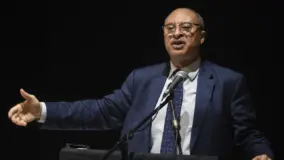
Okechukwu Onuchuku, the Vice Chancellor of Ignatius Ajuru University of Education (IAUOE), the keynote speaker, harping on: “Role of Critical Stakeholders in Shaping the Local Economy’, called for end to violent revenue collection method in Nigeria.
The Uniport lecturer who is serving as acting VC in IAUOE urged Obio/Akpor to chase away agents of multiple taxes and violent tax groups. “On the other hand, some businesses do not pay taxes. There is no way any business would want to operate in any tax jurisdiction without paying taxes. Some have no traceable addresses or sign posts, no identification.”
To boost the economy and create wealth, he advised Obio/Akpor to grow the informal sector. “Help that sector with soft loans, protection, etc.”
He said there is need to define and understand those that are critical stakeholders in a local government especially Obio/Akpor LGA. “They include the administrative staff; councilors, all the workers; the people of the LGA, the business community within Obio/Akpor, those that engage and are engaged by the LG Authority.”
He said Economy refers to activities that lead to productivity including exchange of goods and services of a given area. On challenges, he mentioned power supply, ICT, funding, etc.
He said computer based tests (CBTs) is a new challenge: “We realise that rural based students find it difficult to compete favourably with their city counterparts in public exams such as JAMB (Joint Admission and Matriculation Board), and now WAEC (West African Examinations Council), NECO (National Examination Council).
“They fail these exams not because they do not know anything but because of lack of IT skills. Yet, we see that LGA headquarters have ICT units. I suggest that these ICT units should be transformed into IT teaching centres to create syllabus and time roll for schools in their LGA areas to be taught turn by turn. This will help the students to pass their external exams that are now conducted on CBT systems.”
On job creation, he urged LGAs to develop schemes in collaboration with businesses in their areas to create jobs to absorb the teeming number of youths coming out of school. This is the only way to stop an overflow of idle youths in the near future and reduce youth restiveness and violence. Preaching for peace alone will not stop it. There is need to take action. Each LGA and the business community within should come together and work out ways of creating more ventures and jobs.
“Government must take another look at rural agriculture which is at the moment at agrarian levels. There is need for commercialization and mechanization of agriculture at the rural areas. This will help transform the rural areas and the 774 LGAs into centres of productivity through a carefully planned agric scheme based in each LGA.
“There is need to create competitive business systems with boost in infrastructure, security, and basic amenities that would make lives bearable in the localities.”
He urged LGAs to deploy Research & Development (R&D) very well because it is very important. “Let businesses work with the universities to solve problems confronting businesses. There must be the mindset of produce to survive. It’s a rule.”
It was at this point that he mentioned what he called the three modules of productivity LGAs in Nigeria must adopt. He said they were factors of production, directing funding, manpower, and productive assets to each LGA in Nigeria.
He gave the first model as the PPP (public, private partnership model) which he said would involve businesses and entrepreneurs in a given LGA to work with the LGA authority to execute nominated economic ventures per year.
The next he said next is the Self-Help/Community Participating model which provides a platform for various communities and willing individuals to execute certain projects every given year with the LGA as the coordinating force.
The third is what he called the ‘Triple Helix model’ which he said would create a platform with universities and research centres (for research), industry (for investment), and the LGA for funding and regulatory function, all into a partnership that would have set goals and timelines.
He made it clear that effective collaboration of all stakeholders will create a vibrant LGA economy.

Join BusinessDay whatsapp Channel, to stay up to date
Open In Whatsapp