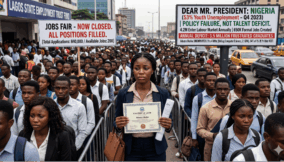
Dozens of protesters in Boston, Massachusetts Thursday chanted, “Destroy Boko Haram” and “Bring Our Girls Back” as they expressed apathy for the Nigerian government’s efforts in dealing with the three week old abduction of over 250 by the Islamic militant group.
Marching round the Boston Commons, a central public park, some wore red to show their solidarity with the missing girls and others waved banners that read, “Help our failing Country” and “Stop Boko Haram now”.
The anger which got expression in the massive protests that have trailed the abduction of the girls followed the perceived belief by many citizens of Nigeria that the response time by the Federal Government was rather too late.
Angry Nigerians and others across the world wondered why the Jonathan-administration delayed rescue operation until about two weeks after the abduction, when the insurgents must have successfully ferried the girls outside the country through the porous borders.
Meanwhile, the United Kingdom has heeded the call by President Goodluck Jonathan for assistance in the fight against terror with the arrival of a team of experts from Britain to help in securing the release of the abducted school girls, just as the Federal Government has been called upon to threaten war on Cameroon, Chad and Niger if they do not produce the over 200 girls abducted on Tuesday, April 15, 2014.
Senator Iyabo Obasanjo, daughter of former President Olusegun Obasanjo, who was part of the Boston protest, told the crowd “let’s keep up the pressure”; calling on Nigerians to be actively involved and not leave it “to others”.
The social-media crusade #BringBackOurGirls which began following the abduction has been re-tweeted over a million times and has attracted the support of global celebrities and voices. Meanwhile, American President Barrack on the heels of this campaign dispatched to Nigeria military personnel and hostage negotiators to help in getting the girls back.
Other voices at the Boston protest called for Nigerian President, Goodluck Jonathan to move beyond rhetoric, tackle the pervasive corruption in the country and for the international media to continue the intense coverage being given to all the issues related to the kidnappings.
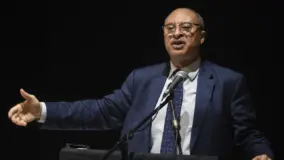
Darren Kew, associate professor of Conflict Resolution at the University of Massachusetts, Boston, speaking at the rally suggested that as Boko Haram evolves from an organisation into a movement, the government should pursue a strategy that would “separate the hard-liners from the fence sitters” in the group.
Kew also proposed engaging the International Criminal Court and the United Nations Security Council, noting the need for a resolution that condemns the acts of Boko Haram.
As events unfold, co-organizer of the Boston protest, Godwin Nnanna, say the aim of the rally was to, among others, support the growing movement to ensure this issue remains in global discuss.
President Goodluck Jonathan had in a media chat last Sunday revealed his intention to seek superior and more sophisticated intelligence in addressing the security challenge in the country. William Hague, UK foreign secretary also confirmed the willingness of Britain in rendering assistance during a meeting of the council of Europe last week.
Rob Fitzpatrick, head of Press and Public Affairs British High Commission, stated that a team of UK experts who will advise and support the Nigerian authorities in its response to the abduction of over 200 school girls arrived in Abuja, Nigeria Friday.
According to Fitzpatrick, the team was drawn from across government agencies including DfID, FCO and the MoD, and will work with the Nigerian authorities.
“The team will be considering not just the recent incidents but also longer-term counter-terrorism solutions to prevent such attacks in the future and defeat Boko Haram,” he said.
Also, the team will be working closely with their US counterparts and others to coordinate efforts.
Participants at the just concluded World Economic Forum (WEF) were particularly angry as they lent their voices to the call for the safe rescue of the abducted Chibok girls.
They were worried that the development could cause mass withdrawal from school due to fear from rising attacks on their right to education by Boko Haram terrorists.
Klaus Schwab, founder and Executive Chairman, WEF led participants to observe a minute silence to express solidarity and particularly, feelings with the victims, the families but also with the hope and prayer that the girls will come back soon, safe and whole.
He said Africa cannot allow terrorism to dictate its agenda and that for this reason, he is grateful that the forum was recording huge participation still even in the face of the insecurity stories around the country, which he said indicated confidence and trust.
Gordon Brown, former Prime Minister of the United Kingdom and current United Nations Special envoy for Global Education, also condemned the abduction of the girls and prayed for their rescue and also for strength and comfort of their families.
“Our fear about their safety, our focus about their families, our worries about their future are at the centre of this intention,” he said.
“We must get the girls safe- those who have been abducted and kidnapped, we must reassure people that schools will be safe in the future and we shall deal with the vulnerability that had been created by terrorism in this country.
“Our support is here for the Nigerian government and the Nigerian people in everything that they are trying to do to make sure that girls, particularly, and also boys can go to school like in other countries. And we will do everything we can to support this initiative.
“From the tweets and the facebooks and from the numbers of people right now around the world joining this campaign ‘Bring back our girls’, I can tell you that millions of people across the world are now aware that they want to do something to help the Nigerian girls,” Brown added.
He said they would be working with governments at all levels to do all they could to return the girls, and that they believe that the greater danger is in the fear of going to school and if time is not taken, the nation could lose a generation of students who are afraid of their safety in schools.
His words, “I’ve talked to the former secretary of the United Kingdom and I’m in contact with John Kerry, personal friend of mine and the Secretary of States in the USA and they have both agreed that they will provide teams to support the Nigerian government- that may be surveillance, satellite, air cover, to try to locate the girls.
“Our efforts to try to locate these girls and defeat those people who want to abduct and kidnap people are being stepped up and then international community is ready to support the. Nigerian government and I understand that the President wants to accept that support.
“So, we are sending out a message that the whole international community is concerned when girls are adopted and kidnapped, when parents are in fear that their daughters may be sold as sex slaves or trafficked to other countries, and that we want to stand beside the people of Nigeria in helping the reassurance that action is being taken to help recover those girls that have been kidnapped.
“We are also committing to making sure that measures are being taken in schools themselves that would make sure that the schools are safer and parents would judge these measures as they are being taken.”
Tunde Bakare, a cleric, former vice presidential candidate and Save Nigeria Group convener, has urged government to threaten war on Cameroon, Chad and Niger if they do not produce the 234 girls abducted from Borno State within 10 days.
Bakare spoke amid rumours that some of the girls have been ferried across Nigeria’s border to neighbouring countries where they have been married off to Boko Haram fighters.
The cleric, who also is a delegate to the ongoing National Conference, said: “I want to see the president of our country sending ambassadors of peace and war to Chad, to Cameroon, to Niger Republic, to say that this is the report we are hearing. Our borders are porous and now our children are abducted and we understand they are in your territory.
“We ask you within 10 days to fish them out, whether there is international law or no international law. We will show you we are the big brothers in West Africa and we are coming against you if you don’t fish them out.”
The anger in the land appeared to have worsened following President Jonathan’s outing at the last Presidential chat.
Critics say the President blew the opportunity, and failed to seize the momentum to soothe the pains of his compatriots. Those who spoke with BDSUNDAY were of the opinion that the President should have better kept quiet since he had “no good news” for the parents and guardians of the abducted girls.
Fear and anger rose to a fever pitch last Monday following the threat by Abubakar Shekau, leader of the Islamist sect Boko Haram to sell the schoolgirls his group abducted.
“I abducted your girls. I will sell them in the market, by Allah,” Shekau said in a video.
According to him, “Allah has instructed me to sell them. They are his property and I will carry out his instructions.”
The threat came a day after the seventh media chat addressed by President Goodluck Jonathan inside the Aso Rock Villa, where he and reassured parents, guardians and all Nigerians that his administration would successfully rescue the kidnapped girls.
Although the President said his government did not know where the missing girls were, he however, said: “Wherever they are, we will surely get them back.”
At a meeting in Lagos during the week, attended by influential Nigerians and expatriates many of whom are big players in various sectors of the economy, a good number of those in attendance expressed regrets at the failure of President Jonathan to leverage on the opportunity provided by the media chat to properly tell the over-traumatised fellow country men and women in concrete terms what government was doing about the abducted girls and about the general insecurity in the country.
One of those who made the observation was a woman, a national leader of repute in private sector. She said some expressions employed by the President to answer some of the questions, particularly his explanation on the abducted girls at Chibok were “not presidential” enough.
“What concerns me so much in all of this is that after the rebasing, we are going to have asset discounting,” she said.
Expressing sadness over the handling of the question on the missing girls, an expatriate who has been in Nigeria for decades, said it was wrong for the President to announce to the traumatised parents and guardians of the abducted girls that government did not know where the girls were.
He also pointed out that the President’s often employed expression- “you are journalists, you know better than I do” was as infantile as it was in bad taste.
He wondered how a president should think that journalists “know better” than he who is in control of all the security personnel and intelligence architecture in the country.
“After saying that his government did not know the whereabouts of the girls, he, at the same time promised that his government would bring back the girls alive, does it make any sense. The question is, how does he do that since he claimed his government did not know where they are?” the expatriate said.
Another expatriate investor at the meeting expressed fears that the way things were going in the country, there is the need for citizens to put their leaders to task.
BDSUNDAY was told that the growing level of anger was a sign of disenchantment in the country.
“What that tells you is that people are now willing, a process has just begun. If you look at the protests across the country, you will see faces of those who are not just aluta people but career Nigerians who believe and feel they can’t take it no more.
“What it means is that it will get to a point that government can no longer contain the people’s anger. It is at that point you’ll begin to see civil disobedience. What is happening in Nigeria is really going out of hand, and government appears incapable of either checking the trend, or employing better approach to calm frayed nerves. The level of corruption in government is getting higher in the present administration than in any other,” chairman of a multinational company said.
Addressing a gathering last week, a media guru pointed out that responses and reactions of Nigerians against the goings on in the country were signs of reawakening and consciousness that may lead to the “Nigeria of our dream”.
According to him, “there is improved communication, comments and debates at the National Assembly on corruption and how to deal with it. The anger is spreading, which means people are becoming more conscious of it now than before. Today, we see lawmakers rise up at the parliament to say this is not the way to go. With the increasing awareness made possible by the social media, it is not going to be business as usual.”
BH wants to instill fear in Nigerians
Ezeatakwulu Osakwe, a security expert, has said that the abduction of the school girls at Chibok and the two incidents of bomb blasts at Nyanya, near Abuja, were ploys by the Boko Haram to instill fear in Nigerians.
“The activities of the Boko Haram will increase so rapidly to a point that fear will grip everybody, and at that point it will become too much to handle,” Osakwe.
Another pundit said that the ease with which the insurgents carry out their deadly campaign is a pointer that “their aim is to publicly instill fear in Nigerians”.
Someone had observed that “if we carefully study the operational intent/behaviours of Boko Haram and their backers, we will discover that they understand very well our vulnerabilities, the psychological impact and uncertainties that their violence would generate in support of other activities and, consequently, they have capitalised on our vulnerabilities. They believe, and rightly so, that Nigerians are emotional and pitiful about any loss of life; they believe also that our government policies are excessively prejudiced by public opinion, which in turn is particularly vulnerable to the unfavourable psychological impact of terrorism. Lastly, members of Boko Haram and their sponsors in the political class know too well that government’s economic performance is perception-driven and very exposed to the unpleasant psychological impact of terrorism. This is the true situation in our country today.”
Nigeria’s porous borders
David Parradang, comptroller-general of the Nigeria Immigration Service (NIS) and Uyo Salifu, a researcher with the Transnational Threats and International Crime Division, Institute for Security Studies, Pretoria, South Africa, have said that the porous borders of Nigeria was responsible for the ease with the Boko Haram insurgents perpetrate their nefarious and murderous acts in the country.
According to Parradang, the number of illegal routes is 100 times more than the number of approved routes. In Adamawa State for instance, there are five control posts but over 80 illegal routes. Long before the current insurgency, smuggling had been a serious problem which various administrations had to grapple with, and which had negatively affected several economic policies.
“These illegal routes have grave security implications. Boko Haram’s activities in Northern Nigeria (especially the northeast zone) have been exacerbated by Nigeria’s porous borders with Cameroon (1,690 kilometres) in the east, Niger (1,497 kilometres) in the north, Benin (773 kilometres) in the west, and Chad (87 kilometres) in the northeast. Most of these border areas are either mountainous or in the jungle. Irrespective of their geographic nature, a common feature of the nation’s borders is their porosity,” he said.
“The porous nature of these borders heightens the potential spread of terrorist activities into the neighbouring countries. Their vulnerability to the spread of Boko Haram is compounded by the fact that Niger and Cameroon have borders with the northern Nigerian states, where Boko Haram exerts a strong influence,” Salifu said.
Dealing with border neighbours
Recently, the Nigerian armed forces said it located about a dozen hideouts of the Boko Haram in neighbouring Cameroon.
As a result, the Federal Government has begun to mount pressure on the neighbouring countries for collaboration in routing the insurgents.
It was gathered that President Jonathan and President Paul Biya are already in talks on how to deal with the security challenge.
Sources said that many Boko Haram leaders and field commanders have relocated to Cameroon from where they direct operations in Borno, Yobe and Adamawa States. But the insurgents Thursday blew up a bridge linking Nigeria to Cameroon as a warning to the country to back out from its plans to assist Nigeria in the fight against terror.
A source said: “We have been able to establish that Boko Haram now operates fully from Cameroon where they have more than a dozen of deadly bases. Most of their wanted leaders live in havens in the Francophone country.
“The sad aspect is that they have been operating with impunity in Cameroon. We do not know why they enjoy such latitude. We have done reconnaissance which confirmed that the sect has been coming in and out of Cameroon to wreak havoc on innocent villages and communities in Nigeria.”
Badejo Ademuyiwa, Zebulon Agomuo and Ameto Akpe

Join BusinessDay whatsapp Channel, to stay up to date
Open In Whatsapp