…Urges member-states to present common front to escape investors’ arm-twisting
The BRACED Commission, comprising states of Bayelsa, Rivers, Akwa Ibom, Cross River, Edo, and Delta, met recently in Port Harcourt, Rivers State capital, to plot economic integration of the states.
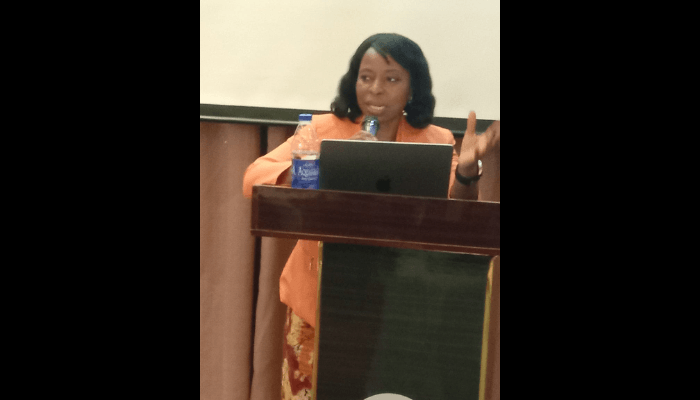
The Bayelsa State team lead, Patience Ranami Abah, Director-General of the Bayelsa State Investment Promotion Agency (BIPA), made strong case for the member-states to form a common economic front so as to offer economy of scale.
Abah also preached a message of closing ‘value-capture gap’ saying most of the values created in the BRACED states or oil states do not return full cost. ‘Value-capture gap’ refers to the disparity between actual value and recovered value.
Abah acted as both Bayelsa team lead and BRACED resource expert, and was thus nominated to lead some teams and groups for better outcomes for the Commission.
Official records indicate that Abah has a strong background in investment promotion, legal services, and economic development, with extensive experience in facilitating investments within Nigeria beyond Bayelsa State.
Since April 2025, she has served as the Director General of BIPA where she is responsible for investment generation, investor facilitation, policy advocacy, and showcasing investment projects in Bayelsa State. Her previous role as Permanent Secretary for the Ministry of Trade, Industry and Investment in Bayelsa State has been of huge impact, just like Chamberlain Peterside, who was commissioner of finance and economic planning in Rivers State now taking up the task of DG of the Rivers State Investment Promotion Agency.
Abah is respected by her colleagues as a lawyer and investment expert with significant experience in creating investment-friendly environments and bridging the value capture gap. She is said to have worked on strengthening the partnership between government and the private sector, specifically in areas such as oil & gas, agriculture, and infrastructure, supported by her education/training as a Juris Doctor (JD) from Queen’s University and a B.Sc in Biological Sciences from the University of Toronto.
The lawyer-trade promotion expert thus took time to present her perspective on essence of the gathering, regional economic integration, as well as what Bayelsa State is bringing to the table. She insisted that closing the value-capture gap would only be through synchronized investment frontiers.
She showed the Bayelsa advantage or profile mainly of access to the Atlantic Ocean that supports a deep seaport at a place called Agge, a state with the third largest wetland in the world of almost 11,000 square kilometers. Bayelsa with a population of almost three million is a gateway into the Gulf of Guinea and West Africa especially in the era of the Africa Continental Free Trade Agreement (AfCFTA).
Showing Bayelsa’s contribution to Nigeria’s oil wealth, she mentioned Brass with LNG facility valued at $4bn, saying gas gathered in the area per day is as huge as 1.2bn scuffs. She mentioned the $3.5 billion Brass Fertilizer & Petrochemical Company Limited.
Abah talked about the importance of risk mitigation approach by the various investment promotion agencies in the member-states, and why they must focus on ‘Ease of Doing Business’ (EoDB), noting that Bayelsa ranked number one in the south-south and number three nationally in the last (2018) World Bank ‘EoDB’.
She went on: “Bayelsa does run a transparent and accountable government backed by laws, including the Bayelsa State Income and Expenditure Transparency Law. The reports are easily accessible to anyone online, and you can also apply if you wish to receive a summary of these financial documents.”
Apart from LGA inclusion system in the state, she said Bayelsa plays strong on procurement law, state audit law, and that the state is participating fully in the World Bank SABER programme, which is the State Action on Business Enabling Reforms.
Presenting Bayelsa as a top tourism destination, she talked about low crime rates. “Bayelsa is one of the safest states in the entire country, accounting for only 1.14% of total reported crime cases from the crime statistics reports of 2018.”
She asked the partner-states to look at the agenda of the present state government led by Douye Diri called ASSURED Prosperity Agenda in considering what Bayelsa State brings to the table for BRACED states economic integration.
She mentioned an Agricultural Revolution and Blue Economy leveraging on Bayelsa’s over 200 km coastline and freshwater rivers. “This means large-scale aquaculture, large-scale marine deep-sea fishing, trawling, and special agro-processing zones. So what we’re doing is we’re moving from subsistence farming to commercial agro-export.”
She said the state is focusing on sustainable infrastructure including roads to the Atlantic Ocean. “That is where the wealth is, access to the Ocean. Then ‘Urban Renewal and Housing’, transforming Yenagoa into a modern, functional city.”
She harped on work on ‘Rural Development and Resource Monetization’, an economic activity from the grassroots. This helps to decentralize governance to the grassroots. She talked of ‘Educational Advancement and Value Chain’ with ‘Health Delivery’. “Our focus is to build the human capital required for a 21st-century economy. The state government has placed priority on technical and vocational education (TVET).”
A highpoint of the education prong is the Oil & Gas Museum at Oloibiri (actually Otuabagi) which she says is a N120bn contract.
The mismatch:
She pointed to what she termed ‘mismatch’ between what the BRACED states contribute to Nigeria (N34 trillion) and the gross domestic product (GDP) of the region 21.25%. She laments that the region contributes at least 70% of the nation’s wealth but gets a bit above 20% of it. She called it the 80/20 trap. She blamed this on lack of production.
“We have economic leakage. This happens because our high-value raw materials, oil and gas, are leaving, but we are not retaining the wealth which should be created during the processing, refining, and distribution of those materials.”
Strategies to close the gap:
“So, the logic: if we are providing about 80% of the value leaving the country, why are we only contributing 21% of the wealth staying in our local areas? So I’ll just run through three possible solutions to close this gap.
“One, there’s a processing leak, ‘crude-to-chemicals’ gap. We export crude oil at a raw price but import the refined products (plastic, fertilizers) at a premium price, mind you, there’s a disparity.
“When we facilitate projects such as the Brass Fertilizer plant, it will help. We can literally plug this leak. Instead of exporting raw gas for few dollars, we can convert that to something of value—urea, methanol, fertilizers, etc. The $9 difference is the value that would have been previously captured by refineries in Europe, in Asia, wherever, but now stays in our region.”
The next solution, she stated, is fiscal leak. “Many companies operate in the South-South, but they’re headquartered elsewhere. By this, their high-value service contracts, PAYE taxes should be very important to us. You know that as sub-nationals, we don’t control the federal taxes. When they pay their federal income tax, it doesn’t come to us, but PAYE is where we rule. So if they’re not actually operating, living in your area, the PAYE goes out and also, their hard-earned money is spent outside of the region.
“So we need to synchronize this. Regional integration will allow BRACED states to demand that operational headquarters follow operational activity, ensuring that tax and service value is captured locally.”
She mentioned that final leak as logistics. “By developing our areas of comparative strength, such as the blue economy, the region can capture the midstream value. An example: If a Bayelsan company owns a vessel that’s moving methanol from, say, the Brass Fertilizer plant, the shipping fees, which are currently a leak, become a part of the state’s GDP because productivity is happening there.”
Abah showed the multiplier effect. “For every $1 of raw resource exported, the global economy creates, say, $6 to $10 of secondary value from jobs, logistics, etc. Our goal as a region then should be to move from capturing just the dollar, which you may get from just extracting the raw materials, to about $4 or more from capturing the value chain. It’s all about value chain.”
In her conclusion, she remarked that the Energy Tank of Nigeria for now is the South-South. “Our goal through economic integration is to become Africa’s industrial engine. We should no longer be content with being the source of wealth; rather, we must be the site of its transformation.”
She made what she termed an audacious projection, saying if the BRACED states manage to do what they have set out to do, integrate the economy of the six states, they would end up as the 11 economy in Africa (behind Nigeria).
“This is possible, based on what we have. My call to action is, let us integrate for transformation, not merely for being an access point for raw materials. Let us integrate for transformation.”
BRACED DG speaks:
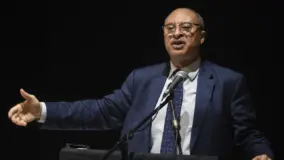
In his welcome address, Joe Keshi, the DG of the Commission, welcomed the DGs of the IPAs of the states and harped on the theme of the roundtable: ‘Synchronizing Investment Frontier: a Strategic Framework for South-South Economic Integration.’
He went on: “Today, we gather not only to reflect on the realities of our region but also to chart a bold course towards collective sustainable growth and shared prosperity. This we must undertake to address poverty, underdevelopment, and create prosperity for our people, thus contributing to the economic transformation of Nigeria. The BRACED states represent a unique economic corridor in Nigeria. Potential alone is not enough.”
He made it clear that states need to tackle infrastructure gaps, environmental issues, governance challenges, security, and consolidate regional economic cooperation and integration as a way of addressing underdeveloped, creating prosperity for the citizens and opportunities, particularly for young people.
He mentioned the opportunities as expanding energy and petrochemical industries; unlocking the promise of agriculture and agribusiness; promoting tourism and creative sectors that highlight the region’s vibrant cultural legacy; building technology hubs that connect youth to the digital economy; and improving ports and transportation networks to boost trade and streamline logistics.
He said: “Consequently, the central issue is straightforward: How can we, working together, transform this significant potential into tangible prosperity that benefits every individual and creates opportunities throughout the region? That is the task before us. This is why this symposium is not merely a conversation—it is a call to action.”
He noted that both governors of Enugu State and that of Anambara have called for economic integration of the South East states as the only way into prosperity. “Now, picture a BRACED area with a population exceeding 30 million, where investors view potential instead of peril, where young entrepreneurs build tech hubs that rival Silicon Valley.
“Farming thrives, tourism continues to expand, industries emerge to meet global market needs, and seaports transform into major international centres and rail lines spread across the states and south-east.
“That vision is achievable if we act together and invest in one another. Investment is not only about capital. It is about confidence. It is about creating an enabling environment where ideas flourish, businesses thrive, and communities prosper.
“Together, we can build that environment. Together, we can turn challenges into stepping stones and opportunities into lasting legacies. This we can do by creating a unified regional investment framework; develop a pipeline of high-priority, bankable projects; coordinate infrastructure development among transportation, energy, and logistics networks; increase productivity and make regulations easier to follow; enhance security collaboration for critical infrastructure; engage development finance institutions and private sector partners through structured Public-Private Partnerships; and leverage technological advancements to enhance operational efficiency and foster skill development across all sectors.”
He said a better way forward to advance our mission is for them at the end of the symposium to agree to constitute a ‘Technical Working Group’ to develop a ‘Regional Investment Roadmap’ and an implementation strategy. “The results of the committee’s efforts will be unveiled at the Third South-South Economic Summit, scheduled for early 2027.”
The summit, he said, would be dedicated exclusively to investment in the region, to draw attention to the wealth of the region and the huge opportunities. “This will be our conference, and each of you will have vital role in its success.
“The BRACED states can be the heartbeat of Nigeria’s economic transformation. And today, in this room, we hold the power to make it happen.”
Echoes of the communique:
The communique seemed to echo the sterling suggestions from Keshi, Abah, Peterside, and many other eggheads. It recognized the participation of the partner-states as well as federal and private sector attendees including officials from the Federal Ministry of Commerce, Industry, and Investment; the Nigeria Economic Summit Group; and private sector leaders in oil and gas, railways, agriculture, power, and the blue economy.
The symposium resolved to position the South-South as Nigeria’s gas industrial hub; West Africa’s maritime gateway; a leading blue economy zone; and a center for value-added manufacturing. They resolved to unlock the region’s untapped potential, creating a harmonized ‘Regional Investment Promotion Framework’, a ‘BRACED Investment Charter’ for uniform investor service, and a ‘Regional Investment Roadmap’.
They resolved to align transport, energy, and logistics corridors while developing a pipeline of priority, bankable projects. They also resolved to improve the ease of doing business through regulatory reforms, security enhancements, and improved infrastructure.
On social and human capital, the communique resolved to prioritize youth empowerment, entrepreneurship, and skills development as long-term prosperity drivers; and to establish a ‘Technical Working Group’ to oversee the implementation strategy.
According to the communique signed by the DG of BRACED Commission (Keshi) and DGs of some of the states including Rivers, Bayelsa, Akwa Ibom and Delta states, the symposium urged state governments, investors, and development partners to collaborate in transforming the BRACED states into a beacon of economic dynamism. “The BRACED platform will continue to coordinate regional economic integration and investor engagement.”
Join BusinessDay whatsapp Channel, to stay up to date
Open In Whatsapp