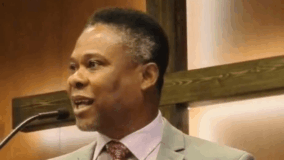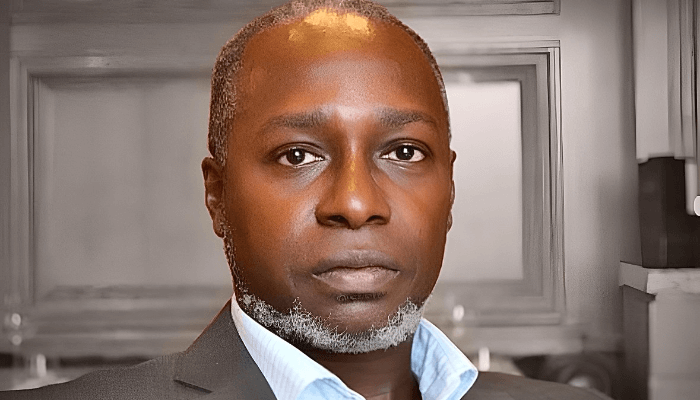
Since his appointment as the director of Nsibidi Institute, in June this year, Ed Emeka Keazor, has turned things around at the independent research organisation, starting with a re-launch event.
In this interview, Keazor, a historian, lawyer, author, and documentary filmmaker, who also sits on many corporate boards, shares with Obinna Emelike, the essence of the institute, why he came out of a three-year retirement for this, feats achieved within his short period in office, especially the inaugural festival, among others.
Excerpt:
Congratulations on your appointment as the new director of Nsibidi Institute. But what is the institute all about?
The Nsibidi Institute describes itself as an independent research organization, which is geared towards building local research capacity, promoting learning and effecting critical engagement on societal issues in Nigeria. It was founded in February 2014, by a group of Nigerian professionals, whose motivations were to establish an organisation to engage in activities around research, publications and other activities focused on an understanding and promotion of indigenous intellectualism and excellence – spread across, culture, heritage, technology and innovation.
What impact have you made since your appointment in June 2025?
My first task was to revitalise the Institute’s infrastructure – physical, proprietary, among others. We relaunched our social media presence in the first instance, followed by a new website www.nsibidifoundation.org. Then we held a relaunch event, at the Soto Gallery, Ikoyi, Lagos on June 28, 2025. This even saw us open our doors to a broad spectrum of our stakeholders and partners. We unveiled our mobile museum, featuring artefacts loaned from a number of individual and institutional collections. Likewise, a mobile rare books library. This was followed by a film screening of Chikezie Ifedobi’s ‘Ije Enu: The Celestine Ukwu bio documentary’ and a photo exhibition celebrating Nigeria’s Highlife legacy, at Quintessence, Ikoyi, Lagos. Also, a film screening at the Africa Centre, London. We entered into collaborative partnerships with the National Council for Arts and Culture, Premier Records, The Africa Centre, London, the Iba Ajie Knowledge Resource Centre, and Piql Africa – all major players in heritage, culture and media. We organised our inaugural Nsibidi Institute Festival, which was held over three days (September 26-28, 2025) at Quintessence, and the Didi Museum, in Victoria Island, Lagos. The festival featured photo exhibitions, film screenings, symposia and performances, as well as an award ceremony celebrating designated champions of Nigeria’s arts and culture. We have also launched our original documentary film series, ‘The Alchemists’ showcasing champions of indigenous intellectual and cultural excellence. Thus far interviewed have been cultural icons such as artist – Victor Ehikhamenor, flautist Gerald Eze, and globally renowned percussionist – Richard Olatunde Baker. One could say, we have been a little busy.
Considering that the institute was inactive for five years, what are your strategies to forestall reoccurrence?
The pandemic was the main reason for the Institute’s temporary closure, a re-evaluation of the Institute’s focus, and insertion of personnel to drive the new strategic direction. As for preventing future occurrence, the board is determined to pursue the Institute’s long term strategic objectives, to build a resilient operational framework – which would absorb external impacts. I am confident that the Institute is here to stay.
Also, congratulations on the successful inaugural festival. How did the idea come about?
The initiative for the festival was mine, and essentially to create a robust, socio-cultural showcase, that celebrated the various disciplines, covered by its programme – and by extension brought the Institute’s brand back in the mainstream calendar.
The rich content points to wider collaborations, how were you able to gather such content partners within a short time in office?
I was recruited by the Institute, amongst other reasons, for my network of prime stakeholders in the socio-cultural and heritage spaces. I was thus able to leverage on decades long contacts, towards streamlining those partnerships. Additionally, the Institute already had an established reputation for credible and effective engagements, thus it was not a hard sell. It needs to be added that this was my motivation for taking up the current position … effectively coming out of a three-year retirement for this.
What is your highpoint for the festival and also areas you hope to improve on in the coming editions?
All events on the programme were highpoints to be fair. However, if one is to drill down, I would cite the conversation between Major-General Tunde Akinkunmi Rtd and Mr Yemi Candide-Johnson SAN, on the subject of ‘Military rule and its socio-cultural impact on Nigeria’, the other being the thought-provoking music documentary day, in which three critically acclaimed films were screened, to an engaged audience.
How did the presence of Obi Asika, director-general of National Council for Arts and Culture (NCAC), impact the festival, is it government endorsement?
Nze Obi Asika was sadly unable to be present for the opening ceremony of the festival; however, he was represented and delivered a thought-provoking keynote address, which highlighted the synergies between the NCAC’s focus and ours and the need for strong broad-based collaborative efforts between both our organisations.
Apart from the many panels of discussion, movie screenings, conversations, books, among others, there seems to be less focus on the cultural aspect. Is that deliberate?
I would not say that culture spans across both contemporary and ancient modes. If you are referring to more traditional elements of our culture, I would respond that our programme schedule for next year digs deep into traditional occupations, art and cultural histories. I would say, watch this space.
On hearing Nsibidi, one easily connects it to the Igbo cultural heritage. But the festival had content spread across the country. Why?
The name Nsibidi is symbolic of indigenous intellectualism, rather than being strictly indexed to the Nsibidi script form of the Cross River basin. Hence, you shall find that our programmes explore multicultural themes, from all across Nigeria and even beyond. Of course, we are planning a specific Nsibidic Orthography event next year, If I may let that cat out of the bag. However, I hope you get my point?
Of course, you are a man of many parts: historian, lawyer, author, documentary filmmaker, you also sit on many boards, and you have added Nsibidi Institute to your growing laurels. How do you multitask successfully?
I think it is a blessing to be able to exercise one’s skills and experience positively, as far as is possible across any areas they may be deemed necessary. Hence, I shall say, I am grateful for opportunities to be of service to my community and country.

Join BusinessDay whatsapp Channel, to stay up to date
Open In Whatsapp