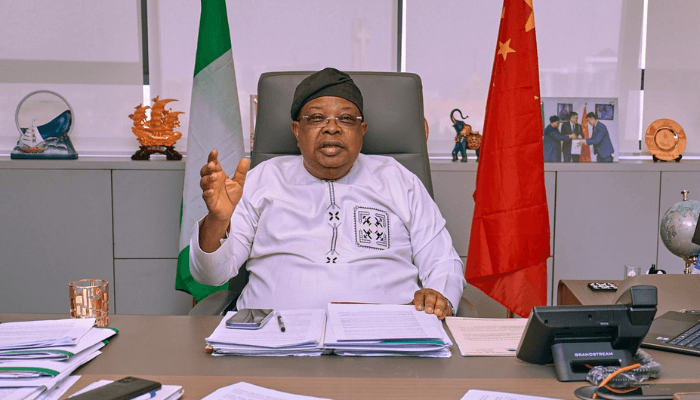
Joseph Tegbe, Chairman of the National Tax Policy Implementation Committee (NTPIC), says ongoing tax reform is being rolled out in a fair, transparent, and an impactful manner for citizens. In this interview with BusinessDay’s John Osadolor, Onyinye Nwachukwu, and Favour Okpale in Abuja, he highlights early progress, addresses misconceptions, and outlines how the committee is prioritising stakeholder engagement, administrative readiness, and voluntary compliance, while implementing President Bola Tinubu’s directive to apply the new tax regime with a “human face.”
With the tax reforms underway, what tangible improvements have you recorded so far in compliance rates, revenue generation, and administrative efficiency? Are there early performance indicators or data you can share?
For emphasis, there are four tax laws. Two of them became effective in June last year, and two in January this year. Those that became effective in June last year relate to internal capacity building of Nigeria Revenue Service (NRS), Joint Revenue Board (JRB). The ones that affect the masses, and they are feeling are the Nigeria Tax Act (NTA) and the Nigeria Tax Administration Act (NTAA) which became effective from January this year. Yes, there are indicators and metrics, but the true impact of initiatives like this goes beyond the usual indicators. It’s better assessed through broader impact measures, ranging from compliance to other long-term outcomes. However, it may still be a bit early to evaluate that fully, because there are two key factors we first need to understand. There are several elements within the tax provisions. One key area is VAT, where we are already seeing improved compliance. A major change is that the law now allows taxpayers to pay less VAT in certain cases. Previously, businesses mainly paid output VAT, but now some sectors can offset input VAT against output VAT. This adjustment is providing relief to taxpayers. In the past, particularly for professional services firms, input VAT could not be netted off against output VAT.
We are seeing increasing compliance and activity around these provisions. However, some impacts may not be visible until about a year from now. Although the laws took effect this year, transparency, predictability, and reliability require time to show clear results. For now, the main development we are seeing is increased awareness, people are discussing and beginning to understand the changes. As the implementing body, we are also receiving feedback from key groups such as NACCIMA, NECA, and OPTS.
We are receiving feedback from stakeholders on what is working well and where they believe adjustments may be needed, and we are actively engaging them on these issues. At this stage, it’s still early days. The foundation of any reform is public trust, and building that trust requires consistent engagement. In reforms like this, there’s really no such thing as over-engagement. Implementation must go hand in hand with communication and stakeholder management. We have developed a broad engagement plan that includes small, medium, and large taxpayers, individuals, and pensioners. Addressing misinformation is also critical, as much of the current concern stems from miscommunication.
Due to social media, information, especially bad news spreads very quickly. Many people also rely only on headlines rather than reading the full details. As journalists know, if a headline is not precise, it can easily create the wrong impression. For instance, someone might say “Tegbe says no more taxes,” when the comment actually refers to a specific aspect. People then react to the headline without understanding the full context, which leads to a lot of misinformation. We need to correct that misinformation. This is not a southern tax, a sectional tax, or a regional tax. From what we have seen, many provisions in these tax laws are more beneficial to Nigerians than punitive. However, it’s important that we communicate this clearly, and over the next three months we plan to engage stakeholders more actively.
The President, in his magnanimity, has also made it clear that this tax law should be implemented with a human face. Contrary to some of the misinformation circulating, there are no plans to arbitrarily access people’s bank accounts or deduct funds. In fact, Taiwo Oyedele once challenged critics to identify two new taxes introduced by this government, many were unable to do so. These provisions have existed for years. For example, adjusting a rate from 10 to 15 percent does not create a new tax. Take transaction reporting for instance, banks have long been required to flag transactions above certain thresholds, such as N10 million. These reports go to the relevant authorities, but if such transactions are routine for a customer, they may not always trigger fresh reporting. That’s why banks often advise that transfers above N10 million may need additional processing or be completed the next day. In such cases, if there is any issue, the bank can hold the transaction overnight rather than processing it instantly. These procedures have existed for years. What the new tax law has done is raise the reporting threshold to N25 million, which is actually a positive change. However, when this is discussed publicly without context, it can appear as though a new tax or rule has been introduced. In reality, those who were previously affected at the N10 million threshold already knew the system existed. Increasing it to N25 million simply provides more flexibility for the public. These are the kinds of misconceptions we intend to clarify.
Also, reforms affect sectors and regions differently, so communication must be tailored accordingly. The way you engage traditional leaders, for instance, will differ from how you communicate with religious leaders or other stakeholder groups. Communication must be tailored to different groups because what you explain to religious leaders differs from what you share with seasoned businessmen who already comply with tax regulations. Our goal is broad and meaningful engagement: we are visiting Kano, Kaduna, the East, and beyond to meet stakeholders directly. This isn’t engagement for its own sake, it’s about implementing the law with a human face, as the President has directed. Where Nigerians encounter challenges in applying the law, we will review and make amendments where necessary, ensuring the system is fair, practical, and responsive. The President supports this approach. Ultimately, we are committed to engaging stakeholders and are open to adjusting our position where needed.
How is the committee balancing enforcement with voluntary compliance, and what new audits, penalties, or incentives are being used to foster a sustainable tax culture?
Tax enforcement is usually not a government’s first choice, it only comes into play when people default. Ideally, voluntary compliance is encouraged. However, defaults can arise from various factors, and even something as simple as misinformation or lack of awareness can prevent compliance. After all, if people don’t understand the rules, why would they follow them? Often, what we focus on is not enforcement itself. Enforcement falls under the NRS’s responsibility. As an implementation committee, our role is to ensure things are done correctly from the start. That means clear communication, effective information dissemination, and guidance. Essentially, we oversee the implementing agencies rather than directly executing the implementation ourselves. Our role is to ensure that the implementing agencies are properly equipped and capable. I can’t mandate electronic transfers without providing the necessary systems, or require monthly filings without giving accessible offices or online platforms for submission. We focus on agency readiness, skills, and the resources needed to implement effectively.
We also need to focus on how we communicate with the public. Beyond the formal redress procedures and deadlines set by law, there’s the tax appeal panel and the government-appointed ombudsman to address issues. Yet, many, even educated individuals do not understand the difference. Clear communication, including frequently asked questions from the NRS, is essential. The Joint Revenue Board (JRB) will be issuing updates, and television stations will broadcast information. We’ll also use media houses like BusinessDay, running regular features for several days or months. We will consider a weekly “Tax Matters” column to highlight developments, provide updates, and address frequently asked questions for the public. We will return to engage stakeholders to ensure these measures are implemented. This approach, for me, will promote better compliance and minimize the need for enforcement, which should remain an exception. That is our goal moving forward.
There were concerns from sections of the private sector about compliance and transition timelines. Has implementation revealed any gaps, especially in terms of preparedness?
Let me be very candid, no major reform anywhere, whether in the U.S., China, or elsewhere, ever runs perfectly without challenges. That said, as of now, there are no significant issues. Tax reform is unique: unlike building a road, where you can inspect after construction, tax reform asks people to reach into their pockets, something naturally met with caution. Tax reform impacts everyone, and people naturally have expectations when it is introduced. Implementation is ongoing, but interpretation of issues are normal, especially around compliance, as we’ve discussed multiple times. Tax reform takes time to settle because the process itself is the reform. Even after filing this year, lessons emerge for next year, and gaps affecting certain groups become apparent over time. It’s an evolving process that requires ongoing adjustments and engagement. One key point is that, for reforms of this nature, we have not seen any major gaps in implementation so far. That said, it is still early days, corporate tax is just starting, VAT is in its second month, and PAYE filings vary monthly or quarterly. What is critical now is to take charge of the public discourse and correct widespread misinformation, such as claims that the law targets inheritances or favors certain regions. This tax act is neither regional nor punitive; its purpose is to ensure fair and effective compliance across board.
For me, I would say there have been no major implementation gaps so far. What we need now is better communication and stronger awareness campaigns to dispel unnecessary fears. Of course, no reform is ever 100% perfect, small issues inevitably emerge during implementation, and we address them as they arise. If you don’t engage proactively and on time, even a small group, say 1% of the population can make enough noise to seem like 50%. That’s what we’re addressing. Some of these taxpayers contribute less than 0.1% of total revenue, yet we still consider their concerns. People also need to understand that as a nation develops, trust in tax and fiscal policies evolves, which is why certain changes in the tax laws were necessary.
To encourage investment, fiscal reforms and policies must create an enabling environment that attracts capital to the country. Similarly, if local content development is the goal, tax laws and fiscal policies can support it. It’s a continuous process. For our part, the committee meets every two weeks, monitors progress monthly, and has developed a detailed engagement plan that targets not just regions but also sectors, including traditional and religious leaders. We are being strategic. When ordinary Nigerians face challenges, they don’t turn to newspapers or TV channels, they go to their traditional leaders, village chiefs, church pastors, or imams. That’s why we’re focusing on engaging these community leaders, ensuring they have a clear understanding so they can guide their communities accurately. If you ask me about the challenges we are facing with implementation today, less than 10% are technical. The majority are what I would describe as soft issues—stakeholder management, change management, addressing misinformation, and dealing with those who deliberately distort information within the system. These are the areas we need to tackle. We are doing our best to address them and will continue to do so. At the end of the day, this is a marathon, not a sprint.
Given that tax administration in Nigeria involves both federal and subnational authorities, how well are states aligning with the new framework, and are you seeing more harmonisation or areas of friction?
You are aware that there is an entity called the Joint Revenue Board (JRB), which is responsible for coordinating tax matters across the national, federal, and subnational levels. The issue of multiple taxation is not new; it has existed for many years. It’s not limited to sectors like motorcycle operators. Even when you drive across two or three states, depending on the type of vehicle you’re using, you may be stopped and asked for different levies. One official might ask for a radio license, and when you get to the next checkpoint, another officer might say that the license only applies to the previous state and that you need a separate one for the current state. Recently, however, the JRB convened a meeting where state governments agreed to harmonise many of these charges to address such inconsistencies. In fact, some of those most affected are not just motorcycle operators but large companies as well. Take Dangote, for example. A truck may load cement in Obajana and head to Calabar, passing through several states along the way. In many cases, it encounters different charges in each state it crosses.
Recently, the Joint Revenue Board facilitated a session where states Internal Revenue Service came together to agree on a common position on some of these multiple taxes. This is one of the outcomes, and indeed a by-product of the ongoing tax reform. Significant efforts are already being made to address these issues. In addition, recently, together with the Minister of Finance, we signed guidelines on presumptive taxes, which is another area that has generated considerable debate and also involves both federal and subnational tax authorities. The guidelines and circulars are meant to provide clarity on what each state is expected to do. These are some of the measures we are putting in place to address issues like multiple taxation. That said, we operate within a federal system, and in such a system, subnational governments cannot be compelled through coercion. The only effective approach is engagement, working with them through dialogue and negotiation. Tax reform often involves extensive negotiation because different aspects of taxation affect different levels of government in different ways.
Some tax measures are more favourable to state governments, while others benefit the federal government. At times, the federal government may choose to make concessions. For instance, it might decide not to increase company income tax, which accrues to the federal level, but instead adjust VAT rates so that states can benefit from higher revenues.
Sometimes states argue that the federal government already has sufficient revenue and that the system needs to be balanced, especially when there are projections for overall tax revenue. These discussions and negotiations have been ongoing for some time.
What we are trying to do now is ensure that states feel adequately accommodated so they don’t resort to aggressive revenue drives. When states feel they lack sufficient revenue, they tend to rely heavily on Internally Generated Revenue (IGR), which often comes from many of the charges we’ve been discussing. The most effective way to address this is through fairer revenue sharing, essentially ensuring that states receive a reasonable portion. The debates around VAT sharing, for example, were quite controversial before a consensus was reached. Ultimately, every state is evaluating its own revenue capacity and how much it needs to fund its expenditures.
Essentially, the multiple taxes you referred to are being addressed by the Joint Revenue Board. The goal is to harmonise and eliminate many of these overlapping charges. One of the key steps being taken now is automation. For instance, if a levy or permit is issued in Sokoto and you have the corresponding sticker, when you pass through another state, officials can simply scan it to confirm that you have already complied.
At that point, you won’t be required to make another payment. Instead, the system will simply record that you passed through that state. When the data is consolidated centrally, the information is used to allocate revenue appropriately among the states. This is one of the mechanisms the JRB is introducing to address the issue of multiple taxation, and we expect to see even more innovations along these lines going forward.
A persistent concern is the gap between tax collection and visible public service delivery. Is there a framework in place to track how the additional revenues generated from the reform are being utilised, and will this information be publicly reported?
You are asking a very sensitive question, and it goes beyond taxation that relates to governance in general. First, it’s important to clarify that these tax laws are not necessarily making people spend more out of pocket. In taxation, there are typically two ways to increase revenue. One option is to raise tax rates or charges, but that is not always the best approach. The other, and often more effective method, is to expand the tax net by bringing more people into the system. Expanding the tax net means ensuring that individuals and businesses earning income but currently outside the system are captured within it. For example, I worked in an organisation for 35 years where my effective tax rate was never less than 30%. Yet, if you look around, how many Nigerians actually pay taxes at that level? Some people are employed but pay little or no tax at all, while others under-declare their income. So the focus is on bringing those who are earning but not contributing into the tax net. Ultimately, paying taxes is a fiduciary responsibility of citizens and leaders alike. This principle dates back centuries, whether in the era of Pharaoh or in biblical teachings. As the Bible says, “Give unto Caesar what belongs to Caesar, and unto God what belongs to God.”
Paying taxes is a fundamental responsibility. Whether the taxes themselves are reasonable is a separate discussion. Likewise, whether governments use tax revenues for their intended purposes has always been a question citizens raise, it is not unique to this administration. Ultimately, accountability is essential. Just as with any aspect of governance, when people elect leaders, they have the right to ask questions and demand transparency. Citizens are justified in wanting to know how their taxes are being used. That is why, in some states, when roads or infrastructure projects are built, governments often highlight them with messages like “your taxes are working.” In other places, authorities appeal to citizens to pay taxes so they can improve services, fix infrastructure, and deliver public projects.
What we don’t have yet which is common in developed countries is the practice of linking the national budget directly to tax contributions. There, governments show citizens: “This is how your taxes are being used, and these are the projects you’ll see over the next two or three years.” I can assure you, this administration is moving toward that level of transparency. The President supports this approach, and the NRS is working to make it a reality. The goal is to bring accountability and clarity to a system that lacked it before. With initiatives like the single-window system and consolidated collections from customs, immigration, and other agencies, revenue is now visible and traceable—no longer disappearing quietly without citizens noticing.
The President’s new executive order on NNPC is a major step forward. Previously, the system was opaque, money would come in and disappear without accountability. Now, transparency is being prioritized, and the same principle is driving tax reform. First, we need to know exactly how much Nigerians are paying in taxes, and where revenue was previously lost. A single, consolidated view allows us to see how many people are in the tax net, and how many more can be brought in. Right now, while the average worker may earn hypothetically one million Naira a month, some informal actors in places like Alaba are handling transactions of 10–20 billion Naira monthly without fully paying taxes. Even customs duties are often under-declared, for example, undervaluing a car to avoid paying the correct tax. The goal is to reach a stage where this is no longer possible, as it is in developed countries. With proper information access and enforcement, everyone pays fairly. Transparency is the first step to clarifying the tax “bucket” and making the system more equitable.
The second priority is expanding the tax net to include those who are not currently paying, often the most vocal critics. Bringing them in ensures fairness and accountability. During planning, the government will outline how it intends to use tax revenue, but it’s important to first establish a reliable collection system. Promising outcomes before achieving sufficient revenue can backfire, because people may say, “You didn’t deliver.” The best approach is to pilot, learn, and scale. This government is building a transparent taxation system, consolidating collections through a single-window framework to ensure accountability and clarity. The next step is linking tax revenue to visible development. Ask me again in six months or a year, and I can show tangible examples of projects underway.
The President is delivering bold initiatives without raising taxes—like the Lagos-Calabar road. Critics now see its impact firsthand and even compare it to international standards. Ultimately, the goal is to use tax revenue for transformative projects in education, healthcare, satellite systems, modern transport networks, and train lines alongside roads, such that citizens truly feel the benefits. But it’s important to remember that this tax reform operates at the federal level. We are not coercing state governments, we are engaging them to ensure compliance. Questions are not just for the President, we also ask state governors and local government chairmen. After all, local issues, like road gutters, are the responsibility of local governments, not the federal government. This administration has started on a strong, transparent note, mapping all taxes, identifying those outside the tax net, and expanding it. The easiest way to grow revenue is by bringing more people into the system, but it’s not about overtaxing. In fact, the government has indirectly reduced the burden for some who were already paying.
Some businesses that were previously taxed below a certain threshold are now exempt until they reach 100 million Naira in revenue, so it’s a completely different approach. Tax rates have generally come down: someone who previously paid an effective rate of 20% may now pay 17.5%, while smaller operators may pay as little as 10%.
It’s better for businesses, and even if some are initially unhappy, they’ll benefit as development projects take shape. This government is serious about letting tax revenue reflect tangible results. For example, the President recently emphasised funding for state police, something that relies on effective tax collection to support security and public services. The federal government continues to play a key role, especially in security. The President has long championed the creation of state police to decentralize law enforcement, a proposal he recently discussed with the National Assembly. Such initiatives could be financed through more effective tax collection.
Is the government considering linking tax revenues, like Company Income Tax, to specific projects to improve transparency and show citizens exactly how funds are used?
The reality is, project-based taxation isn’t always practical because governance is more complex than it appears. Sometimes you “rob Peter to Pay Paul”. We collect more from those with the capacity to pay and less from those who can’t, not necessarily because they want to pay more, but because they can. Even in countries like the U.S., some billionaires have voluntarily asked to be taxed more, while others pay huge amounts, like Aliko Dangote recently contributing hundreds of billions in taxes. For us, the focus is on creating a large, consolidated tax “bucket” that serves different communities in different ways. The critical part is transparency and accountability. While we may not be able to tie each tax directly to a specific project, the government can and should show citizens that the tax base has expanded, with previously hidden revenues like those in NNPC, customs, and immigration, now fully visible. Ultimately, people can complain about paying taxes, but the same people often highlight gaps in public services, like hospitals. Transparency ensures they can see how the system works and hold those responsible accountable.
When I was younger, there were authorities we respected because they enforced rules strictly—if you defaulted, there were immediate consequences. That kind of enforcement minimized corruption and ensured compliance. Even today, many people still avoid basic obligations, like income tax or car registration. But automation is changing that. Take Lagos, for example, vehicle registrations are now tracked digitally. If you drive with an expired registration, cameras capture your number, match it to the database, and a fine of say 20,000 Naira is automatically applied. When you eventually renew your registration, all outstanding fines must be paid. That’s the level of enforcement and compliance we are aiming for nationwide. Voluntary compliance doesn’t work where there are no consequences. People follow rules when there are clear consequences for breaking them. Take Lagos, the Third Mainland Bridge has an 80 km/h speed limit. Before, it wasn’t. Now, cameras capture speeding cars, and tickets are issued automatically. That’s enforcement driving compliance.
Compliance also grows as society advances and sees transparency. When people can see what their contributions are doing, how revenues are being used, they are more willing to comply voluntarily. Even the elite often comply proactively to avoid embarrassment. This government is committed to implementing reforms with a human face. Ignore the misinformation in the media, there’s no sudden debit from your account. The goal is fairness, transparency, and gradual voluntary compliance. Many of the issues being highlighted now have actually existed for 10 or 20 years. What’s different is that people are becoming more aware. For the first time, they’re “Googling” the tax act, reading up, and engaging in discussions. That awareness is a positive outcome.
Our committee’s role is to make sure the implementing agencies act correctly, that Nigerians receive accurate information, and that their voices are heard. Implementation isn’t just about collecting taxes, it’s about listening and responding to the people.
The President is also keen on transparency. It’s easy to demonstrate accountability when citizens can see exactly how their taxes are being used. That’s why the government is undertaking bold initiatives, like the state police proposal, to shift responsibility and show tangible results rather than leaving the blame solely at the local level. You see, states have tried creating their own security systems. Take Amotekun in the Southwest, for example. It’s operational, but it hasn’t gained the traction everyone hoped for, and there are countless explanations for why that is. Now, we have an opportunity to get it right with the state police. It’s not just about the concept, it’s about designing it well. I also hope that the elite—people like you—engage with the National Assembly and contribute ideas on how the state police should function, just as you advocate for improvements in tax policy.

Join BusinessDay whatsapp Channel, to stay up to date
Open In Whatsapp