Nigeria’s pension industry has grown remarkably over the past two decades with assets now exceeding N27 trillion and more than 11 million Retirement Savings Account (RSA) holders. This makes the Contributory Pension Scheme (CPS) one of the strongest pillars of long-term financial stability in the country.
Yet, behind this growth lies a quieter but equally important reform- ‘Data Recapture’. For many contributors, pension discussions often revolve around investment returns, inflation, annuity versus programmed withdrawal, and retirement projections. However, one of the most fundamental determinants of whether pension benefits are paid smoothly and paid at all is something far less discussed – the accuracy of contributor data.
Read also: Stock rally lifts pension equity returns 78% in one year
Why Data Recapture Became Necessary
When the CPS was introduced in 2004, the industry experienced rapid expansion. Millions of workers opened Retirement Savings Accounts across various Pension Fund Administrators (PFAs). In the early years, however, data collection processes were not as technologically robust as they are today.
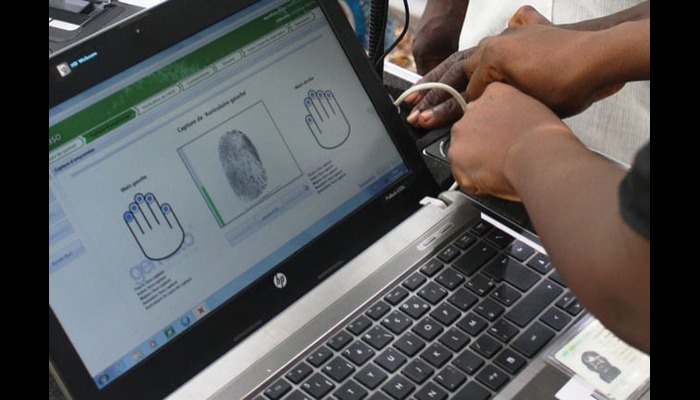
Over time, inconsistencies began to surface. Some contributors had multiple RSAs. Others had incomplete biodata, showing incorrect dates of birth, inconsistent names, missing fingerprints, or outdated employer records. In many cases, contributors changed jobs without properly updating their records. Some did not link their accounts to national identity numbers.
These discrepancies may appear minor during active employment, but at retirement, when benefits are to be processed, even a small data mismatch can delay access to funds.
Data recapture initiatives were therefore introduced to clean, update, harmonise, and verify contributor records across the industry. The goal is simple, to ensure that every RSA holder can access their pension seamlessly when the time comes.
The Cost of Inaccurate Records
One of the most overlooked issues in the pension system is the volume of unclaimed funds. In many cases, these funds remain unclaimed not because they do not belong to someone, but because the system cannot match them confidently to a verified individual. A missing next-of-kin detail. A mismatched name across identity documents. An unverified date of birth. A dormant account whose owner cannot be traced. Across the financial system, including pensions, such inconsistencies contribute to billions of naira in unclaimed balances.
Accurate data is therefore not just administrative housekeeping. It directly affects contribution reconciliation, benefit computation, and retirement access. Where records are incomplete or inaccurate, contribution histories may not align properly. Where employment data is outdated, remittance tracking becomes more difficult. In simple terms, if your data is not correct, your pension process may not be smooth.
Read also: Nigeria’s informal sector ready for pensions, yet underserved
Who Should Participate in Data Recapture?
Data recapture is not only relevant for retirees; it is important for every Retirement Savings Account (RSA) holder, including active workers, near-retirees and individuals who have changed jobs several times during their careers. As Nigeria’s pension system continues to grow, ensuring that contributor records are accurate and complete has become a critical step in preventing delays when benefits eventually become due.
The exercise is particularly important for contributors who opened their RSAs before June 2019, when stricter biometric and identity verification requirements were introduced across the pension industry. It is also essential for individuals who have changed their names due to marriage or other legal processes, workers who have moved between employers multiple times, and RSA holders who have not updated their records in recent years. In addition, contributors who have yet to link their RSAs with their National Identity Number (NIN) are strongly encouraged to complete the process to avoid future verification challenges.
Industry operators note that proactive data verification while contributors are still actively employed can prevent significant stress during retirement. Many of the delays experienced by retirees arise from discrepancies in personal information, incomplete records or missing biometric data that could have been corrected earlier.
The process of data recapture itself is relatively straightforward. Contributors are encouraged to contact their Pension Fund Administrator (PFA) to confirm the status of their records and verify that their biodata matches their official identification documents. They should also ensure that their fingerprints and photographs have been properly captured, confirm that their NIN has been successfully linked to their RSA, and review their employer and contribution history to ensure that records are accurate and complete. Updating next-of-kin information is also recommended, as this plays an important role in the administration of benefits.
All Pension Fund Administrators now provide digital channels that allow contributors to review and update certain information remotely. However, physical visits to PFA offices may still be required in some cases, particularly where biometric recapture is necessary.
Data Accuracy and Retirement Options
Recent public commentary has reignited discussions around retirement choices particularly the differences between annuity and programmed withdrawal. It is important for contributors to understand that both options are legally recognised under the CPS and operate within regulatory frameworks. An annuity is purchased from a life insurance company and guarantees periodic payments for life. Programmed withdrawal, on the other hand, is managed by a PFA and is structured based on life expectancy calculations, investment returns, and remaining balances.
What is often overlooked in this debate is that regardless of which option a retiree chooses, accurate data remains foundational. Before any retirement option is activated, the contributor’s records must be verified. Total accumulated contributions must be reconciled. Age must be confirmed. Employment history must be validated. Benefit computation depends entirely on reliable data. Without accurate records, neither annuity nor programmed withdrawal can function properly.
It is also important to clarify that programmed withdrawal does not arbitrarily “run out” in the way it is sometimes portrayed. The structure is actuarially determined and periodically reviewed in line with regulatory standards and prevailing economic conditions. Likewise, annuity products are structured based on actuarial pricing and insurance principles.
The real determinant of retirement stability is not the label of the option chosen, but the adequacy of contributions, investment performance over time, and crucially the accuracy of contributor data.
Read also: Nigeria pension membership rises 16% amidst structural gaps
A System That Is Evolving
The Nigerian pension industry has not remained static. Investment guidelines have been reviewed to improve portfolio diversification and return optimisation. Over 10 Pension Payment Solution Service Providers (PSSPs) have been licensed to enhance service accessibility. Digital platforms have expanded contributor engagement. Regulatory oversight has strengthened transparency and governance.
Retirement planning often focuses on “how much”, how much has been saved, how much will be paid monthly, how long it will last. Yet an equally important question is “how accurate.” Your pension is only as secure as the records that support it.
In a system serving over 11 million Nigerians, data recapture is not merely a technical exercise. It is a safeguard. It ensures that contributions made over decades are correctly tracked, accurately computed, and seamlessly accessed when needed.
As conversations continue about inflation, longevity, and retirement options, contributors should not overlook the simplest but most powerful action available to them today, verify your data. Because in the end, before retirement planning becomes about policy choices, it begins with something far more fundamental, getting your records right.

Join BusinessDay whatsapp Channel, to stay up to date
Open In Whatsapp